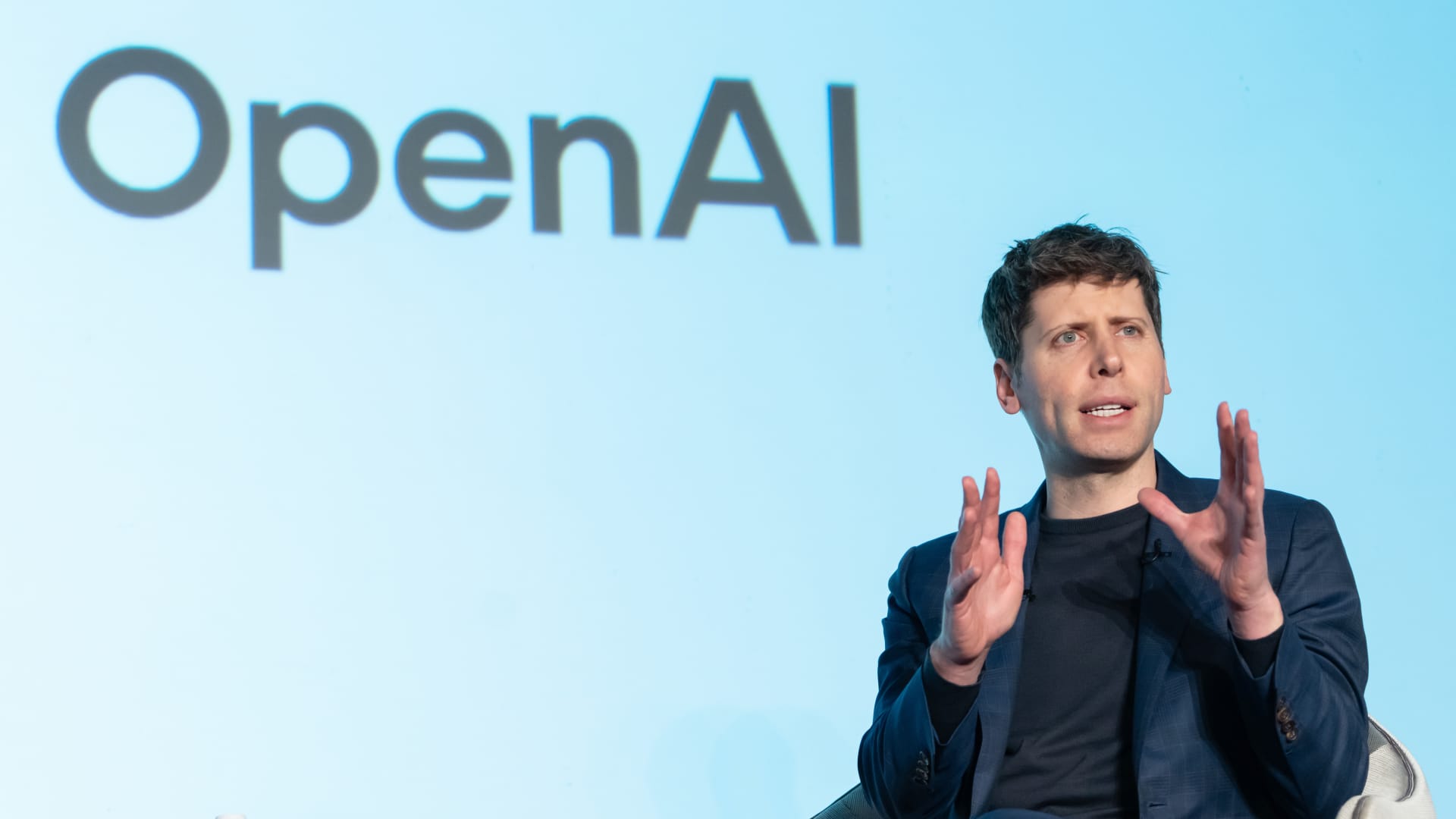
Nvidia recently announced the largest private investment in history: an eye-popping $100 billion into OpenAI. But this outlay isn’t about empowering people or enabling breakthroughs, as Sam Altman said; this kind of vertical integration is about money, control, and power. It’s the latest step in a decades-long campaign by Big Tech to capture every layer of the digital economy—from chips to clouds to the apps you use. A few trillion-dollar companies now comprise an AI oligopoly that poses major risks to competition and to our national security.
They’re building an AI economy where the same companies own the infrastructure, the technology, and its applications—and where no one else gets a fair shot. Nvidia, the most valuable company in the world, has long controlled the market for designing graphics processing units, or GPUs, which are the kind of chips needed for AI.
Amazon, Microsoft, and Google own two-thirds of cloud computing, where chips are used and where AI models are built. Each of these three so-called hyperscalers are among the top five most valuable companies in the world. At its core, the cloud is a model analogous to electricity, water, and other utilities; computing is a commodified service, generated at a remote location (in this case, a data center) and delivered through a network (here, the internet). Unlike other utilities, however, hyperscalers are unregulated, allowing them to pick winners and losers among their customers. For most developers, that means lock-in and dependency, which became normal before today’s AI boom and is assumed.