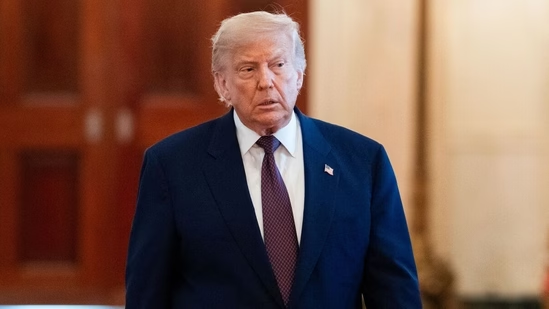
President Donald Trump’s tumbling approval ratings are raising the odds that the 2026 midterm elections will extend one of the most powerful trends in 21st-century American politics.
The president’s steady decline in popularity has increased the chances that Democrats in November could recapture the House of Representatives, and maybe the Senate too.
If Democrats flip either chamber, it will continue the extraordinary run of volatility that has seen control of the House, the Senate or the White House change hands between the parties in 11 of the 13 elections since 2000. By contrast, control of either congressional chamber or the White House flipped in just five of the final 13 elections of the 20th century and only seven of the last 20 stretching back to 1960.
Each time voters recoil against the party in power, political analysts usually focus on the immediate choices made by the president and his party in Congress. But the pattern of rapid reversals has become so entrenched that it appears driven less by tactical decisions than by deeper forces in the economy, society and the electorate that show no sign of abating.
“Five or six years from now, if we are having this conversation, it will probably be 14 out of 16 elections with people voting for change,” said Doug Sosnik, a former White House political adviser for Bill Clinton, who has tracked the trend.