Columnist
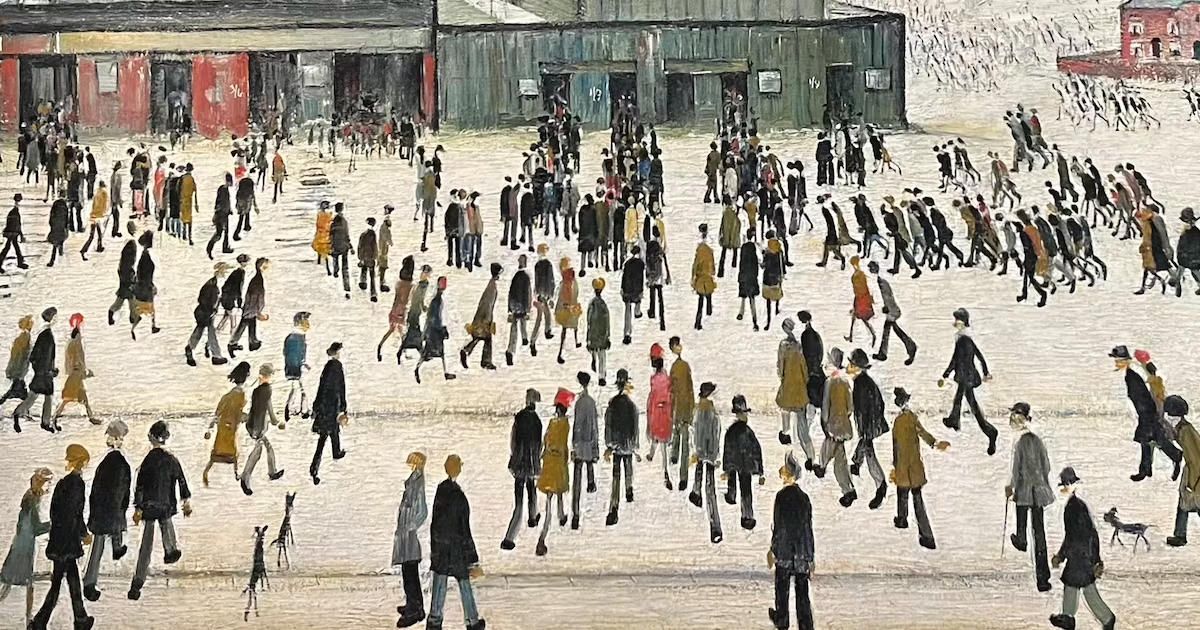
Earlier this year the art world gained new insights into the life and times of LS Lowry, the Manchester painter famous for depicting the industrial cityscapes of northern England. Populated by his distinctive “matchstick” people, Lowry’s panoramic scenes convey the colour and the bleakness of working-class Britain in the decades either side of World War 2.
Lowry was a reclusive figure, even after he achieved success as an artist, and shared little about his rather sad and tortured domestic life. But between 1972 and his death in 1976, he granted a series of interviews to a fan of his work, Angela Barratt — the recordings of which surfaced only when Barratt herself died in 2022. A few months ago the BBC released a film based on these “unheard tapes”, combining documentary-style treatment of the material with surprisingly convincing lip-synched re-enactments of the interviews featuring Ian McKellan as Lowry and Annabel Smith as Barratt.
In one memorable exchange, Barratt elicits Lowry’s views on the more “beautiful” (southern) parts of England compared to the north. “I don’t like the south of England,” insists Lowry. “It’s harmless. No guts in it. Dull. Horrible place. Dead alive.” This affirmation of the gritty dynamism of northern towns and cities like Manchester is echoed by a fellow Mancunian, the writer Jeanette Winterson, who describes Lowry’s paintings as conveying “the exuberance, the vibrance, the energy, the irrepressibility of the Manchester spirit…. It’s a special place. Its grandeur and its griminess sit together.”