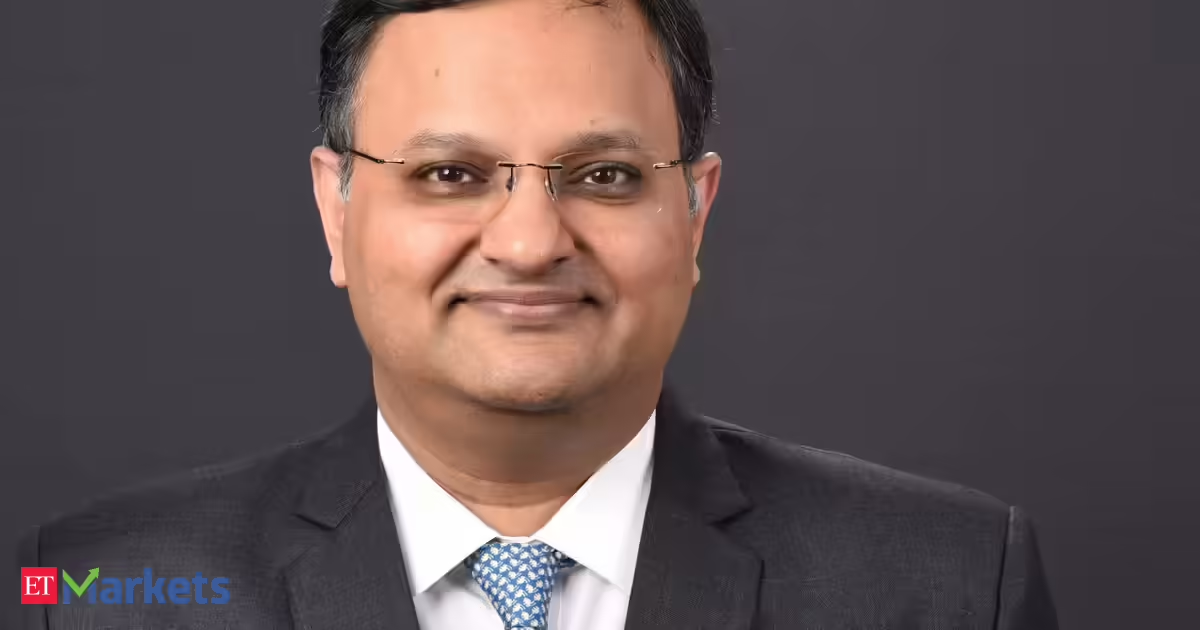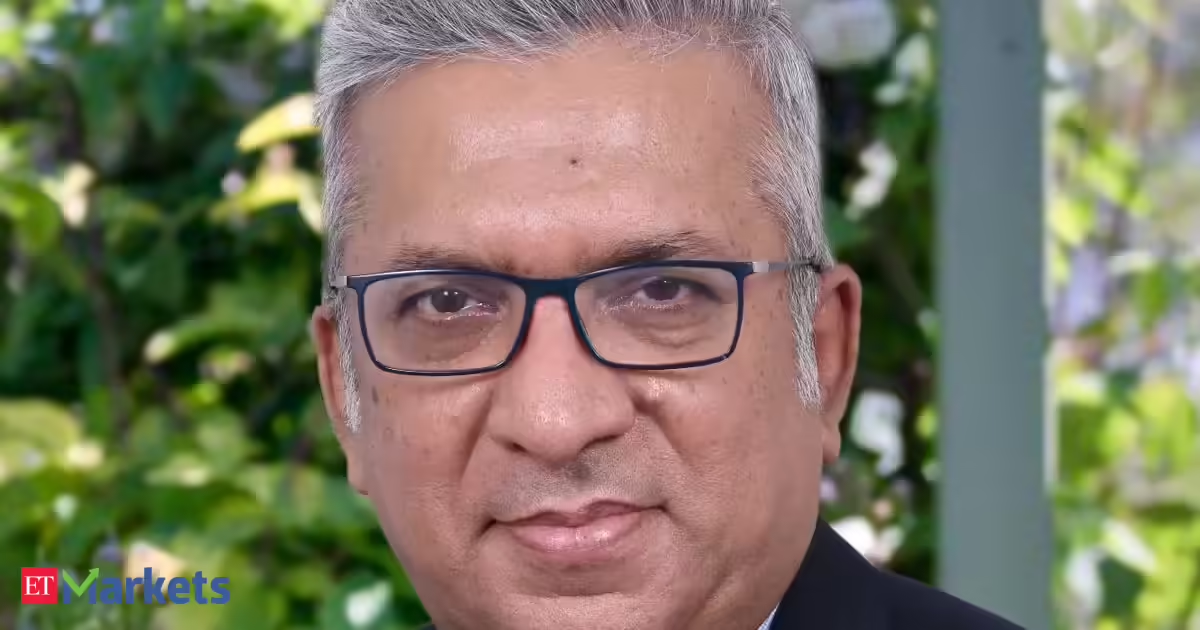
The next six months will be uncomfortable. That's not a prediction, it's a near-consensus view among senior fund managers watching India's market dynamics play out in real time. But discomfort and danger aren't the same thing, and Nitin Raheja, Managing Director and Senior Advisor at Julius Baer Wealth Advisors, is drawing that line very deliberately.The honest assessmentRaheja's advice to clients right now is refreshingly unhedged: brace for near-term choppiness, but don't mistake it for structural breakdown.Valuations, he notes, have held around the March-April lows despite a wall of macro headwinds, and that's actually telling you something. Markets aren't in freefall. They're digesting. The bigger concern is the FPI selling, which shows no signs of letting up, and an earnings outlook that's quietly getting marked down.Most analysts walked into 2024 expecting roughly 15% earnings growth for the Nifty. Raheja thinks that number is optimistic given where things stand now. His revised expectation: somewhere between 12% and 13%, and even that depends on the West Asia situation not deteriorating further. Q1, he says plainly, is going to be a tough quarter.The AI trade India is missingPeer markets in Asia are running hot. Korea, Taiwan, and China are benefitting from concentrated but powerful AI-related rallies. The companies in those markets are seeing dramatic re-ratings based on projected growth, and foreign money is chasing those stories aggressively.You Might Also Like:India, by contrast, is sitting on the other side of that trade. Slower earnings growth, premium valuations, and no clear AI infrastructure play to speak of. The result is what Raheja describes as a time-and-price correction happening simultaneously. India isn't broken, it's just not the room where the party is right now.That could change. If earnings growth starts picking up meaningfully, the foreign money will follow. If the West Asia crisis resolves and oil prices ease, with roughly a three-month lag before supply chain and inventory effects work through, the picture shifts quickly in India's favour. The second half of the year, Raheja believes, should look considerably better.IT: A business model under genuine pressureThe IT sector conversation is where Raheja gets most direct. The traditional manpower-deployment model is being questioned in a way it hasn't been before, and the dynamic is uncomfortable for large-cap IT names specifically.Here's the problem: if AI tools mean a project that once required ten people now requires six, clients will ask why the billing hasn't changed. Revenue deflation is a real risk, not a theoretical one. Profitability may hold up as productivity tools are deployed internally, but revenue growth coming into question means valuation multiples will drift lower over time.You Might Also Like:The opportunity, counterintuitively, may sit in midcap and smaller IT names that have moved faster on agentic AI tools and built genuine domain expertise in specific verticals. The traditional advantage that large IT firms held — deep bench strength and scale — is exactly what's being disrupted. Smaller, more nimble players who've built real AI use cases could find themselves rewarded in ways that weren't possible two years ago.Where the bottom-up opportunities areRaheja is clear that this is not a top-down sector rotation market. The returns this year will be generated stock by stock, not theme by theme.Financial services has pockets of interest and select NBFCs, certain banks. Tier II banks, notably, have been outperforming some of their larger peers, partly because the largest private banks carry heavy FPI ownership. In a market where institutional selling continues, high FPI ownership has quietly become a risk factor in itself.Manufacturing is the other area where Raheja sees structural tailwinds. With services under pressure, manufacturing's role in the broader economy becomes more critical. The rupee's depreciation, painful as it is in other respects, has made Indian exports genuinely competitive, and export-oriented manufacturers are positioned to benefit as that plays out.You Might Also Like:The bottom line from Julius Baer's desk: stay invested, go bottom-up, watch the FPI ownership in whatever you hold, and trust that the second half will look different from the first.
Nitin Raheja on why next 6 months will separate good portfolios from great ones
Senior fund managers anticipate an uncomfortable six months for India's market, with near-term choppiness expected due to FPI selling and a revised, lower earnings outlook. While India misses the current AI rally, opportunities lie in manufacturing and select financial services, with a positive outlook for the second half of the year.
662 words~3 min read