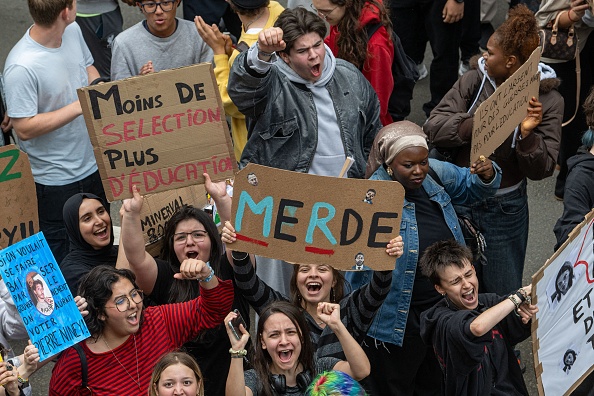
A French government plan to charge students from outside the EU 16 times more than previously have stoked discontent. But how does this compare to the rest of Europe, both inside the EU and out?
Plans to dramatically increase the tuition fees paid by international students in France have sparked protests and highlighted the problems faced in the European country's higher education sector.
The "Choose France for Higher Education" scheme, initially announced last month, aims to remove an opt out system that French universities often used to keep non-EU students' fees the same as their EU counterparts.
As a result, the vast majority of non-EU students heading to France for the 2026/27 academic year must pay annual tuition fees of €2,895 ($3,391) for a bachelor's programme and €3,941 for a master's degree. That's a hike of 16 times the previous prices and the move is expected to net universities an extra €250 million a year.
"The proposal represents an alarming step regarding the commitment to equitable access to higher education. By significantly increasing tuition fees for non-EU students, the French government risks institutionalising a system in which access to education is increasingly determined by nationality and financial capacity," read a statement from the European Students Union and the Federation of General Student Associations in France.