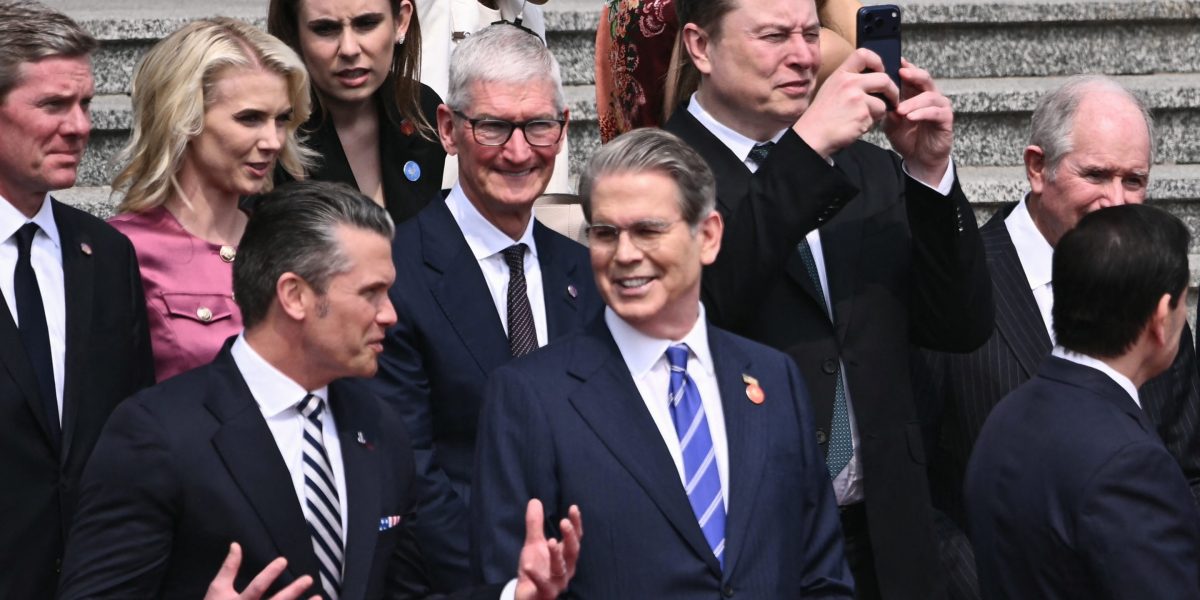
In 1992, a 29-year-old Scott Bessent looked at the Bank of England and saw something no one else did.
The Bank of England couldn’t afford to keep its promises. It had committed to keeping the pound trading within a narrow radius against the German mark, requiring it to spend whatever it took to defend the currency’s value. The trouble was that the British economy was fragile—most mortgages in the UK at the time had variable rates, so raising interest rates would devastate British homeowners. Bessent convinced his boss, George Soros, to bet against the pound. When it crashed a week later, Bessent made $1 billion for the firm and made himself and Soros famous.
The lesson Bessent learned on that “Black Wednesday” is simple: when a central bank is artificially holding its currency at a level the market wouldn’t otherwise support, eventually the market will win. Though the yuan is harder to trade than the pound—China has a number of capital controls—the same logic, more or less, should apply to China today.
Thirty-four years later, Bessent is flying to Beijing, where he will sit across from a central bank, the People’s Bank of China (PBOC), that is, by his private firm’s research, artificially holding the yuan at a level the market wouldn’t otherwise support. But Bessent isn’t working for that firm now; he’s the Treasury Secretary of the United States.