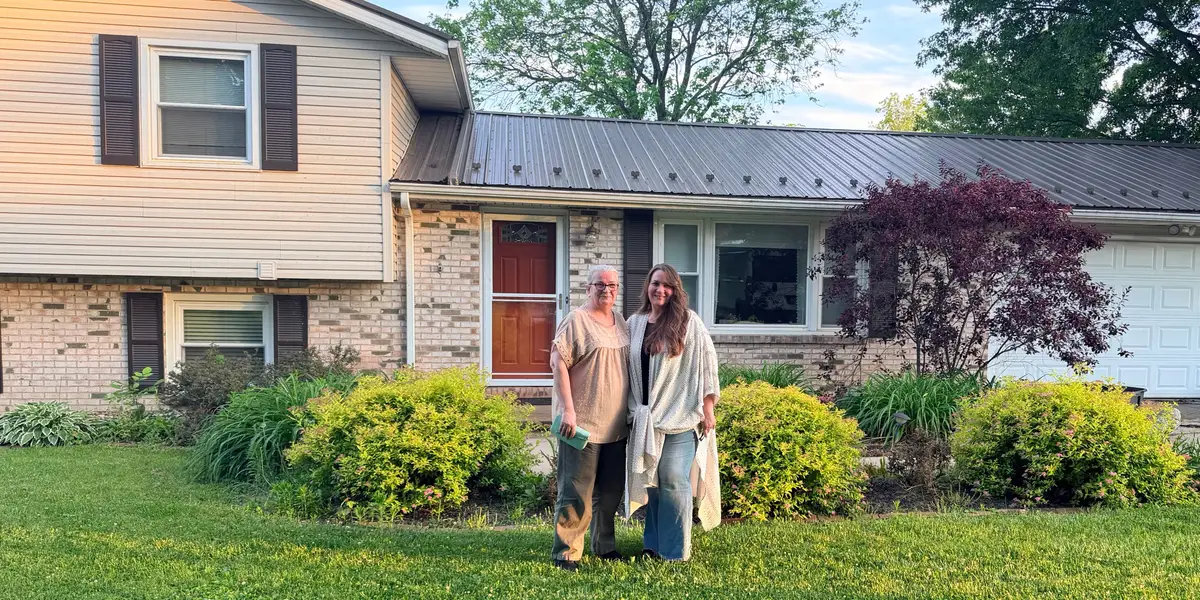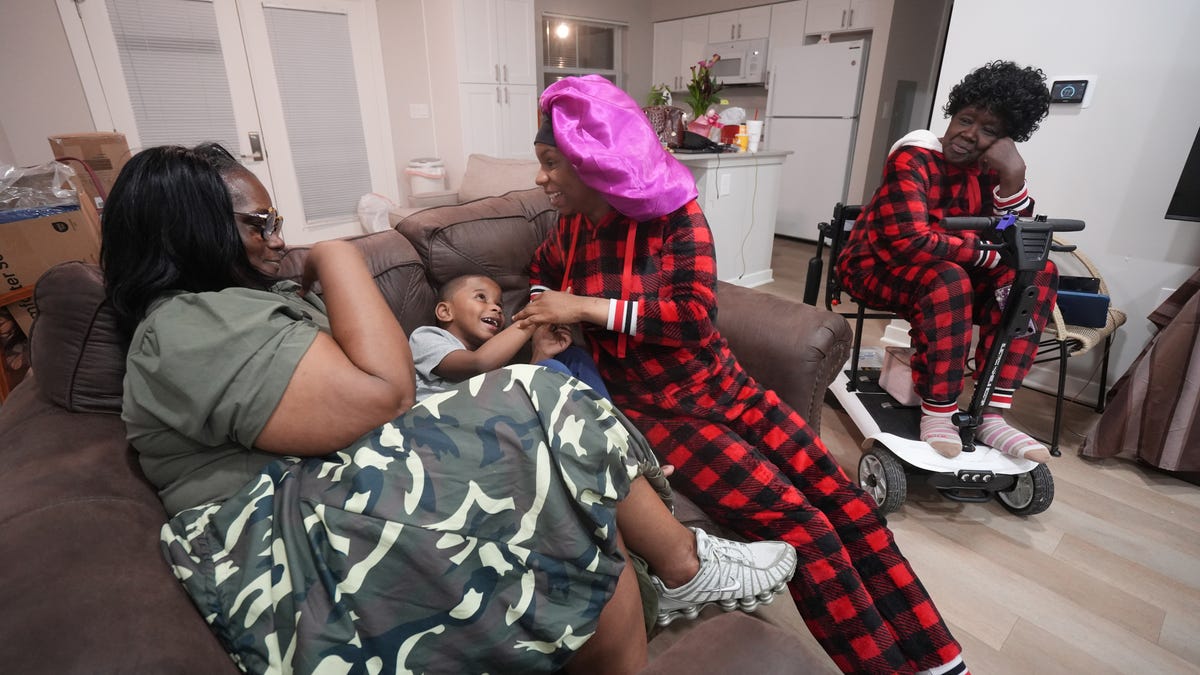
When Denise Chattams lost her Ohio home of 18 years, her family had to split into pairs to stay where they could: a friend’s house and a daughter’s apartment.
The high school teacher, then 55, shared a bedroom with the toddler nephew she’d agreed to raise. Her elementary-aged niece and elderly mother crammed in with a relative. Denise and her mother had agreed to raise the young children to keep them from being adopted by strangers. That decision eventually overwhelmed the family’s finances, leading to foreclosure and bankruptcy.
“I promised my mom I’d make it right,” Denise recalled. To herself, she thought, “I don’t know how.”Two years later, on a whim, Denise applied for Vermillion Place. The hub of 26 duplexes with a shared community center and playground had just opened with the promise to help families like theirs.
The Dayton, Ohio, development is one of a growing number of affordable housing projects designed to meet the unique needs of “kinship families,” which form when someone, often a grandparent or aunt, raises young relatives because parents are unable to do so. At least 23 places nationwide now offer kinship housing. Although promising, the need is much larger, and experts with Generations United, a nonprofit advocacy group, say legal barriers make it challenging to expand the solution to more communities.