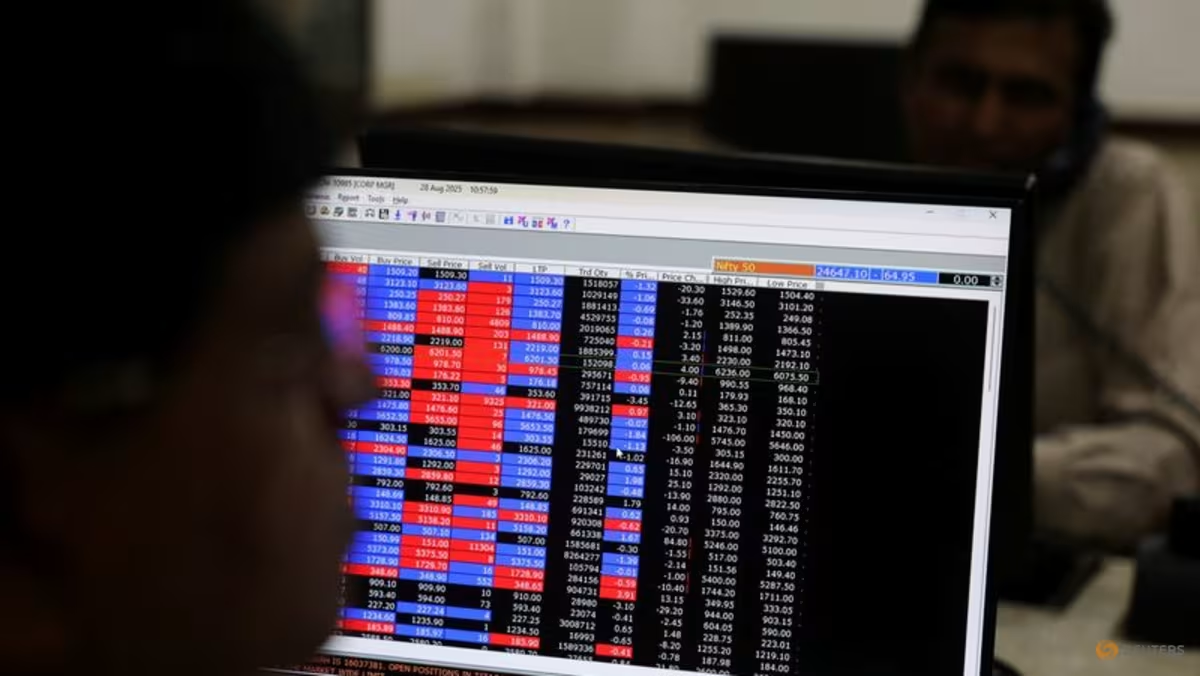
Technology shares remained under pressure on Thursday, extending their losing streak to a fourth consecutive session even as the broader market moved higher, with investors continuing to cut exposure to the sector amid slowing growth expectations, muted client spending and rising concerns around artificial intelligence-led disruption.The Nifty IT index fell over 2% during the session, sharply underperforming the broader Nifty, which gained 0.8%. The continued selloff has now dragged the Nifty IT index more than 40% below its record peak touched in December 2024, highlighting the extent of the sector-wide correction.Among the major laggards, Persistent Systems declined 4%, emerging as the top loser in the pack. Coforge fell nearly 2%, while HCL Tech dropped nearly 2% and Tech Mahindra lost 2%. IT majors TCS and Infosys lost 1% and 2.6%, respectively during the day.Wipro was the only major stock in the segment to remain marginally positive, rising 0.16%.The sustained underperformance reflects growing unease around the near-term earnings outlook for the Indian IT sector, particularly after several large companies issued cautious commentary and softer growth guidance for FY27.Investors have become increasingly concerned that demand visibility in key overseas markets, especially the United States, remains weak as global companies continue to delay discretionary technology spending.Fourth-quarter results were mildly disappointing after relative stability in the preceding few quarters. The combination of minor misses in growth estimates, unexciting TCV, guidance below expectations and the reality of GenAI-led revenue deflation will keep pressure on multiples intact."IT firms are making reasonable headway in AI-driven opportunities, although it will not be enough to compensate for deflationary headwinds. Offsetting growth headwinds amid high competitive intensity will be challenging. Margin headwinds are manageable by further flexing cost levers," said Kotak Equities.Revenue growth missed estimates marginally for most companies, reflecting incremental stress in demand. TCS grew 1.2% qoq (0.8% organic), leading growth among Tier 1, followed by TM at 0.6%. Revenue declined sequentially for Infosys, HCLT and Wipro. Mid-tier outperformed Tier 1 and grew 1.2-3.4% except for Hexaware, which declined on account of client-specific issues.Revenue growth guidance was subdued across most companies, given expectations of a lift from lower tariff-related uncertainties. HCL Tech, Infosys and Wipro issued lower-than-expected guidance. Subdued guidance takes into account multiple headwinds -- AI-driven deflation, pricing pressure due to high competitive intensity, macro headwinds from the Middle East war situation, client-specific issues, etc."Infosys and TCS remain vulnerable to GenAI disruptions given incumbent status. Healthy AI capabilities and domain expertise, strong client relationships and experience of navigating technology cycles will ensure growth similar to industry. Valuations are cheap and attractive," the broker said.Another major overhang for the sector has been the rapid shift toward generative artificial intelligence.Investors are increasingly worried that AI-driven automation could reduce the need for large human-intensive technology services teams, potentially affecting billing growth and long-term hiring demand for outsourcing companies.They fear that as AI tools become more efficient, clients may demand lower pricing for services that previously required larger engineering and support teams. That has raised questions around future margin expansion and revenue growth sustainability for traditional IT services businesses.At the same time, global technology spending patterns are also evolving. Companies are increasingly diverting budgets toward AI infrastructure, chips, data centres and automation platforms instead of conventional enterprise software and outsourcing-led spending.This shift has added to concerns that Indian IT firms could face a prolonged adjustment period as the global technology landscape changes rapidly.Escalating geopolitical tensions in West Asia, volatile commodity prices and continued uncertainty around global monetary policy have pushed investors toward a more defensive stance. Foreign institutional investors have been reducing exposure across several emerging market sectors, including information technology.Also read: 10 stocks to buy: Inside Morgan Stanley's India model portfolio and the themes it is betting onThe combination of weaker earnings visibility, AI-related uncertainty and global risk aversion has left IT stocks among the weakest-performing pockets of the market despite resilience in broader domestic equities.(Disclaimer: Recommendations, suggestions, views and opinions given by the experts are their own. These do not represent the views of The Economic Times)
Infosys, TCS and other IT stocks slide for third straight session as AI worries mount
Indian IT stocks extended their decline for a fourth straight session as investors trimmed exposure amid weak growth visibility, muted client spending and rising concerns over AI-driven disruption. The Nifty IT index fell sharply, with major names including Infosys and Tata Consultancy Services sliding on cautious guidance and deflationary headwinds.
667 words~3 min read