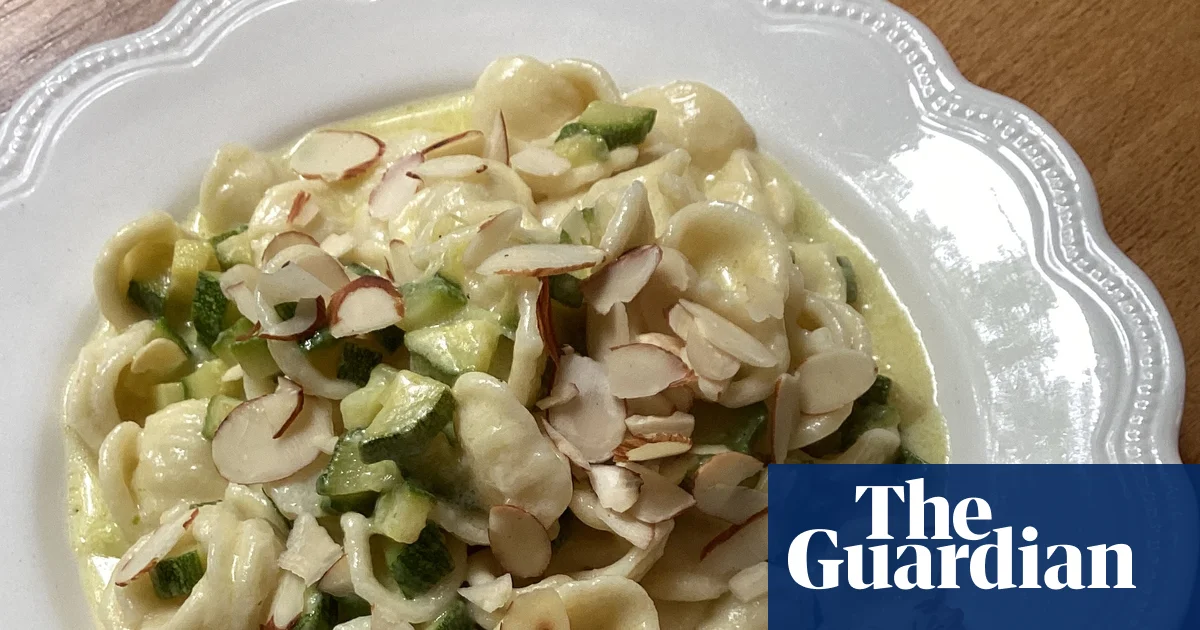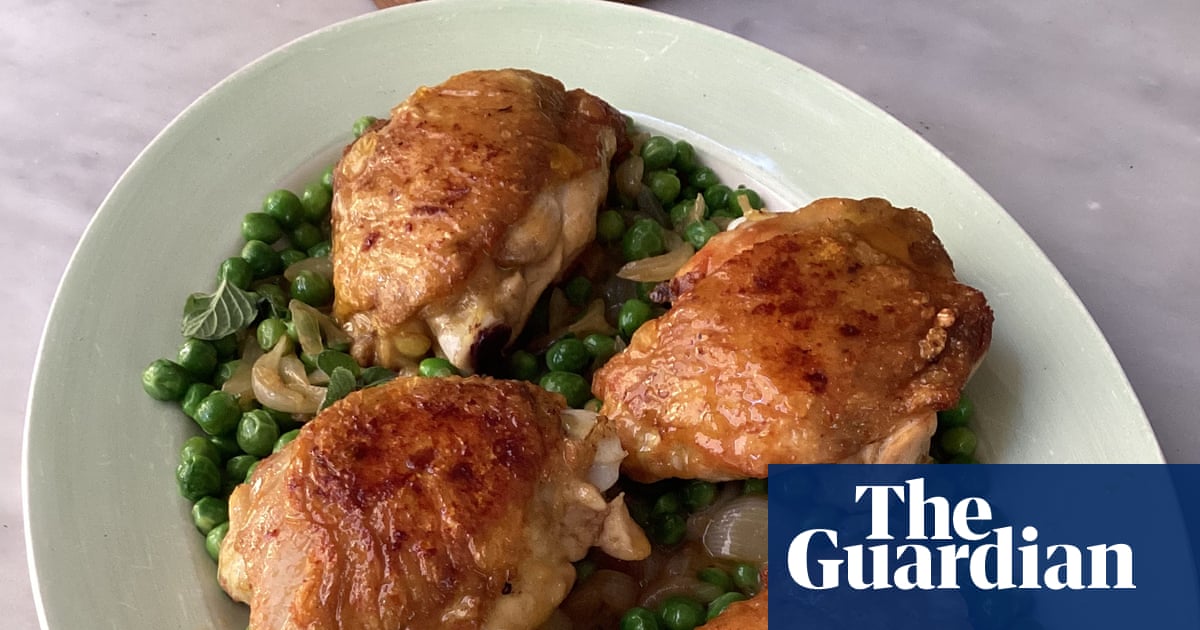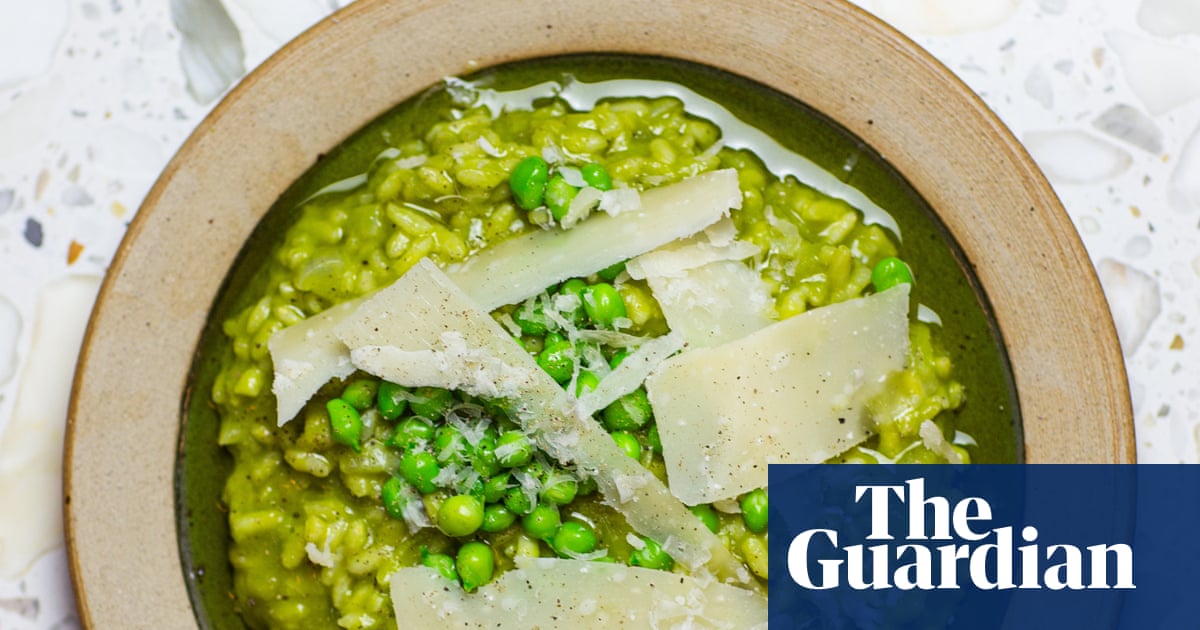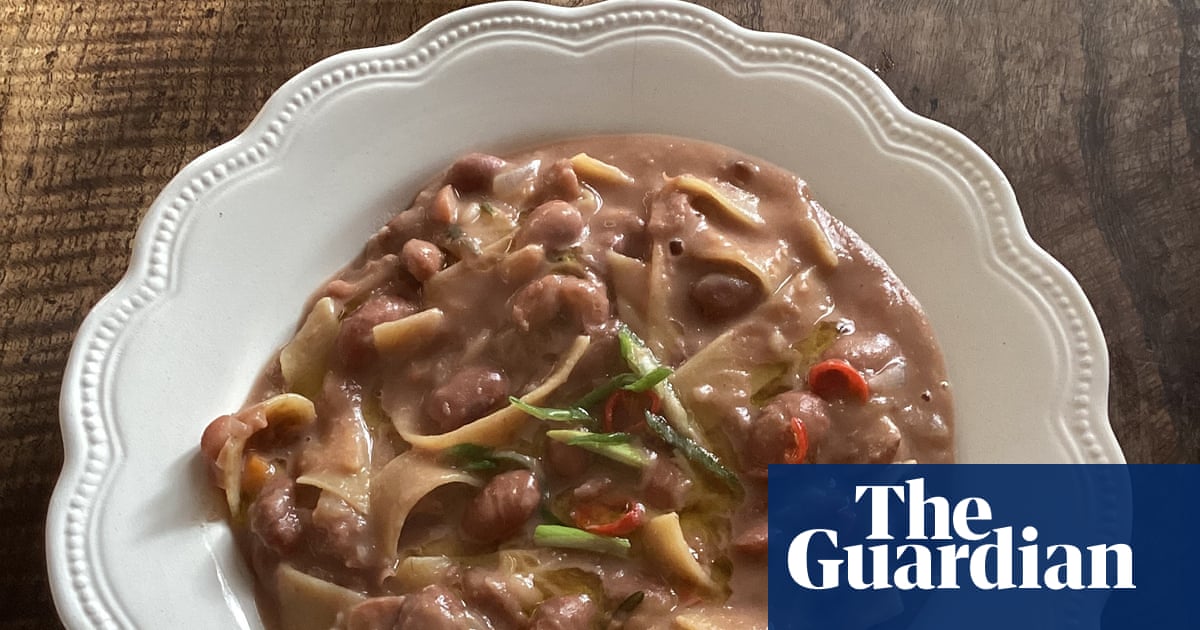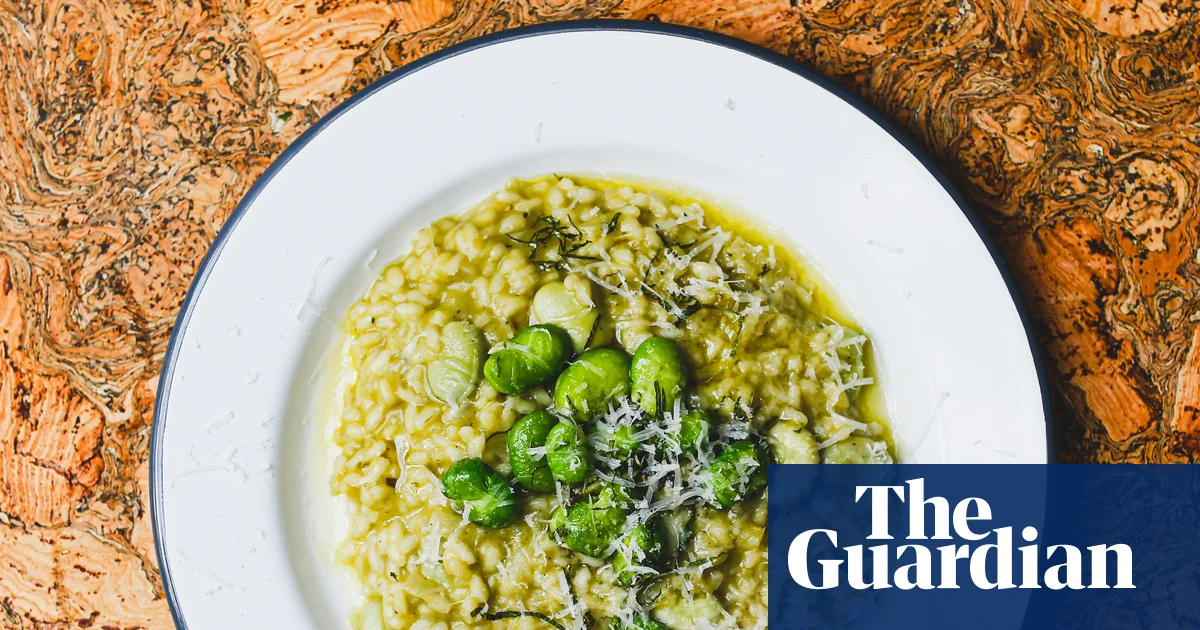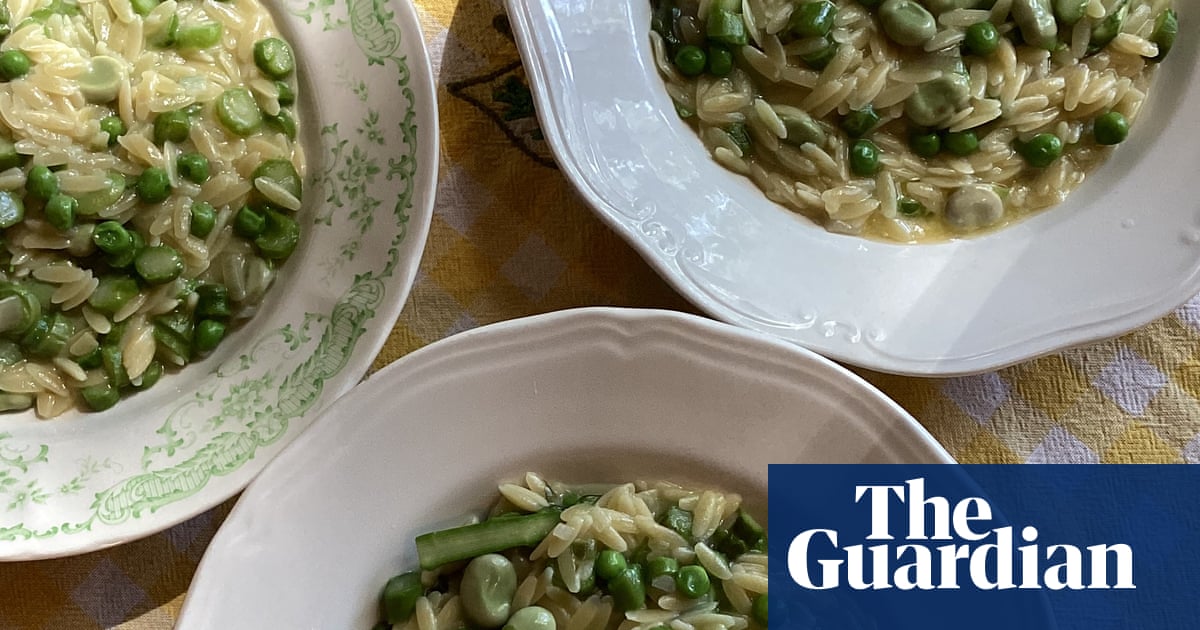
A deliciously rustic, risotto-style pasta using seasonal spring veg and finished with butter, parmesan and lemon zest
I
am in more or less the same position as with last week’s recipe, only this time the pods contain broad beans, which are slightly easier to read than peas. This is because the pods are longer and become softer and floppier as they age, so you can see and feel if the beans inside are large and hard, which, like peas, is because their sugar has turned to starch, and which makes them more suited to longer cooking. The other thing about broad beans is their opaque jackets, which thicken as the beans age and get more bitter, but they can be removed by picking them off with a nail, or by dunking the beans in hot water for a minute, then in cold water and squeezing the jackets off and across the worktop. Even older, larger beans can be enjoyed raw or lightly cooked; they are brighter, too, like green tiddlywinks.
As well as dealing with pods, I have been reading about broad beans in recipe books and stories, looking out in particular for references to how they are consumed in spring, which in Italy is often alongside young sheep’s cheese – a great combination, as is broad beans and lancashire cheese. It turns out, though, that the mentions I have enjoyed most are to be found in England, and in George Eliot’s Adam Bede. One instance is when Adam, having walked past the leafy walls of scarlet beans, late peas and bushy filberts, strides over a “superfluity of broad beans” in Mrs Poyser’s garden; another when he eats cold broad beans out of a large dish with his pocket knife, and finds a flavour that he would not exchange for the finest pineapple.