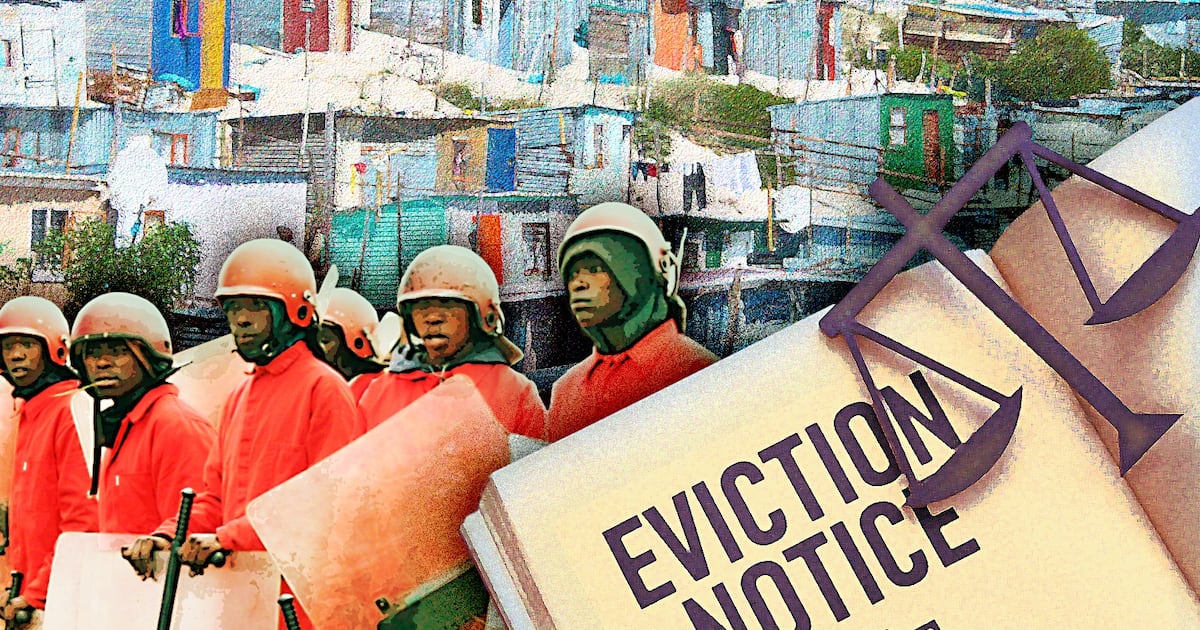
Time and again the conviction surfaces from various quarters that certain homes can and should be demolished without adherence to the provisions carefully crafted in the transition from apartheid to democracy.
The provisions in section 26 of the constitution of 1996, elaborated in the Prevention of Illegal Eviction & Unlawful Occupation of Land (Pie) Act of 1998, are mindful that never again should a bulldozer arrive, unannounced, and an inhabitant be left in the street.
There are three legal offences under the Pie Act. One is the soliciting of a fee or payment for organising or permitting occupation of land without the owner’s consent. Another is eviction without a court order, and the third is interference with those carrying out their duties in accordance with the act, including mediation.
According to the Pie Act, evictions must follow a fair process that includes a court order and time for legal representation. If occupation has exceeded six months, an order for eviction can be granted only after considering whether “suitable alternative accommodation or land" is available.
From 2004 to 2009, then housing minister Lindiwe Sisulu drove an ambitious target to eradicate informal settlements by 2014, the end of the second post-apartheid decade. Premiers competed in undertakings to reach this target sooner, if not in time for the hosting of the Fifa World Cup in 2010.