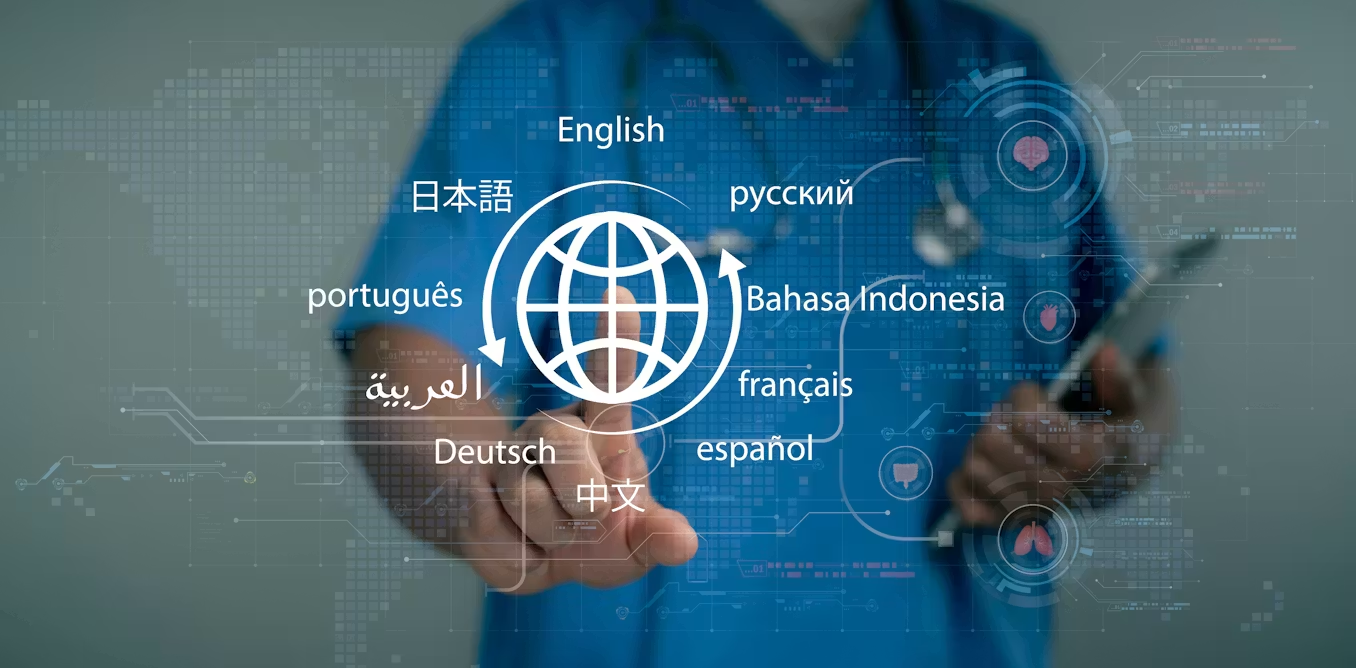
From live speech translation in video calls to auto-dubbing on TikTok, the technology to dissolve language barriers has arrived. Real-time translation powered by artificial intelligence (AI) is now embedded in everyday life.
Tools from OpenAI, Meta, Google and many others now offer near-instant translation across dozens of languages, and they keep improving.
All this raises a vital question. If machines can do this faster and more accurately than humans, is investing years in learning another language still worth it?
The logic is appealing. Humans have always offloaded cognitive work onto tools. Writing reduced demands on our memory. Calculators removed the burden of mental arithmetic. AI sits within this long tradition. Used well, it can support learning and expand access in ways that matter enormously.
But there’s a difference between using a tool to extend your capabilities and using it to avoid doing something altogether. That distinction becomes important when you are not just replacing a skill, but a form of cognitive and cultural engagement.