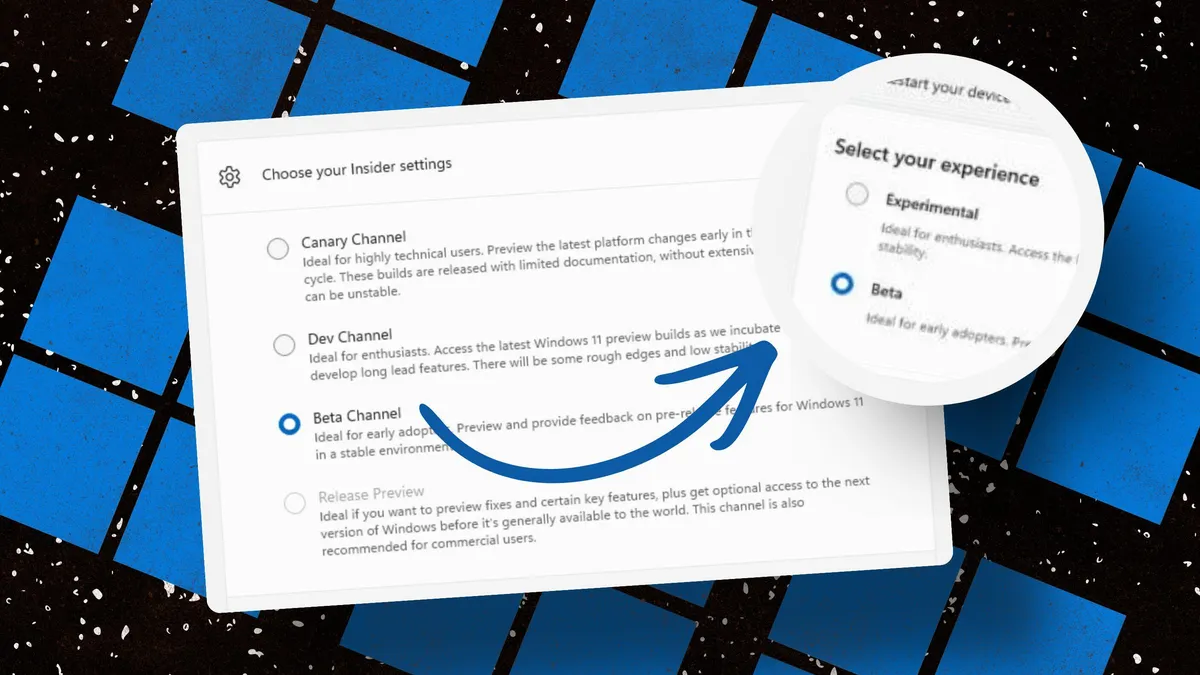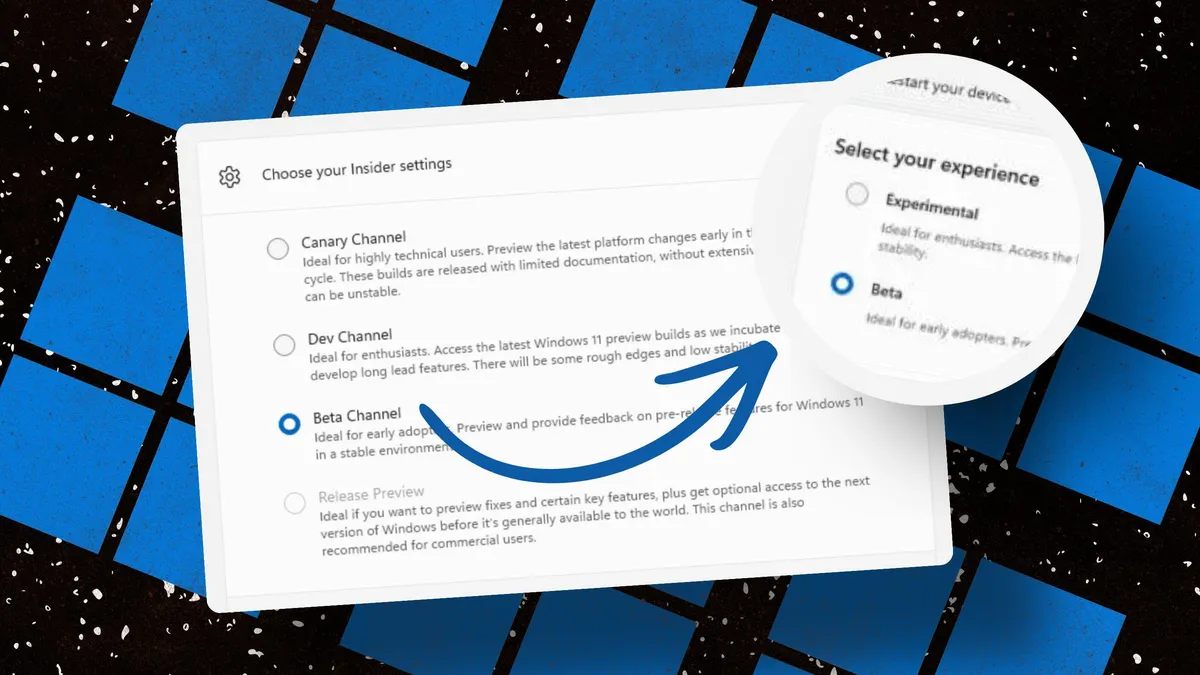
Ed Bott / Elyse Betters Picaro / ZDNETFollow ZDNET: Add us as a preferred source on Google.ZDNET's key takeawaysMicrosoft is making the Insider Program less complicated.Beta channel will be a more reliable preview of the next retail release.Other changes will allow testers to quickly enable/disable new features.In March, Microsoft finally took official notice of its customers' many complaints about Windows 11. Pavan Davaluri, the executive vice president who runs the Windows and Devices group, promised sweeping changes to Windows 11. Earlier this month, the company announced the first of those changes in a post authored by Alec Oot, who's been the principal group product manager for the Windows Insider Program since January 2024. Those changes are designed to streamline the Insider program, which has lost sight of its original goals in the past few years. (For a brief history of the program and what had gone wrong, see my post from last November: "The Windows Insider Program is a confusing mess.")Also: 5 ways your Windows updates are about to get a lot less painfulThe first release incorporating those changes has now begun rolling out, with an official announcement on the Windows Insider blog: "We're moving to Experimental and Beta!" Build 26300.8289, released to the Dev channel on April 24, offers testers a pathway to the new Insider experience. I've installed the new build on one of my test PCs. If you're currently participating in the Windows Insider Program, these are meaningful improvements. Here's what you can expect and what you need to do to enable the new features.Minimizing the chaos of Controlled Feature RolloutLast month, I urged Microsoft to stop using its Controlled Feature Rollout technology, especially for builds in the Beta channel. Apparently, someone in Redmond was listening.One of the most common questions we receive from Insiders is "why don't I have access to a feature that's been announced in a WIP blog?" This is usually due to a technology called Controlled Feature Rollout (CFR), a gradual process of rolling out new features to ensure quality before releasing to wider audiences. These gradual rollouts are an industry standard that help us measure impact before releasing more broadly. But they also make your experience unpredictable and often mean you don't get the new features that motivated many of you to join the Insider program to begin with.For those in the Dev channel, there's a new capability that lets you enable or disable specific features via the Feature Flags page in the Windows Insider Program settings. Here's what it looks like on my test system: This is the first batch of feature flags available for testers in the Experimental channel Screenshot by Ed Bott/ZDNETWhen I first installed that new build, I assumed that the new features discussed in the release notes had not yet been incorporated. But they were there after all, and I was able to turn them on using the switches on the Feature Flags page. One of those options changed the Windows Update behavior, giving me more control over updates. Another one changed to the new Windows Insider experience. (More on that in a minute.)Insider builds in the Beta channel will no longer suffer from this gradual rollout of features, so they shouldn't see this page, nor will they need to use it.Not every feature will be available from this list, but the intent is to add those flags for "visible new features" that are announced as part of a new Insider build. Simplifying the Insider channel lineup Throughout the Windows 11 era, signing up for the Insider program has required choosing one of four channels using a dialog in Windows Settings. Here's what those options looked like earlier this month on one of my test PCs. The current Insider channel lineup is confusing, to say the least. Screenshot by Ed Bott/ZDNETWhich channel should you choose? As the company admitted in that earlier post, "the channel structure became confusing. It was not clear what channel to pick based on what you wanted to get out of the program." After enabling the feature flag for the new Windows Insider experience and restarting, I noticed that the lineup had changed to two options instead of four: This simplified lineup is easier to follow. Beta is the upcoming retail release, Experimental is for the adventurous. Screenshot by Ed Bott/ZDNETThe new lineup consists of two primary channels: Experimental and Beta. The Release Preview channel will remain available, primarily for corporate customers seeking early access to production builds a few days before their official release. If I had been joining the Insider program for the first time from a public release, that option would have been available under the Advanced Options section.Here's Microsoft's official description of what's in each channel now, with the company's emphasis retained: Experimental replaces what were previously the Dev and Canary channels. The name is deliberate: you're getting early access to features under active development, with the understanding that what you see may change, get delayed, or not ship at all. We've heard your feedback that you want to access and contribute to features early in development and this is the channel to do that.Beta is a refresh of the previous Beta Channel and previews what we plan to ship in the coming weeks. The big change: we're ending gradual feature rollouts in Beta. When we announce a feature in a Beta update and you take that update, you will have that feature. You may occasionally see small differences within a feature as we test variations, but the feature itself will always be on your device.These changes will also apply to the Windows Insider Program for Business. Offering a choice of platforms For those testers who want to tinker with the bleeding edge of Windows development, a few additional options will be available in the Experimental channel. These advanced options will allow you to choose a platform aligned with a currently supported retail build. Currently, that's Windows 11 version 25H2 or 26H1, with the latter being exclusively for new hardware arriving soon with Snapdragon X2 Arm chips. Also: Microsoft account vs. local account: How to chooseThere will also be a Future Platforms option, which represents a preview build not aligned with a retail version of Windows. According to the earlier announcement, this option is "aimed at users who are looking to be at the forefront of platform development. Insiders looking for the earliest access to features should remain on a version aligned to a retail build." I wasn't able to access this page on the current build, which isn't surprising. Microsoft says it's still rolling out the changes. The Future Platforms option is the equivalent of the current Canary channel Screenshot courtesy of MicrosoftThe latest announcement has only a loose timetable: "We will continue this rollout over the next few weeks, expanding to Canary Channel 28000 series to Experimental (26H1), Canary Channel 29500 series to Experimental (Future Platforms) and Beta Channel to the new Beta experience. We will announce when we begin starting the rollout for these channels." Making it easier to change channels The final change announced earlier is one I didn't see coming. Historically, leaving the Windows Insider Program or downgrading a channel (from Dev to Beta, for example) has required a full wipe and reinstall. That's a major hurdle and a big impediment to anyone who doesn't have the time or technical skills to do that sort of migration. Also: Why Microsoft is forcing Windows 11 25H2 update on all eligible PCsBeginning with the new channel lineup, it should be easier to change channels or leave the program without jumping through a bunch of hoops. To make this a more streamlined and consistent experience, we're making some behind the scenes changes to enable Insider builds to use an in-place upgrade (IPU) to hop between versions. This will allow in most cases Insiders to move between Experimental, Beta, and Release Preview on the same Windows core version, or leave the program without a clean install. An IPU takes a bit more time than your normal update but migrates your apps, settings, and data in-place. If you've chosen one of the future platforms from the Experimental channel, those options don't apply. To move back to a supported retail platform, you'll need to do a clean install. Also: Apple, Google, and Microsoft join Anthropic's Project Glasswing to defend world's most critical softwareThe upshot of all these changes should make things a lot clearer for anyone trying to figure out what's coming in the next big feature update. Beta channel updates, for example, should offer a more accurate preview of what's coming in the next big feature update, so over the next month or two, we should get a better picture of what's coming in the 26H2 release, due in October. Oh, and there's one more change to watch out for. The release notes for each build are moving to the Windows Insider Program Documentation Hub. The channel release notes for all the new builds are here:Beta (Including Beta Channel): Build 26220.8283Experimental (Including Dev Channel): Build 26300.8289 Experimental (26H1) – Including Canary 28000 series: Build 28020.1873Experimental (Future Platforms) – Including Canary 29500 series: Build 29576.1000I've been avoiding running Insider builds on anything but virtual machines for a long time. With this set of changes, I'm tempted to switch to the Beta channel again.
Windows changes are coming: Here's how to get a sneak peek at what's next
Microsoft is finally making its Windows Insider Program less complicated. Here's everything that's being fixed - and what you have to do to see the changes for yourself.
1,553 words~7 min read