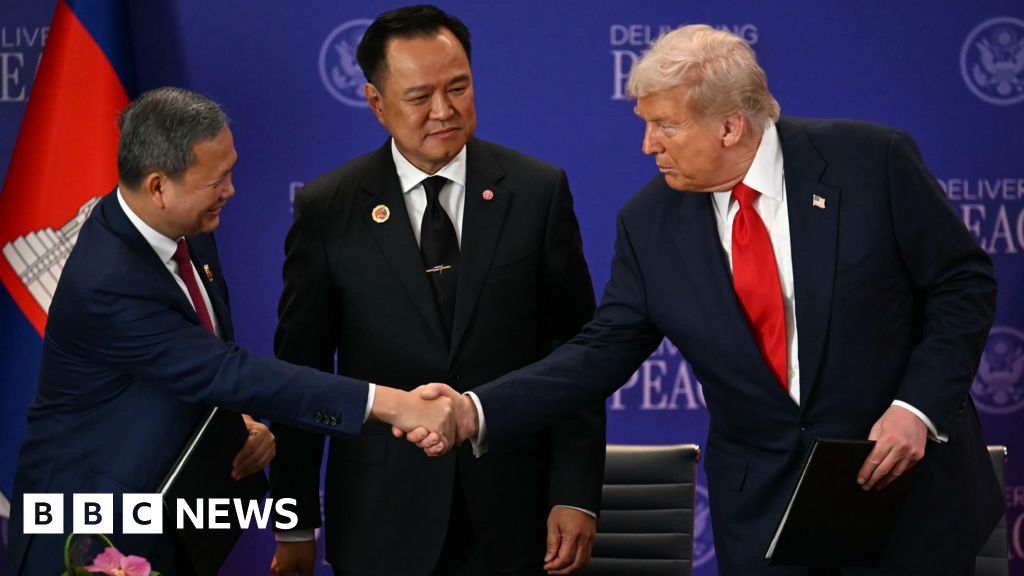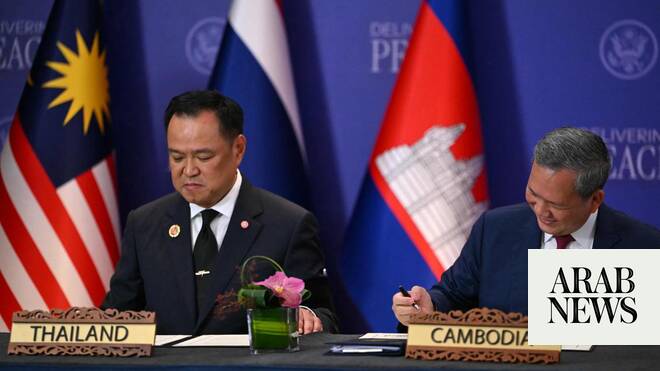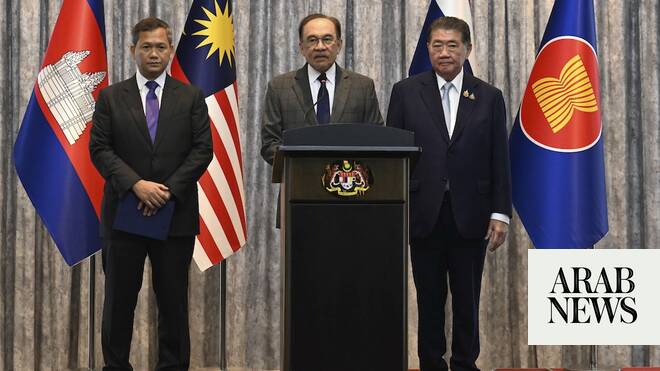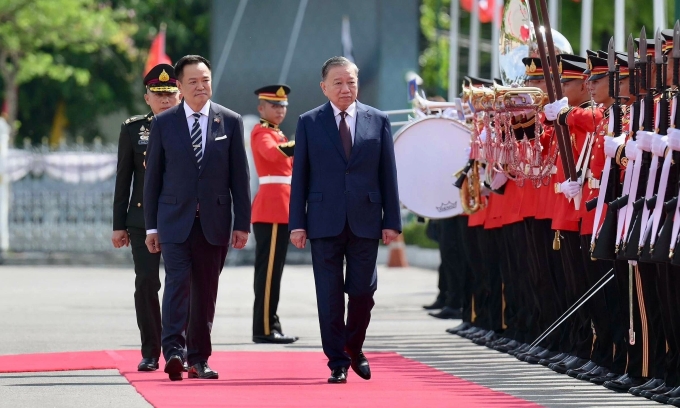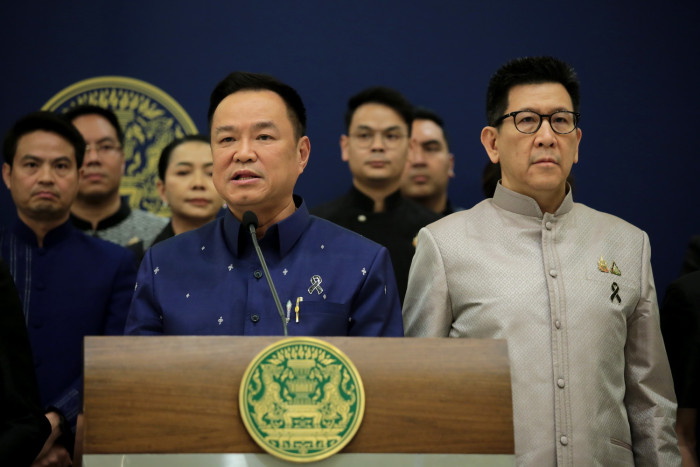
Anutin Charnvirakul (4th from left)
Thailand's decision to cancel the memorandum of understanding on overlapping maritime claims with Cambodia, widely known as MoU 44, marks a major shift in how both countries will manage maritime tensions in the Gulf of Thailand 25 years after it was signed in 2001.The decision of the Anutin Charnvirakul administration to adopt the United Nations Convention on the Law of the Sea (UNCLOS) in place of the scrapped MoU may hint at further unpredictability ahead as bilateral talks make way for internationally endorsed recommendations that are void of any legal bindings.
Why MoU 44 became controversial
MoU 44 was originally designed as a framework for negotiating maritime boundaries and establishing a Joint Development Area (JDA) between Thailand and Cambodia.
In 2001, the Exclusive Economic Zone (EEZ), a framework Thailand set up in the 1980s, suggested the 26,000-square-kilometre Overlapping Claims Area (OCA) in the Gulf of Thailand could contain commercially valuable oil and gas reserves.