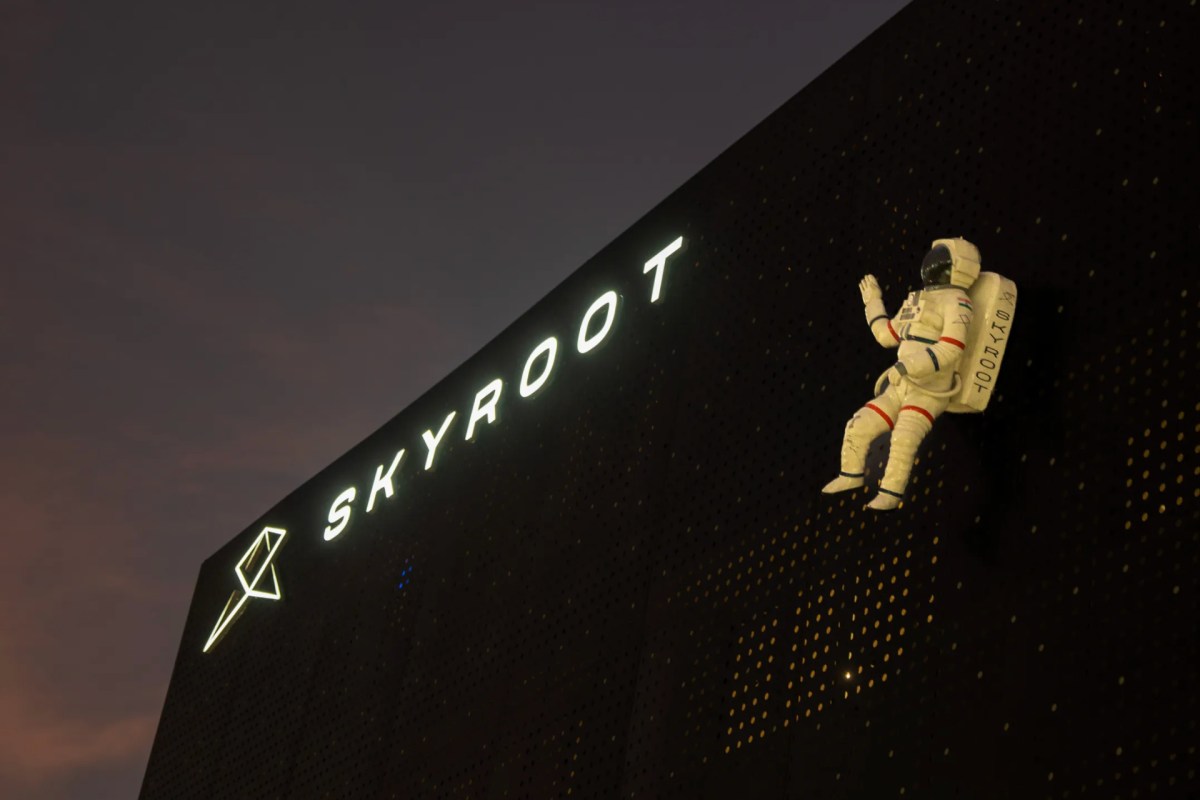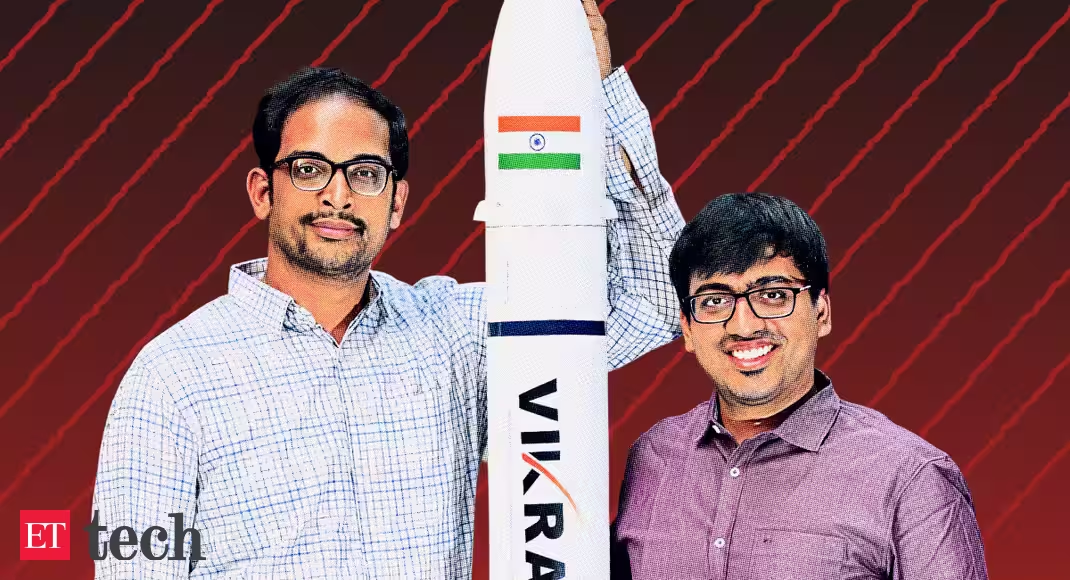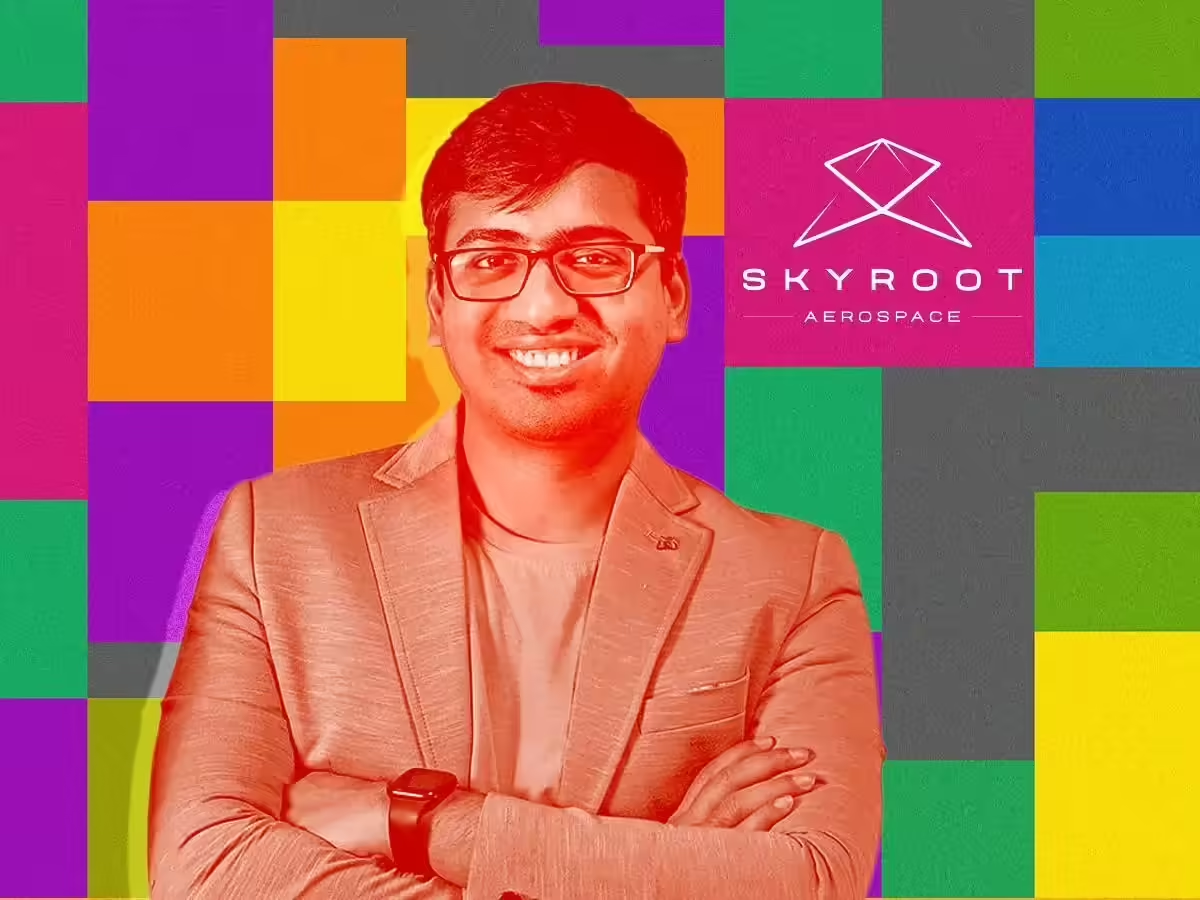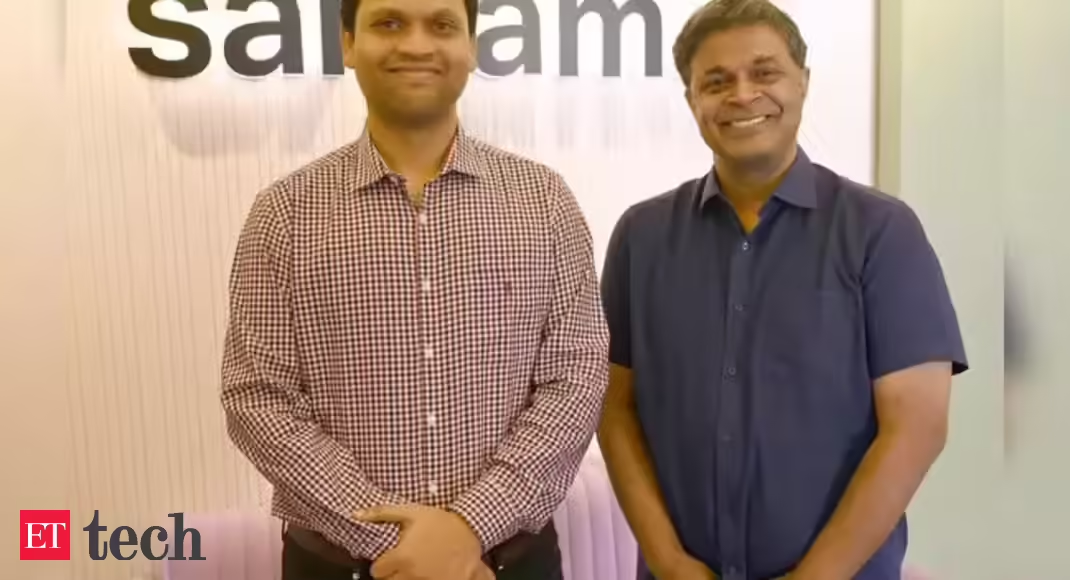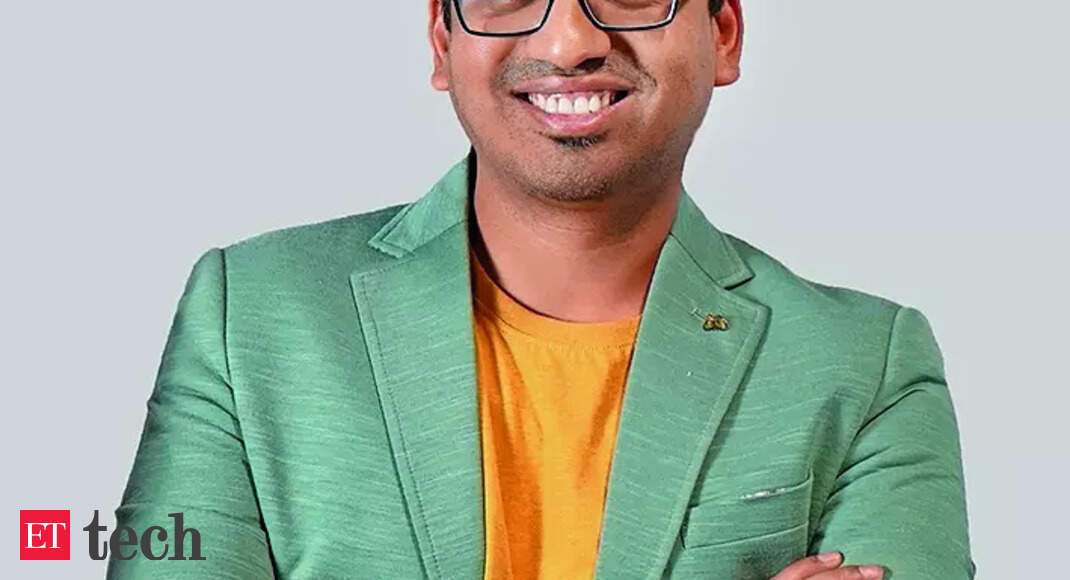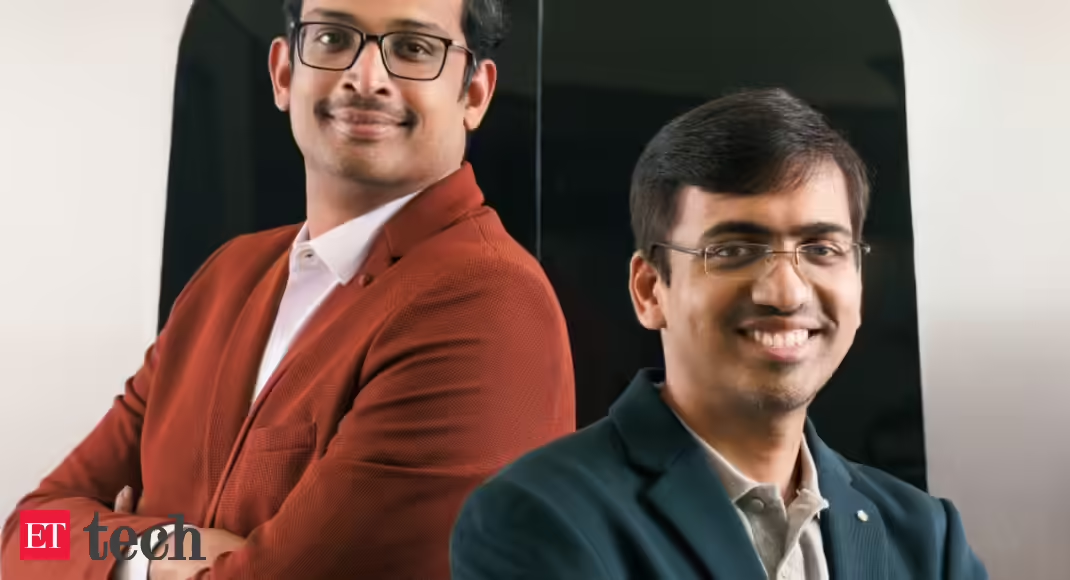
Skyroot Aerospace became India’s first spacetech unicorn after its latest funding round. This and more in today’s ETtech Top 5.Also in the letter:■ Walmart CEO in India■ Cars24's FY26 report■ Inside OpenAI after Altman's ouster Ram Shriram's Sherpalo Ventures to lead $60 million funding round in Skyroot; valuation hits $1.1 billion (L-R) Naga Bharath Daka and Pawan Kumar Chandana, founders, Skyroot Aerospace Skyroot Aerospace has raised about $60 million in a round led by Ram Shriram's Sherpalo Ventures, valuing the Hyderabad-based space startup at $1.1 billion and making it India’s first spacetech unicorn.Deal details:Existing backers including GIC, BlackRock, the Greenko founders, Arkam Ventures, and others are also participating. Temasek is not part of this round. The capital will go towards launch vehicle development, higher launch frequency, infrastructure, hiring, and broader technology build-out. Tell me more: The fresh funding comes as Skyroot prepares Vikram-I, its first orbital rocket, after the earlier Vikram-S suborbital mission made it the first private Indian company to reach space, ET reported.Shriram had also led Skyroot's earlier series B fundraise in 2022, and this new round doubles its valuation in roughly 2.5 years. The addition of BlackRock and other investors strengthens the company’s cap table as it moves from demonstration flights to commercial orbital launches.Driving revenue: In an interaction with ET, CEO Pawan Kumar Chandana said the company had to “break the glass ceiling” while raising capital in a sector where revenues take years to materialise.Quote, unquote: “When a product and the revenue streams are few years away, it’s a very unique kind of fundraising one has to go through and it’s been very, very difficult. But once our Vikram-I launch happened (sub-orbital), there was a lot of interest as there was proven capability,” Chandana said.On Vikram-II: “Vikram-II is already under development and will share the same first-stage architecture as Vikram-I, which is a major advantage since that portion of the rocket would already be proven through this mission.”The growing pay gap: AI skills drive 60% higher salaries in tech AI-skilled professionals in India are now earning 30% to 60% more than peers in other tech roles, and that gap is likely to widen over the next two to three years, according to recruitment agencies.Data decoded: The premium is showing up across technology, GCCs, and BFSI as companies tie pay more closely to AI capability and productivity.A senior AI or machine learning role in a GCC pays Rs 58-60 lakh a year and is growing at 18% annually, against Rs 12 lakh for legacy IT support. In banking, AI roles in areas such as fraud detection pay Rs 18-50 lakh, while a comparable non-AI role fetches Rs 8-15 lakh.Inside companies: Employers are now moving to skills-based or AI-influenced pay frameworks, and six in 10 are reportedly linking AI skills directly to compensation. Those who actively use AI tools are also seeing appraisal hikes that are 1.5 to 1.7 times the company average.What’s next: The biggest pressure point is for roles with limited AI exposure, such as basic QA, routine coding, and Level 1 support, where pay growth is slowing and jobs are shrinking. “Fresher hiring across the industry is less than half of what it used to be, and in the next couple of years, it could fall to about 25% of earlier levels,” said Pareekh Jain, CEO of EIIRTrend, an analytcs firm. Layoffs continue: Tech companies have axed more than 93,000 jobs across 106 firms in the first five months of 2026. Freshworks and Coinbase are among the latest to announce cuts. The 2026 tally is already approaching the 124,201 layoffs recorded in all of 2025, according to Layoffs.fyi.Walmart CEO John Furner addresses Flipkart townhall in Bengaluru; says bullish on quick commerce John Furner, CEO, WalmartWalmart's president and CEO John Furner said the US-based retailer was bullish on quick commerce in the country, in a townhall at the Flipkart office in Bengaluru earlier this week. In India on a three-day visit, the new CEO said quick commerce is gaining global interest, as Walmart's business picks up pace in China and the US. Verbatim: Speaking at the Walmart Growth Summit today, the second edition of its flagship event for global suppliers, MSMEs, and sellers on Flipkart’s marketplace, Furner said the company has already sourced over $40 billion in goods from India. “(We) are focussed on strengthening entrepreneur and supplier capabilities, raising compliance and quality standards, and helping scale manufacturing so more Indian businesses are ready to export,” Furner said. He formally took over as Walmart CEO on February 1, succeeding Doug McMillon.What's happening: Furner, who is in New Delhi on Thursday, is expected to meet Prime Minister Narendra Modi following the Growth Summit. Apart from Flipkart, he also spent time at digital payments company PhonePe in Bengaluru earlier this week. His visit comes as both Flipkart and PhonePe plan their public listings in India. Cars24 narrows FY26 operating losses as revenue grows 27%: CEO Vikram Chopra Vikram Chopra, CEO, Cars24Used-car sales platform Cars24 reported strong revenue growth and improved profitability in FY26, despite recent leadership changes at the company.Financials:Revenue: Rose 27% year-on-year (YoY) to Rs 1,411 crore in FY26.Ebitda loss: Narrowed 36% to Rs 357 crore from Rs 555 crore a year earlier.Expenses: Group operating expenses remained largely flat during the year ended March 2026.Profitability: Chopra, who’s also the founder, said the company turned Ebitda positive in January and expects to sustain the same.Exec speak: Cars24's India CFO Shivanshu Makkar told us that increased use of artificial intelligence tools helped cut marketing costs by 40-45%, tech costs by 20-25%, and car refurbishment-related vendor expenses by around 15%.He added that revenue per employee rose 50% in the second half of FY26, with AI contributing nearly 300 basis points to Ebitda improvement.Zoom out: Last month, Cars24 founders Mehul Agrawal and Gajendra Jangid stepped down from active executive roles.'They don’t care if everyone quits': Texts show chaos inside OpenAI during Sam Altman ouster Chats between Sam Altman and Mira Murati, released in Musk v. Altman, reveal the frantic discussions inside OpenAI after Altman’s sudden removal in November 2023.Board pushback: Soon after the firing, Altman can be seen texting Murati whether talks with the board were moving positively. Her reply was blunt: “directionally very bad.” The chats show Altman trying to negotiate a return, but at the same time offering to “just walk away” if it helped resolve the crisis.Replacement plans: The board was already moving to appoint Emmett Shear as interim CEO. Altman also floated the possibility of Microsoft acquiring OpenAI, which did not gain traction.Also Read: In OpenAI trial, former technology chief says Sam Altman sowed 'chaos,' distrust among top executives
Skyroot, a newborn unicorn; AI pay gap grows
Skyroot Aerospace became Indias first spacetech unicorn after its latest funding round. This and more in todays ETtech Top 5.
1,102 words~5 min read