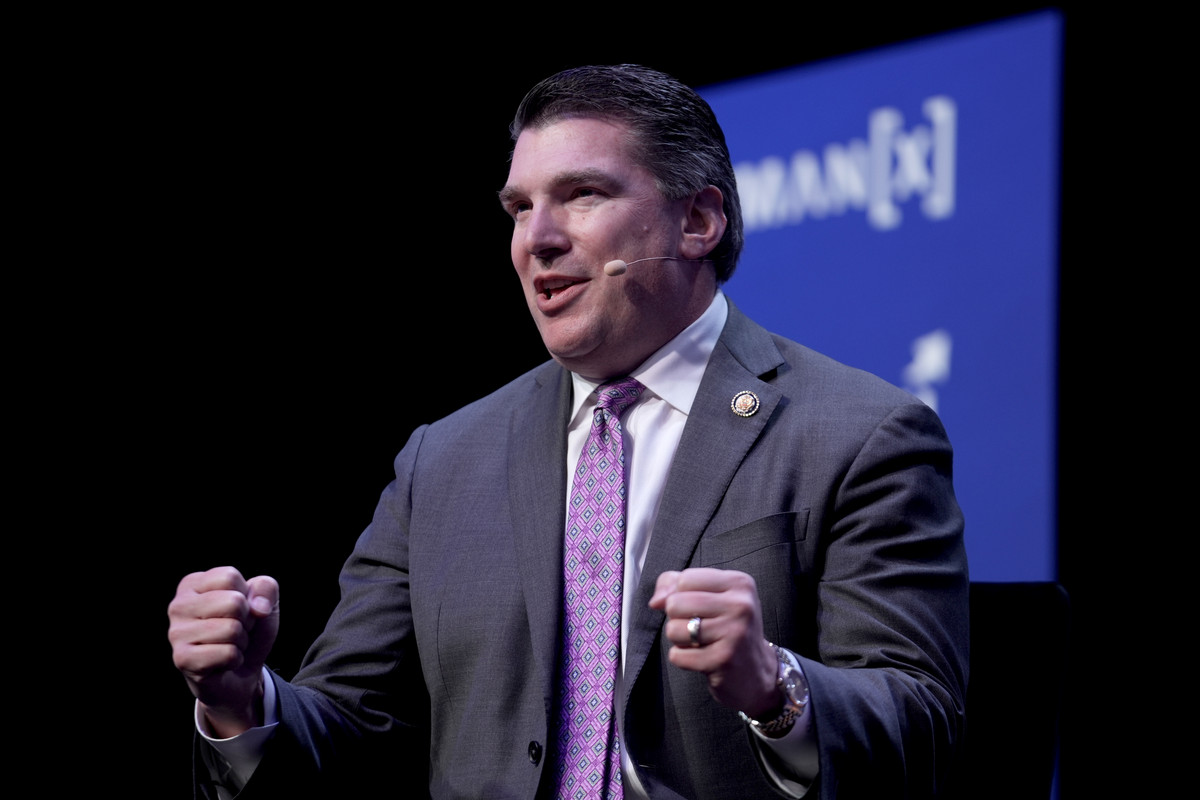
Congress is urging the White House to respond to a growing AI cybersecurity threat: advanced models that can uncover software vulnerabilities faster than companies and governments can patch them.Why it matters: A bipartisan letter, shared first with Axios, marks an escalation in pressure on the Trump administration to confront the risks posed by frontier AI cyber models like Anthropic's Mythos.The letter comes as the White House weighs executive action on AI cybersecurity and frontier model safety following the rollout of these increasingly powerful systems.That process has been delayed amid internal disagreements over how aggressive new regulations should be, as well as a time crunch ahead of President Trump's trip to China, as Axios reported Wednesday.Driving the news: A bipartisan group of 32 House lawmakers wrote to National Cyber Director Sean Cairncross urging immediate action to confront the high volume of cyber vulnerability disclosures cropping up from advanced AI systems.In the letter led by Rep. Bob Latta (R-Ohio), the lawmakers call for expanded defensive access to tools like Mythos and OpenAI's GPT-5.5 Cyber, and ask whether the federal government can help software companies validate and patch vulnerabilities discovered by the systems.According to the letter, Mythos identified "thousands of high-severity zero-day vulnerabilities" across major operating systems and web browsers — including flaws that had survived years of human review and automated testing.What they're saying: "AI can empower defenders to discover a multitude of serious vulnerabilities, but the corresponding disclosure, validation, patching, and deployment efforts may struggle to keep pace," the lawmakers write."The lesson from Mythos is not limited to cybersecurity or to just one company," they add. "Regardless of how quickly one expects AI capabilities to advance, when important capabilities appear, federal agencies must be able to recognize them and respond quickly."The big picture: The letter cites reports that the White House has opposed efforts to expand access to Mythos, and calls for clearer and more consistent standards governing how advanced cyber models are shared, restricted and accessed across government and industry.The lawmakers urge the White House to coordinate with the Treasury Department and National Economic Council on those decisions as concerns grow that adversaries could steal, copy or replicate comparable systems. Capabilities have outgrown the traditional cyber coordination playbooks, they write.The letter outlines seven recommendations, including coordinating responses to large volumes of AI-generated vulnerability disclosures, helping critical infrastructure operators deploy patches, expanding trusted access to advanced cyber models, and identifying areas where Congress may need new legislation.What's next: The lawmakers requested a staff-level briefing from the White House cyber office within 30 days and a written response within 45 days outlining the administration's plans.In addition to the volume problem, lawmakers are concerned the models could give adversaries powerful new offensive capabilities before the U.S. is prepared to defend against them."We must ensure that this lead hardens American infrastructure before our adversaries use these tools against us," they write.Read the full letter.
Scoop: Lawmakers press White House to act on AI cyber threats
Congress is pressing the White House to confront the risks posed by frontier models like Mythos.
480 words~2 min read