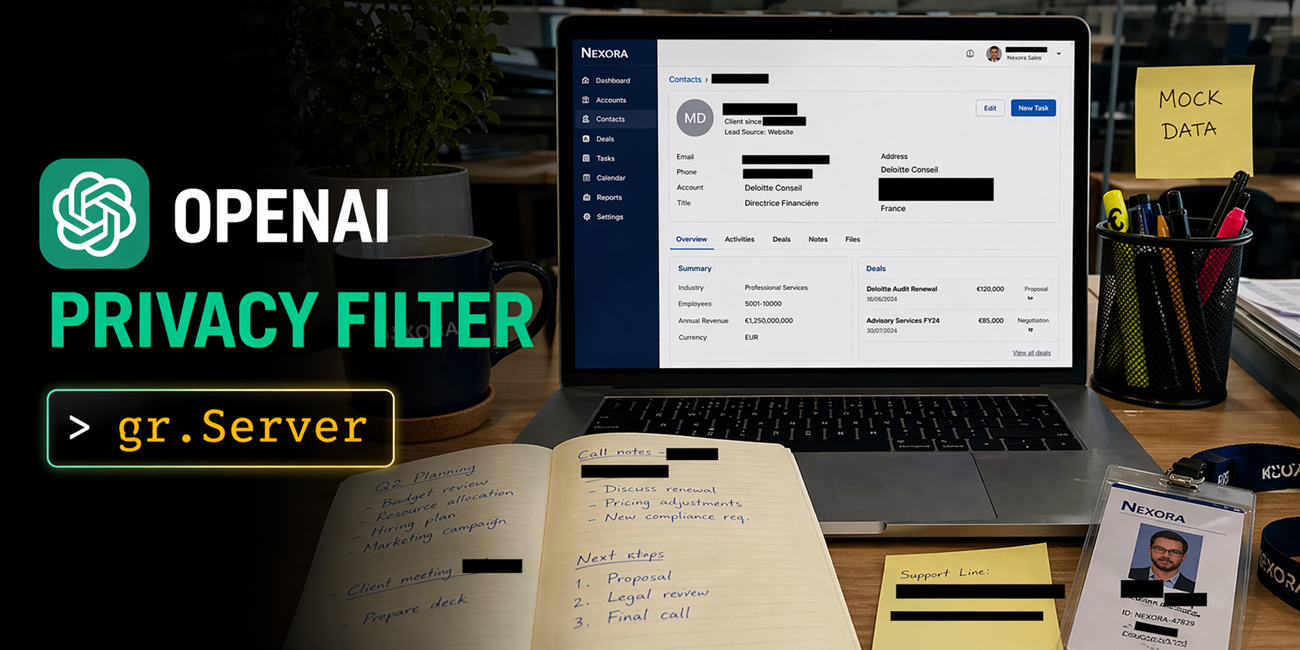
In a significant shift toward local-first privacy infrastructure, OpenAI has released Privacy Filter, a specialized open-source model designed to detect and redact personally identifiable information (PII) before it ever reaches a cloud-based server.
Launched today on AI code sharing community Hugging Face under a permissive Apache 2.0 license, the tool addresses a growing industry bottleneck: the risk of sensitive data "leaking" into training sets or being exposed during high-throughput inference.
By providing a 1.5-billion-parameter model that can run on a standard laptop or directly in a web browser, the company is effectively handing developers a "privacy-by-design" toolkit that functions as a sophisticated, context-aware digital shredder.
Though OpenAI was founded with a focus on open source models such as this, the company shifted during the ChatGPT era to providing more proprietary ("closed source") models available only through its website, apps, and API — only to return to open source in a big way last year with the launch of the gpt-oss family of language models.
In that light, and combined with OpenAI's recent open sourcing of agentic orchestration tools and frameworks, it's safe to say that the generative AI giant is clearly still heavily invested in fostering this less immediately lucrative part of the AI ecosystem.