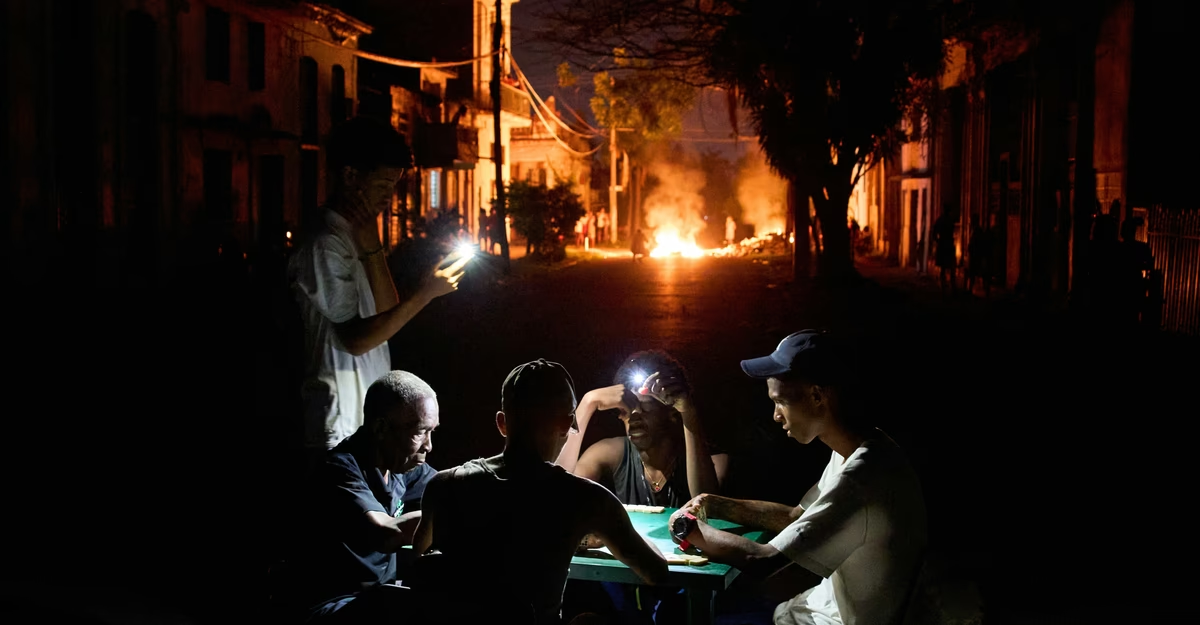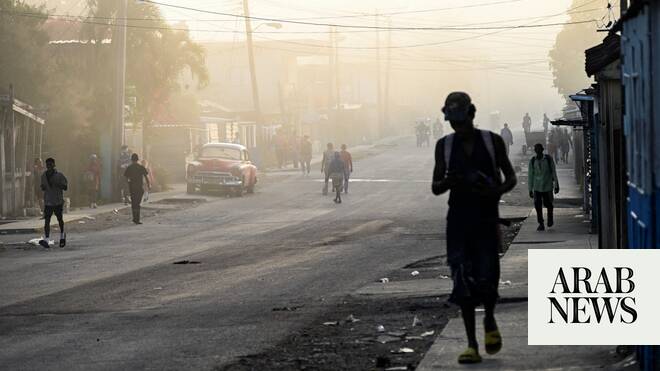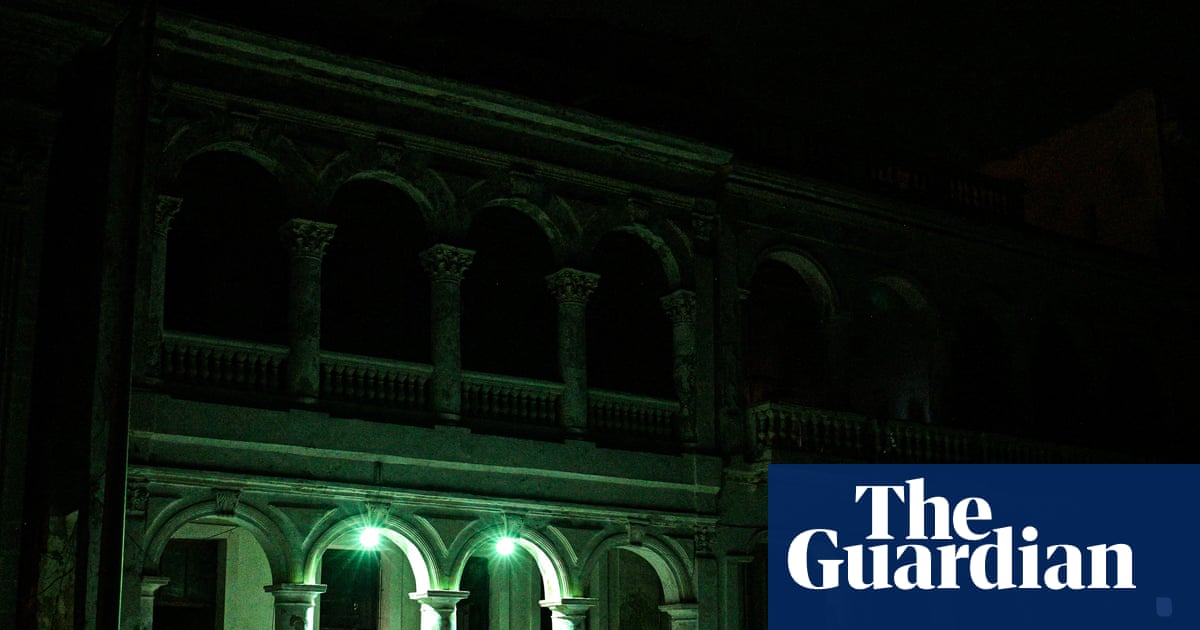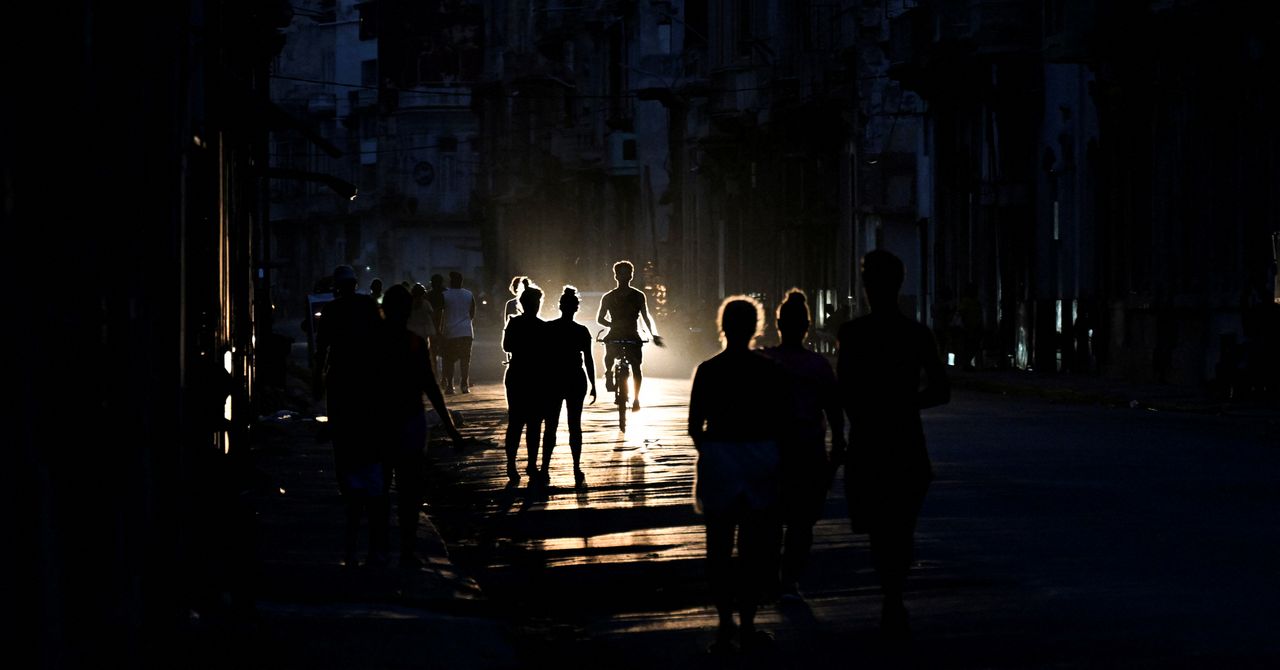
IT’S 5:30 IN the morning in Arroyo Naranjo, a municipality located to the south of Old Havana. Javier (who is 27) and his father, Elías (64), cannot remember the last time they walked hand in hand. Now they are taking short steps, side by side, because in the early-morning darkness they can barely see their hands in front of them. They can only hear the whispers of neighbors, chatting in their homes, as they walk in this suburb on the outskirts of Cuba’s capital city.
They haven’t showered in over a day and their house hasn’t had electricity for more than 16 hours. The power outage coincided with the day when the aqueduct pumps water into this area, so the neighborhood’s water tanks are also empty. They are hungry and thirsty. The little they had left in the refrigerator—some chicken and the last two sausages from a pack of five—had to be shared between four people. If they didn’t eat them, they would soon rot. To cook their meal, they built a makeshift charcoal stove on the roof, using stones and wood boards; gas tanks haven’t been refilled in this municipality for a month. They are tired. They have hardly been able to sleep because of the heat and the stench coming from the overflowing trash containers on the corner, which are now blocking traffic. And because there is no electricity, the only way they can make sure that they get up on time in the morning is to keep their eyes always half open so they can be their own alarm clocks.