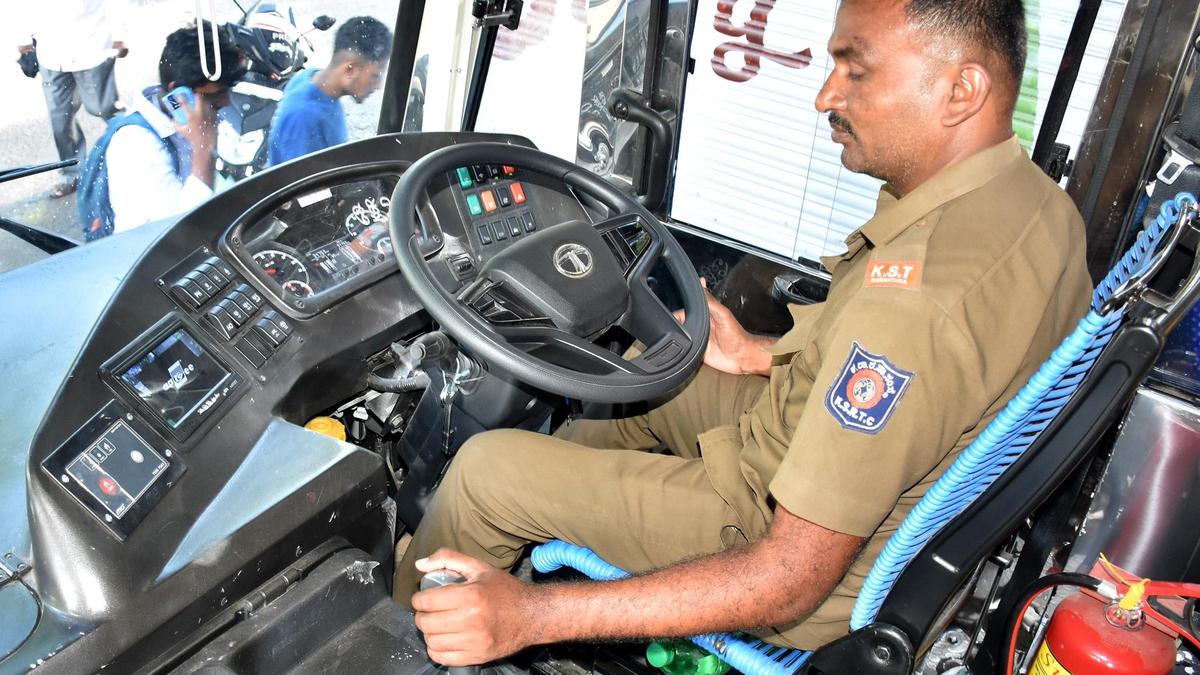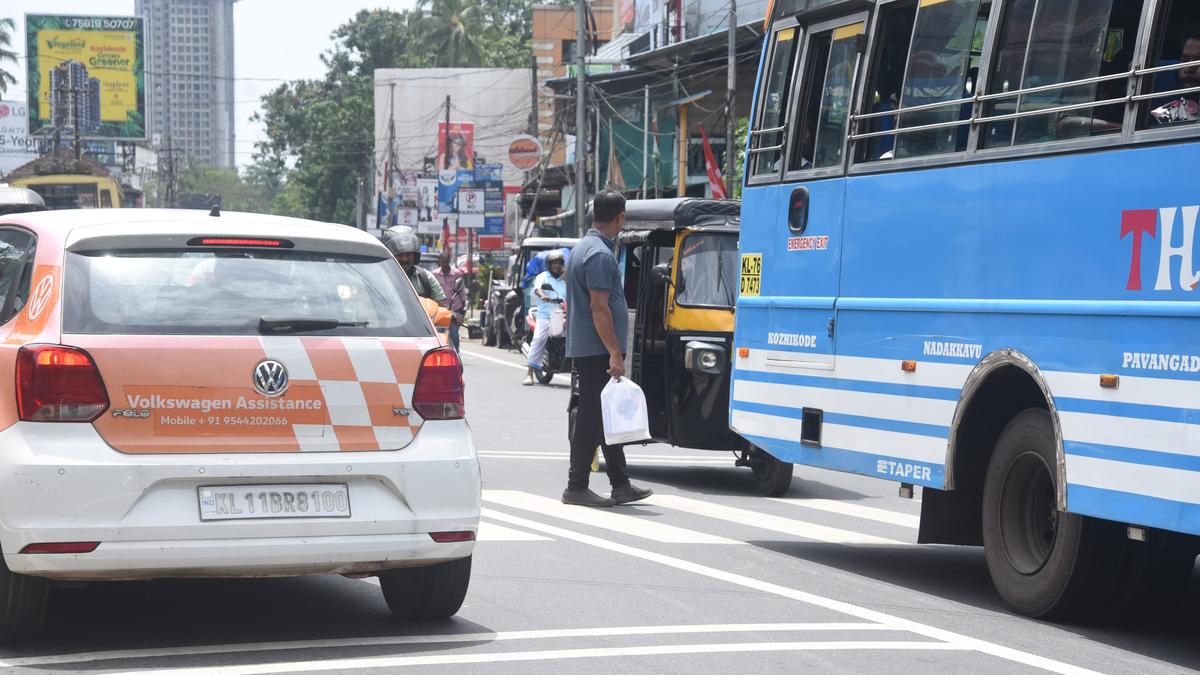
The Supreme Court on Wednesday (May 13, 2026) directed all States and Union Territories to urgently implement the provisions of the Central Motor Vehicles (CMV) Rules, 1989 mandating the installation of speed governors, vehicle location tracking devices and emergency panic buttons in passenger transport vehicles.A Bench of Justices J.B. Pardiwala and K.V. Viswanathan observed that these safety requirements were being widely flouted across the country.“We direct all States and Union Territories to strictly enforce the Central Motor Vehicles Rules, 1989 by ensuring the installation of vehicle location tracking devices and panic buttons in a time-bound and verifiable manner in both new and existing public service vehicles,” the Bench said.The directions were issued in a public interest litigation filed by Coimbatore-based surgeon S. Rajasekaran, who drew attention to India’s alarming rate of road fatalities and the “utter callous and casual attitude” of State authorities towards road safety measures.A case for public transport On Wednesday (May 13, 2026), the Bench also expressed concern over the lack of lane-driving discipline in India, observing that it was a major contributing factor in road accidents. The court called upon the Union government to take corrective measures in this regard.“There is no concept of lane driving in this country. Most accidents occur because of that... Most drivers may be illiterate, but lane driving is something the government must focus on,” Justice Pardiwala remarked.Senior advocate Gaurav Agarwal, assisting the court as amicus curiae, submitted that according to data placed before Parliament in 2024, speed-limiting devices had been installed in less than 5% of transport vehicles, while vehicle location tracking devices were present in fewer than 1% of such vehicles.Describing the figures as “disturbing”, the Bench directed that fitness certificates or permits should not be issued to public service vehicles found in violation of these requirements.Referring to Rule 118 of the CMV Rules, which mandates speed-limiting devices in transport vehicles, the Bench ordered States and Union Territories to file fresh status reports indicating compliance with the requirement.The court also directed the Ministry of Road Transport and Highways to hold consultations with vehicle manufacturers to ensure all new vehicles were fitted with speed-limiting devices, vehicle location tracking devices, and panic buttons at the manufacturing stage itself, while States were ordered to retrofit existing vehicles with these devices.It further directed States and Union Territories to integrate compliance data with the centralised VAHAN portal for real-time monitoring.During the hearing, Mr. Agarwal pointed out that the Motor Vehicles (Vehicle Location Tracking Device and Emergency Button) Order was issued by the Road Transport Ministry in 2018 to facilitate timely emergency response in distress situations.Vehicle location tracking devices use the Global Positioning System (GPS) to continuously transmit a vehicle’s location to a control centre operated by the government or an authorised agency, Mr. Agarwal said. In the event of emergencies, including abduction, hijacking or medical distress, the panic button enables passengers to send instant alerts to police control rooms or women’s safety command centres, allowing authorities to promptly dispatch assistance to the vehicle’s location.Earlier, the top court had in these proceedings issued a host of directions aimed at strengthening road safety measures, including cashless treatment for accident victims, compensation for hit-and-run victims, and the use of electronic enforcement tools, including speed cameras, CCTV surveillance, speed guns, and automatic number plate recognition systems.While reviewing compliance with its earlier directions, the Bench expressed displeasure over the Union government’s failure to constitute the National Road Safety Board as mandated under Section 215B of the Motor Vehicles Act, 1988.“We grant one last opportunity to constitute the Board within a period of three months from today,” the Bench said.The Bench directed the Union government to file an updated status report indicating compliance with its directions, and posted the matter for hearing in September.
Supreme Court directs States to install panic buttons, tracking devices in public transport vehicles
Supreme Court mandates States to install panic buttons and tracking devices in public transport for enhanced passenger safety.
624 words~3 min read