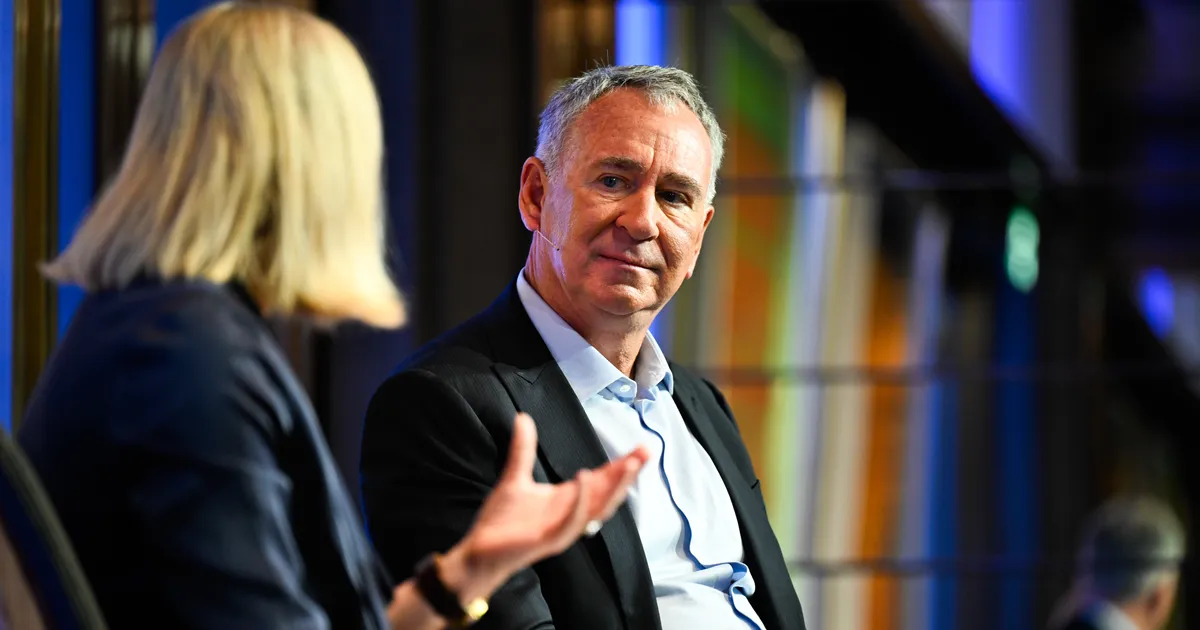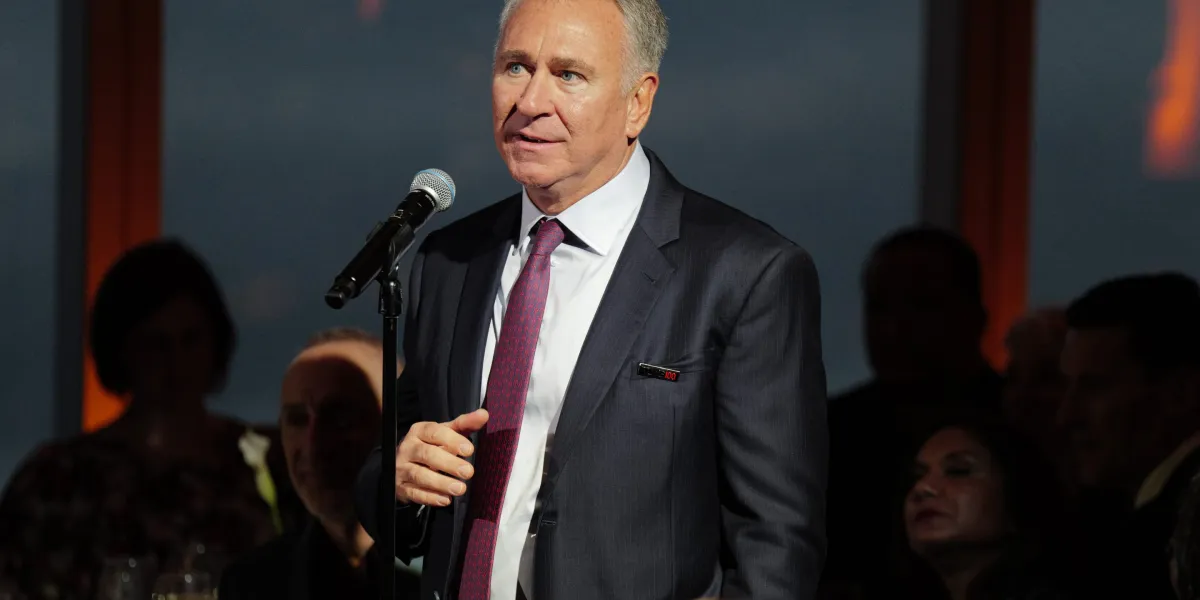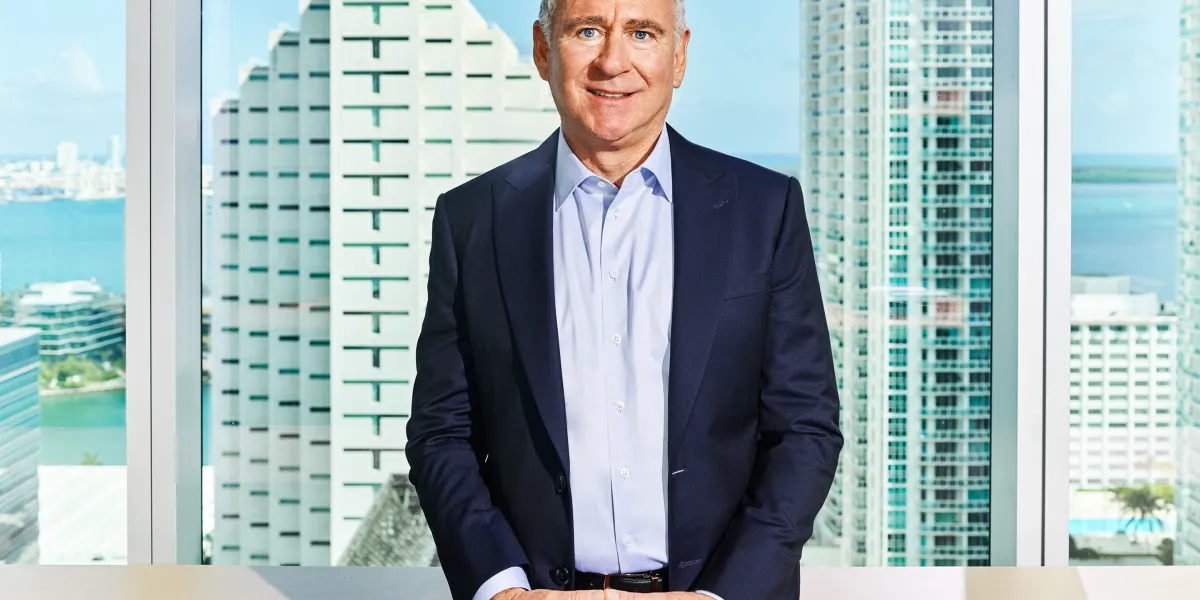
Ken Griffin is pointing an outstretched arm toward his field of dreams. On this Wednesday afternoon in early February, the CEO of Citadel, one of the world’s largest and most profitable hedge funds, is holding court, attired in his signature blue suit and saddle shoes, sans jacket for the moment. With Biscayne Bay glittering a vivid turquoise in the distance, he stands framed by floor-to-ceiling windows on the 27th floor of a skyscraper where he has temporarily parked Citadel’s offices, while he awaits completion of the crown-jewel headquarters, a gracefully tapered, 54-story Norman Foster design, slated for completion in 2030 at a cost recently estimated at $2.5 billion. Extols Griffin, “We’re constructing an iconic office building for this century, right here in Miami, in the free state of Florida, on the water. And people from some of the biggest tech companies in the world who’ve seen the design are saying, ‘We want to be there!’ ”
He is adamant about one thing: This could not have happened in Chicago, or New York, or maybe anywhere but here. Griffin’s tone grows rhapsodic as he describes how Miami authorities coordinated like a Navy SEALs team to fast-track his vision on Biscayne Bay. The dynamic is what Griffin lauds as Miami hustle. The city and county leadership, under a Republican and Democrat, respectively, share a “we’re open for business” mindset. Miami-Dade County designated the Citadel site as part of a rapid transit zone, special areas where the authorities greatly expedite the zoning approval process. Citadel won approval in around 18 months—for a megaproject that would have taken years to be green-lighted in virtually any other major metro.