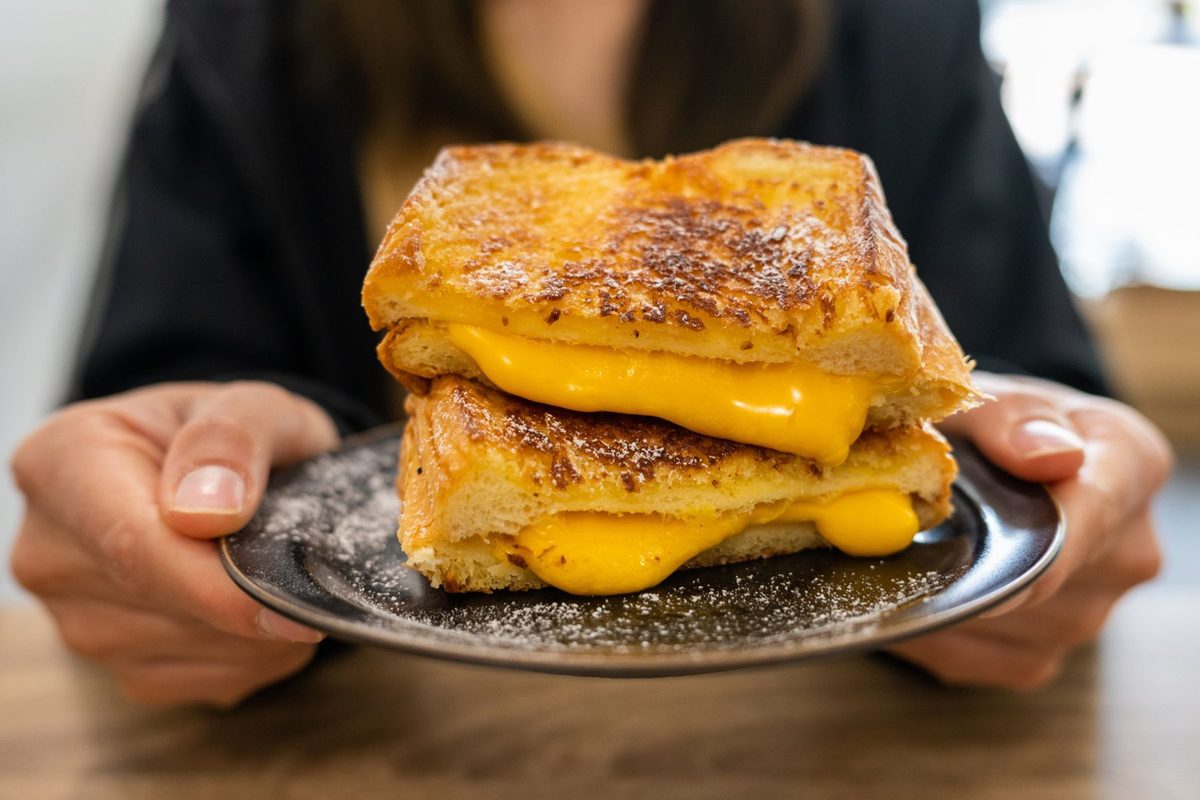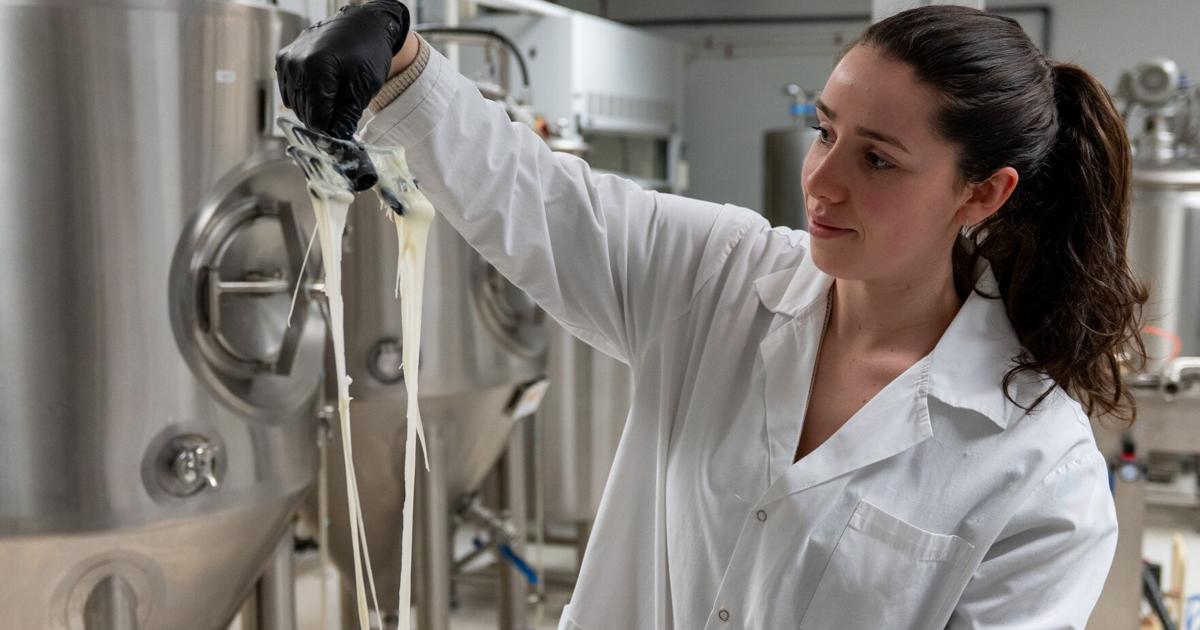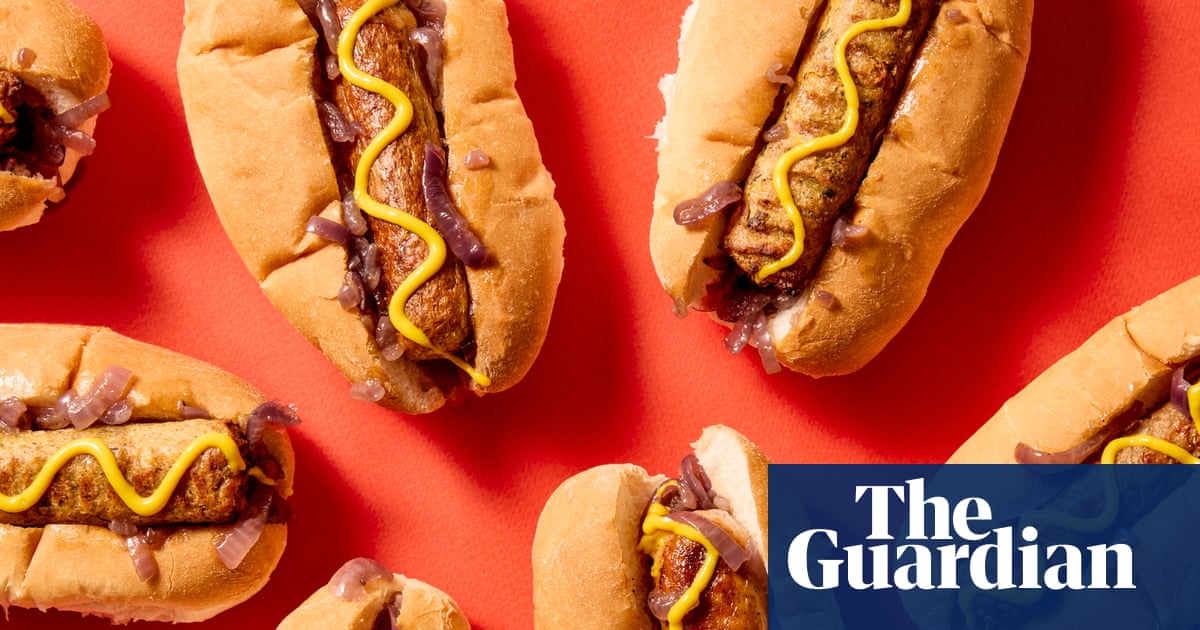
May 8th 2026 By Sam Colbert In an office block in south London a chef was trying hard to prove that vegan cheese wasn’t disgusting. Violife, a brand that makes dairy-free products, had asked him to make a multicourse lunch to show off its cheese alternatives. The chef, Duncan Parsonage, served up a fake-meat Cuban sandwich topped with gooey mock mozzarella, tortilla chips with whipped Greek White (a version of feta) and, to top it off, a doughnut filled with imitation cream cheese. It was all tasty enough, but it was clear that the cheese needed dressing up. Even Parsonage confessed the products would struggle to hold their own on a cheese board. As vegans know, ersatz cheese can be waxy and bland—and nowhere near as good as the real thing. I swore off animal products several years ago, when the vegan-food craze was at its peak. Propelled by wellness influencers and Netflix exposés of the meat industry, veganism became aspirational—and lucrative. Venture capital and celebrity finance poured into firms such as Impossible Foods and Beyond Meat, the latter of which boasted Bill Gates and Leonardo DiCaprio among early investors and went public in 2019 at nearly $4bn. In 2021 Oatly, a Swedish oat-milk firm that was backed by Oprah Winfrey, Jay Z and Natalie Portman, was valued at around $13bn. Its chief executive hailed the stars’ investment as “a clear indication of where the world is heading”. Food, like popular culture, was going woke. During the pandemic, however, it became clear that investors had overestimated consumers’ appetite for vegan alternatives. Sales of plant-based meat and milk have since stalled, weighed down by higher prices and growing suspicion of ultra-processed foods. Beyond Meat is now worth less than $400m and Oatly has lost 97% of its peak value. Yet although the companies at the forefront of the vegan-food revolution are worth less, most of their products are still widely available. Fortunately for people like me—and for anyone with a dairy allergy or intolerance—plant-based milk is pretty good. Last year it accounted for 13% of American milk sales, while Square, a payments firm, has said that oat milk is chosen for one in three coffee orders made through its platform. Even cafés in the back of beyond serve oat-milk lattes, and most supermarkets stock several varieties. Propelled by wellness influencers and Netflix exposés of the meat industry, veganism became aspirational—and lucrative But there is one dairy alternative you’re unlikely to spot in shopping trolleys, even if that trolley contains dairy-free ice cream and chocolate. Vegan cheese makes up less than 1% of the American cheese market, and sales were 10% lower at the end of 2025 than a year earlier. Clearly I’m not the only consumer who finds it offputting. Why is vegan cheese still so disappointing? The answer can be found under a microscope. Milk consists of two proteins: whey and casein. Casein is what makes cheese cheesy. Unlike most proteins, it doesn’t form a fixed shape. Instead, it gathers into tiny clusters that trap fat and calcium (these are what makes cheese stretchy when melted). As cheese ages, the clusters slowly break down, releasing enzymes that produce complex flavours. Plant proteins can’t replicate this behaviour: they are more rigid and don’t bind fat and calcium in the same way. Companies like Violife have attempted to sidestep the casein problem by focusing not on what cheese is, but what it does. They generally use coconut oil and tapioca starch to replicate some of cheese’s distinctive properties. Like cheese, coconut oil is solid at room temperature and melts under a grill. Tapioca gives the melted oil its tackiness and stretch (think tapioca balls in bubble tea). Synthetic flavouring and salt are added for the final touch. Parsonage told me vegan cheese is best enjoyed as an ingredient on a burger or pizza. Even then, texture is a problem. Shreds of Violife blocks “lock up” under direct heat in a pizza oven, softening around the edges but refusing to melt. Their fake Camembert comes with instructions: don’t bake it for as long as a real one, or it will turn into liquid rather than a gooey treat. There are other snags. Despite being plant-based, most vegan cheese isn’t very nutritious. It’s high in saturated fat and contains almost no protein. It also doesn’t taste of much, apart from coconut. In theory, any taste can be mimicked with the right combination of synthetic flavours, but recreating the notes of a ripened cheddar is prohibitively expensive. Your browser does not support this video. There is an obvious solution: make casein without a cow. A handful of scientists and entrepreneurs are using a process called precision fermentation to do this. Fermentation is when a microorganism, like bacteria or yeast, breaks down sugars into new compounds. It turns grape juice into wine, cabbage into kimchi, and milk into cheese. Precision fermentation involves genetically modifying that microorganism to make it break down sugars in a specific way. (In the 1980s it was used to make synthetic insulin—previously diabetics had to inject themselves with insulin from animal pancreases.) Last year I visited Wageningen University in the Netherlands, where teams are trying to perfect the method. Scientists there have isolated the DNA sequence in cows that produces casein. They stick it into E. coli bacteria, give the bacteria glucose to feed on, and caseins get left behind. They are then mixed with oil and water to make a kind of mozzarella. “It’s more similar to the animal product,” Julia Kepler, one of the scientists, told me. “Though, of course, we haven’t tasted it yet.” Under European Union (EU) law, precision-fermented cheese is classified as a “novel food” and must receive approval before it can be marketed to consumers—a process that can take years. The EU doesn’t explicitly ban scientists from tasting the food, but most countries take a cautious approach, treating any human consumption as off-limits until approval is granted. (Since my visit, the Dutch government has relaxed its rules and now allows tastings under strict conditions—the first EU country to do so. Researchers in Wageningen hope to organise their first tasting later this year.) Some EU countries are deeply resistant to alternative proteins. The Italian parliament banned lab-grown meat in 2023, in defence of the country’s culinary traditions. The move was pre-emptive: cultivated meat is not yet approved for sale in the EU (it’s also not clear whether the ban would survive a court challenge). But the vote demonstrated strong feelings about what the country’s agriculture minister called “the social and economic risks of synthetic food”. Vegan cheese makes up less than 1% of the American cheese market, and sales were 10% lower at the end of 2025 than a year earlier The work at Wageningen is funded through government grants and partnerships with food companies, which will have to confront the EU’s regulatory hurdles before bringing the lab’s creations to market. Those companies will face another challenge: precision fermentation is expensive, and it’s unlikely cheese created in this way could ever compete on cost with real cheese. For now, though, the researchers are trying only to prove the technology works. They test the physical performance of samples against real cheese, measuring density, melting temperature and stretch length. Kepler insisted she’s never sneaked a bite. Previously, she spent four years working on precision-fermented milk before she was allowed to try some. That was at a conference in America, where regulations are more relaxed. “People are consuming it there,” she said, “and they’ve survived.” It is no surprise that California has become a breeding ground for alternative proteins. Its tech, research and wellness industries are fuelled by abundant venture capital and lack of red tape—at least compared with Europe. Beyond Meat and Impossible Foods both emerged from this ecosystem, alongside a lesser-known company called Climax Foods. Its founder, Oliver Zahn, had been a data scientist at Google, and before that at SpaceX and Impossible Foods. He grew up in Germany and had come to America for postgraduate studies in astrophysics. He wrote influential papers on the origins of the universe and served as director of the Centre of Cosmological Physics at the University of California, Berkeley. But although he enjoyed decoding the mysteries of space, he was increasingly distracted by another problem of cosmic proportions: how to make vegan cheese taste good. Your browser does not support this video. I first spoke to him on a video call early last year. He is long and lean, with a shaven head and dark eyebrows. “There was nothing even borderline good as an alternative” for vegans like him, he told me, not to mention the two-thirds of the global population that has some form of lactose intolerance. In 2019 he founded Climax, which he said would fix vegan cheese in the same way he’d approached astrophysics: by making sense of complex data. The following year Zahn left Google to run Climax full time. By then, Beyond Meat had gone public and Zahn wanted in on the plant-based revolution. Climax, which was based in Berkeley, pitched itself as the kind of foodmaker only Silicon Valley could produce. It was a “data-science company innovating the future of food”, according to its website. The company boasted that its scientists would develop plant-based cheeses through “sophisticated machine intelligence tools”, including using artificial intelligence (AI) to predict what would happen when a recipe was tweaked. Climax’s name and logo, in which the “M” and “A” formed mountain peaks, suggested a pinnacle—products “better in every way”, as Zahn liked to say in interviews, than the cheeses they were designed to imitate. Zahn raised $7.5m in seed funding and began recruiting through his industry contacts. He and his new team would do the hard thing first: speciality cheeses. This was a strategy Zahn had picked up from Elon Musk when he worked at SpaceX. Zahn’s inspiration was the Tesla Roadster, a high-end proof of concept that ushered in the mass adoption of electric vehicles. “If you can make the fanciest, most difficult car to get right, do that really well, you can hopefully do all the other things really well,” Zahn told me. Making good on Climax’s promise to leverage machine learning would take time. It would first require a data set, fed with the results of experiments on a wide range of potential ingredients. In the meantime, the priority was making a cheese to show to investors. Zahn’s team set to work on a full slate of varieties, including brie and goat’s cheese. Instead of relying on the usual oil and starch, they built their recipes around seeds and legumes. These ingredients were far more nutritious but they were also expensive—a handful of companies had made nut- and seed-based cheeses, but their products were priced high and hard to find. Zahn, however, was confident his team could perfect the taste first and bring costs down later. Although he enjoyed decoding the mysteries of space, he was increasingly distracted by another problem of cosmic proportions: how to make vegan cheese taste good Soon they had something to show for their efforts: Climax Blue, an imitation wheel of blue cheese. It looked impressive: ripples of mould ran through a creamy base of blended seeds, beans and coconut cream. Zahn spent more and more time on the road, showing off Climax Blue, while his team worked back at the lab in Berkeley. He appeared at food expos and met star chefs, promising “zero-compromise” vegan alternatives. At one point, he flew to London for a private tasting with Paul McCartney, who became an investor. Zahn sent me a photo of himself grinning and grasping hands with the former Beatle next to a table strewn with cheese samples. Zahn loved watching the delight of people who tried his cheese for the first time. “I wish you could have filmed their faces,” he told me. The company was looking for a big cash injection that would allow it to make vegan cheese at scale. At the start of 2022 a tech fund in London promised a $60m investment. Zahn and his team were on a high. “The assumption was that we were all going to explode, like the best of the food tech startups,” one former employee told me. The startup’s staff grew to roughly 50 and Climax poured money into research and development. In a way, blue cheese had been relatively easy to get right; its most important quality, taste, could be replicated using the same mould. The real challenge lay with more popular varieties, like mozzarella, where physical properties, like melt and stretch, were paramount. To get those right, Climax would need to confront the casein problem. They would need to develop a process for modifying a seed protein to make it function like a milk protein, without resorting to costly precision fermentation. Your browser does not support this video. In April 2022 Zahn was in a meeting when he got a text from one of his staff telling him to come to the lab right away. Zahn arrived to see employees shooting video on their phones. One of the scientists had been working on an analogue to mozzarella. He’d accidentally overheated the sample, thinking he was setting the oven temperature in Fahrenheit when it was programmed in Celsius. Under the high heat, his sample did something that, up to that point, had seemed near impossible for food made with plant proteins: it melted and stretched, just like real cheese. Zahn became emotional. “We knew immediately we had hit jackpot.” Climax had cracked it. They called the ingredient Caseed. It would not only make a stretchier cheese, but one higher in protein than existing vegan cheeses. The process needed fine-tuning and was expensive. But with the promised cash from the London fund they would surely have enough runway to figure it out. By the middle of 2022, however, the heyday for plant-based foods appeared to be ending. Over the previous year, Beyond Meat had lost nearly 85% of its value. Investors had been treating food like it was software, which can be scaled and sold with the click of a button. But increasing supply of a food product means building more production capacity, and margins were slim, especially given the need to compete with meat and dairy on cost. The London fund pulled out. Despite the setback, things appeared to be going well for Climax. The public got their first tastes of Climax Blue at pop-up events in December 2022. By the end of the following year, more than 15 restaurants, among them the renowned Atelier Crenn in San Francisco and Eleven Madison Park in New York, had included the product in their dishes. Zahn continued to pull together enough money from a group of small investors to keep the company going. In April 2023 Bel Group, the French makers of Babybel and Boursin, announced that it would be working with Climax to make new vegan versions of its products using Caseed. A joint press release talked of “leveraging the power of data science and artificial intelligence” to create “nutritious and affordable” cheeses that would be “indistinguishable from their dairy counterparts”. The following April staff at Climax were excited to hear the company had reached the finals of a prestigious competition, the Good Food Awards. Their cheese would be competing against dairy cheeses in a blind taste test. According to Zahn, the competition organisers emailed Climax to say it had won. But before the awards ceremony, Climax was disqualified. Someone had complained that its cheese included kokum butter, which isn’t on the Food and Drug Administration’s list of foods “generally regarded as safe”. Kokum butter is better known as an ingredient in skincare products, but it is edible, if high in fat, and is sometimes used in Indian cooking. At the time, Zahn claimed sabotage by an “informant” dairy producer. “At the very least,” he told me when I asked him about the late-stage disqualification, “it’s incredibly unprofessional of them.” Climax, which was based in Berkeley, pitched itself as the kind of foodmaker only Silicon Valley could produce. It was a “data-science company innovating the future of food” Behind the scenes, the company was struggling to raise money and was laying off staff. By the end of the year, Climax was down to a handful of employees. The roll-out of Bel products using Caseed, which was promised for the end of 2024, never happened. I spoke to some former employees who told me that even as financing dwindled, it felt like Zahn was trying to do too many things at once. Priorities seemed to shift week to week, based on the latest advice from some adviser or star chef. One former staffer said the team was in a “civil war” about which direction to pursue. Fine cheeses, such as Blue, had impressed investors. But crowd-pleasers such as mozzarella were more likely to sustain the business. Back when raising money was easier, making several products felt more feasible. Another former employee said it seemed like Zahn was waiting for a “white knight” investor that would allow Climax to continue doing everything at once. There was still some interest from investors. In October a fund called S2G Ventures led a $6.5m round, but with one condition: that Zahn step down as chief executive. As the market for plant-based foods shrank, investors wanted someone focused on making products cheaply and efficiently—rather than a brilliant inventor. Sandeep Patel, a former investment banker who’d been advising Climax, would become CEO, with Zahn shifting to a less business-facing role. The company rebranded. Climax Foods would now be known as Bettani Farms. Bettani evoked bucolic Italian pastures and was, said Patel, a riff on Zahn’s boast that their cheeses would be “better in every way”. When I spoke to Patel over a video call in October I asked him why the name had changed. “I think you can answer that question yourself,” he said. When pressed, he admitted he thought the name sounded too sexual. “We’ve been at conferences where people come up to us and say, ‘What are you working on, a Viagra replacement?’” They’d also consulted a branding expert who told them that Climax was a tech-forward name that might have appealed to early investors, but meant little to shoppers. People didn’t want to eat food served by someone in a lab coat, said Patel. They want food served by Martha Stewart. Your browser does not support this video. The firm decided to stop production of Climax Blue and focus on more popular cheeses such as feta and mozzarella. In a press release Patel promised to “do for pizza what oat milk has done for coffee”. When I spoke to him in October, Patel criticised “an inordinate amount of focus on a very small area of the market” at Climax. Gone were any mention of data science or AI, which had seemed so important to partners like Bel. Patel wouldn’t discuss how central AI had been to the work at Climax. Former employees told me the issue had caused some internal dispute, after journalists overstated the company’s use of the technology following conversations with Zahn (Zahn denies any misrepresentation on his part). In any case, Bettani Farms was now emphasising its “naturally derived” ingredients. Eventually Zahn left the company completely. “I’m not at liberty to discuss,” Patel said when I asked him why Zahn had left, “but it just wasn’t the right fit.” He said the press—no offence—was too focused on the idea of a hero entrepreneur. “It’s too much reliance, too much belief, that one person is the saviour.” Innovation is ultimately a team effort, he added. And even then, “just because something is a great idea and a great product, doesn’t necessarily make it a great business,” Patel said. “You have to have a compromise,” said Alex, a Climax employee who didn’t want to give their real name. “I think [Zahn] never understood that.” Alex suggested the company could have gone all-in on blue cheese, contenting itself with being a small company for a small market. Another former employee said the team grew overconfident when financing was easy, and tried to do too many things at once. “I look back on it as a missed opportunity,” they said. In an alternate reality, “we would have this mozzarella cheese in Domino’s right about now.” Both agreed an element of hubris was involved. “They all thought they would be the kings of the world,” said Alex, “and it just never happened.” Last summer Zahn was on a cycling holiday in the Bavarian Alps with his son when he flipped over his handlebars and landed on his head. He fractured vertebrae in his neck but mercifully avoided paralysis. When I spoke to him again in October he said he was focused on getting better and planning his next steps, including a new AI-related venture. He wouldn’t tell me anything about it, only that it will enable “humans and AI to discover together”. He was reluctant to talk about his departure from Climax. But he maintained that his original strategy, the Tesla Roadster approach, was the right one. “It was always about mass market,” he said. He’s annoyed at recent statements from Bettani that suggest otherwise, and he insisted that most resources had already been shifted to mozzarella before he stepped down as chief executive. People didn’t want to eat food served by someone in a lab coat, said Patel. They want food served by Martha Stewart Vegan cheese, meanwhile, is still waiting for its oat-milk moment. Cost remains the biggest hurdle for companies experimenting with artificial casein. Caseed’s patent was approved last year, but it is still expensive to make, so using it as a substitute for milk protein would be challenging. One workaround, according to a former Climax employee I spoke to, may be to use small amounts of Caseed to give an edge to conventional oil-and-starch formulations. It’s hard to escape the feeling that vegan cheese was marooned after the plant-based food boom of the 2010s: capital was pouring in, but the problem of how to make it affordable and delicious remained stubbornly unsolved. Now, with funding harder to secure, that prospect looks even more unlikely. You could argue that it offers a parable for the AI bubble today. If the hardest technical problems, such as artificial general intelligence, prove more challenging than investors expect, then they too could be stranded if the bubble bursts. Before I left the Wageningen campus in the Netherlands, the lab team invited me to see its not-quite-mozzarella for myself. They popped a few pieces out of a silicon ice-cube tray and onto a table. It’s off-white, lightly shiny. I picked it up, and it started to soften between my fingers. It didn’t really smell of anything, but it felt decidedly squishy, just as mozzarella should.■ Sam Colbert produces podcast series at The Economist ILLUSTRATIONS BY ROB & ROBIN
Grate expectations: the troubled quest for tasty vegan cheese
The plant-based boom failed to deliver. But there may yet be hope
3,829 words~17 min read