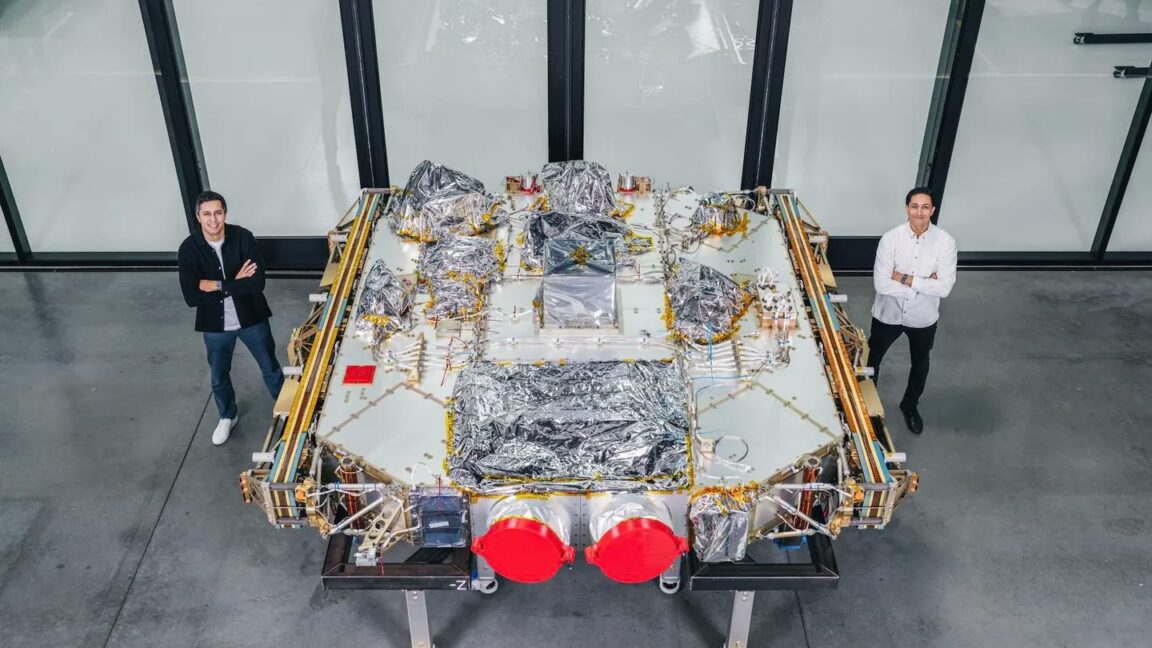
MAX BHATTI AND the four other engineers at Basalt Space worked 22 hours a day in March to assemble the startup’s first satellite so it would be finished in time for a launch deadline. “It makes 996 look like a vacation,” says Bhatti, the CEO. To keep electronics free of contamination, the team operated in a well-ventilated tent that Bhatti boasts is more dust-free than a hospital. It sits in one of three adjacent apartments the company leases in San Francisco’s Lower Nob Hill neighborhood.
The apartments have been home and office for the Basalt team for the past two years, replete with all the staples of a hacker house, including a laundry machine, an outdoor gym, and stacks of ramen. Employees, who are all in their twenties, feel a sense of urgency as the third and largest-yet wave of satellite development unfolds across the US.
Basalt is part of a generation of startups aiming to broaden reliable and secure access to satellite imaging, navigation, and communication services. As they envision it, more of the world will be continually photographed, more items will be tracked, and customers won’t have to fear gatekeepers like Starlink cutting off their transmissions.
From the first satellite launch in 1957 until the past couple of decades, governments and defense contractors largely controlled access to data from space. Alternatives followed, including Globalstar, Planet Labs, and Skybox Imaging, which launched a few low-cost satellites and conveyed specific data to paying customers. But Basalt wants to go further, providing any client with their own set of five to 15 satellites in a similar fashion to how cloud computing firms give companies access to data centers full of sophisticated servers. Faster satellite data could help farmers stop pests and diseases before they spread widely. Fewer restrictions and increased reliability could enable news organizations and investors to better understand migration and trade.