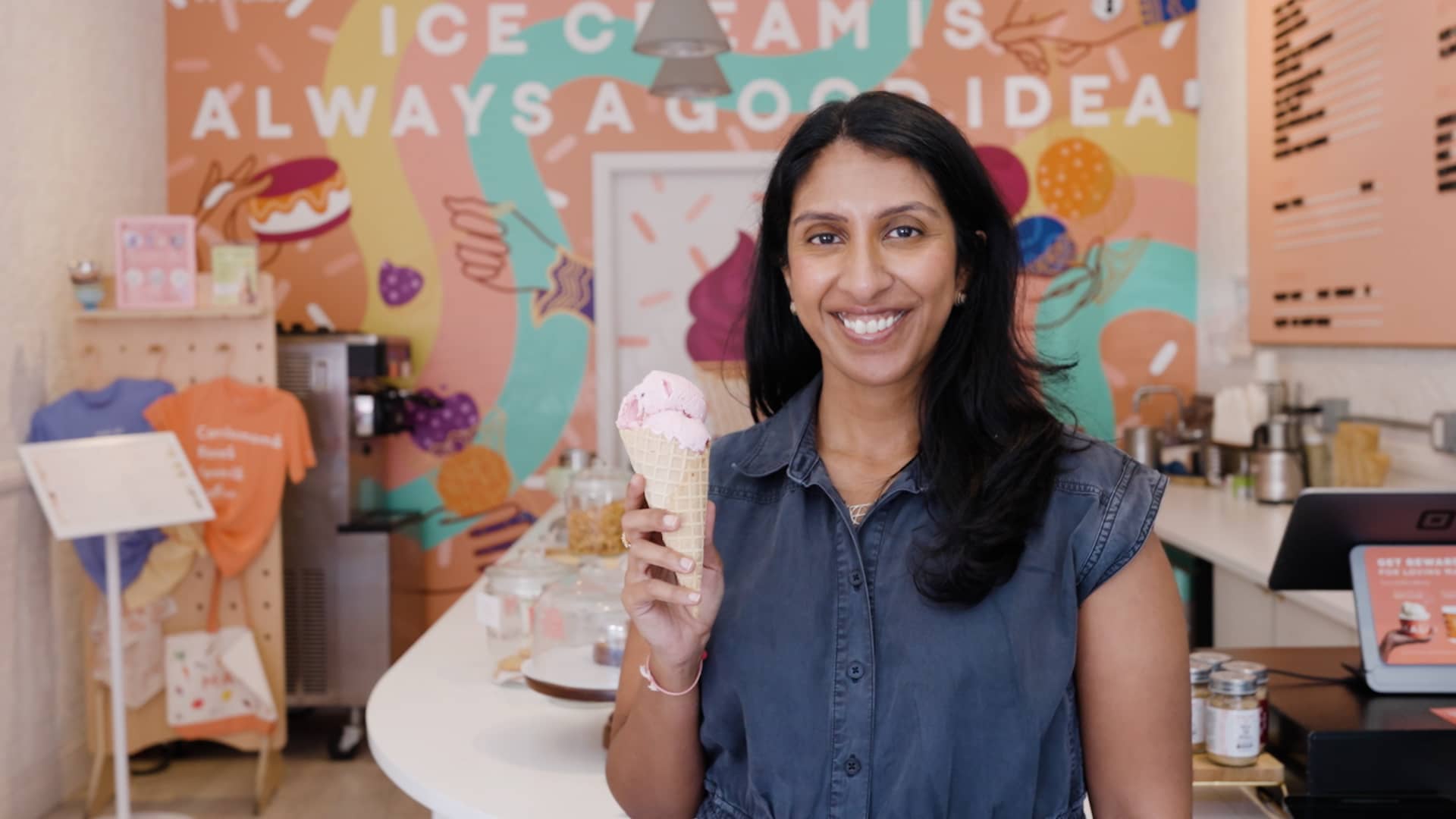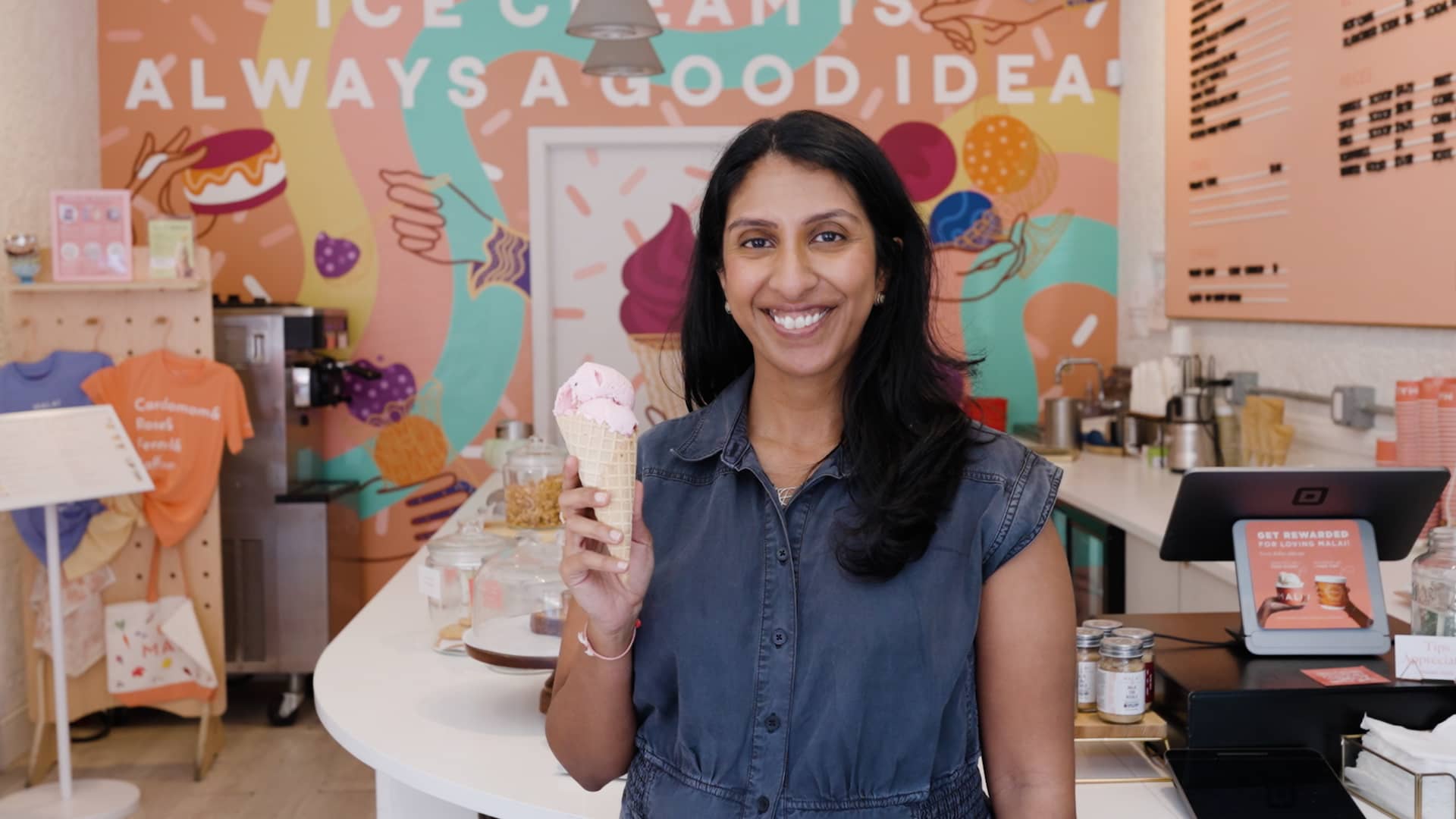
From childhood, Pooja Bavishi dreamed of "being in the business of providing joy" by selling desserts, she says. She just got a late start on pursuing that dream.Bavishi, 42, is the founder and CEO of Brooklyn, New York-based ice cream company Malai, which she founded in 2015. The business — which operates four brick-and-mortar locations across New York, Philadelphia and Washington D.C., plus a growing wholesale and e-commerce business — distinguishes itself in a crowded market with flavors inspired by the spices and seasonings Bavishi grew up enjoying with her parents who immigrated to the U.S. from India."Malai is so different because we go beyond chocolate and vanilla," says Bavishi. "We introduce flavors like cardamom, rose, saffron, [and] nutmeg into ice cream — flavors that are so ubiquitous to so many people around the country and the world that we want to mainstream into American flavors."The company brought in $2.8 million in total sales in 2025, according to documents reviewed by CNBC Make It. Malai, which was profitable in 2024 and 2025, opened its fourth location, a shop in Manhattan's West Village, on Saturday.DON'T MISS: The communication skill that can help you accelerate your career growthBavishi has a degree in urban planning from The London School of Economics, and previously worked as a civil rights project coordinator for the Equal Rights Center, a Washington D.C.-based nonprofit. She got the idea for Malai after a dinner party in 2014, while she was working toward an MBA at New York University, she says: She whipped up some experimental homemade ice cream featuring two frequently-used spices in her pantry, ginger and star anise."I just remember my friends being like ... 'We've never had anything like this before,'" Bavishi says.Over the next 12 years, despite having "no experience in the food industry," Bavishi launched Malai by selling homemade ice cream at outdoor markets across New York City, got a foot in the industry's door due to one particularly unexpected customer, amassed thousands of dollars in credit card debt to build a brick-and-mortar business and eventually turned the entire operation profitable."Malai, as a brand, is as American as anything you've experienced before," she says.Testing in markets and pop-ups before opening a storeWhen Bavishi officially launched Malai in the summer of 2015, she used only her everyday grocery budget to make ice cream in her own kitchen on weekdays and set up shop at markets around the city on Saturdays, she says. She enlisted "all of my friends within a four-hour driving radius" to help her sell scoops from a camping chest freezer and hand out survey sheets for customers to leave feedback, she adds."I needed to make sure that there was a market for my products and that my idea actually made sense," says Bavishi. "I would test different [flavors]. I needed to know exactly who my customer was, what they were looking to buy, what their buying behavior is and who I'm catering to. If I didn't have that information, I had no viable business."One intrigued customer turned out to be a food writer for The New York Times, which led to Malai's first major press mention in an August 2015 article. The story "propelled" the business' just-launched online sales of ice cream pints and frozen pops, which Bavishi personally packed and shipped herself, she says. Source: CNBC Make ItFrom there, Bavishi started using credit cards to fund Malai's growth, paying for ingredients and a shared commercial kitchen space to continue building the brand, she says. She used "a very small amount" of funding from a "friends and family" investment round in 2017 to launch pop-ups and temporary food hall locations around New York, while scouting locations for Malai's first permanent physical store, she adds.Opening and stocking Malai's brick-and-mortar shop in Brooklyn's Carroll Gardens neighborhood required Bavishi to take on roughly $200,000 in credit card debt, which she calls a "scary" proposition that took roughly two years to pay down. As of 2026, "about 80%" of Malai's revenue comes from its brick-and-mortar locations, which are each individually profitable, she says.From niche to 'the American mainstream'To help fund Malai's expansion, Bavishi raised additional capital, including a seed fundraising round in 2023 and a bridge round in 2025. The company has raised $1.8 million in total outside funding, much of which has funded new store openings and increased production, Bavishi says. She remains the company's majority owner, she says."You don't have growth without spending money," she says, noting that Malai prioritized expansion over profitability for several years. The company reached profitability by 2024 after multiple brick-and-mortar locations "hit their stride" and built strong followings, says Bavishi. That same year, the company's wholesale and e-commerce businesses — which include selling to grocery stores and through online retailers like Goldbelly — nearly doubled in revenue, partially as a result of the increased brand awareness, she notes.After years of launching new locations, Bavishi says she's now focused on building out Malai's wholesale distribution and landing new partnerships with grocery stores and retailers across the country. Scaling nationally puts Malai into a new category of competition, in a global ice cream market that's valued at roughly $160 billion annually as of February, according to Morningstar.Source: CNBC Make ItIn such a large industry, Malai's closest competitors include fellow artisanal brands like Jeni's Splendid Ice Cream, which Bavishi calls one of Malai's "brand role models." Jeni's brought in more than $125 million in annual revenue as of 2023, according to Fortune magazine.In other words, Malai has a ways to go to achieve Bavishi's goal of becoming "a nationwide brand." She relishes the challenge and wants "as many people as possible ... to have Malai in their freezers," she says."Indian flavors are not experimental," says Bavishi. "These flavors have been enjoyed by billions of people all over the world on a daily basis [and] for generations ... So, the fact that we're introducing it to the mainstream American market, and the fact that we're a leader in that, actually makes me so proud."Want to get ahead at work? Then you need to learn how to make effective small talk. In CNBC's new online course, How To Talk To People At Work, expert instructors share practical strategies to help you use everyday conversations to gain visibility, build meaningful relationships and accelerate your career growth. Sign up today!
42-year-old former urban planner chased her dessert-making dreams—her ice cream business brings in $2.8 million a year
Malai founder Pooja Bavishi used to sell ice cream with flavors like masala chai at outdoor markets in New York. Now, the company brings in $2.8 million a year.
1,053 words~5 min read