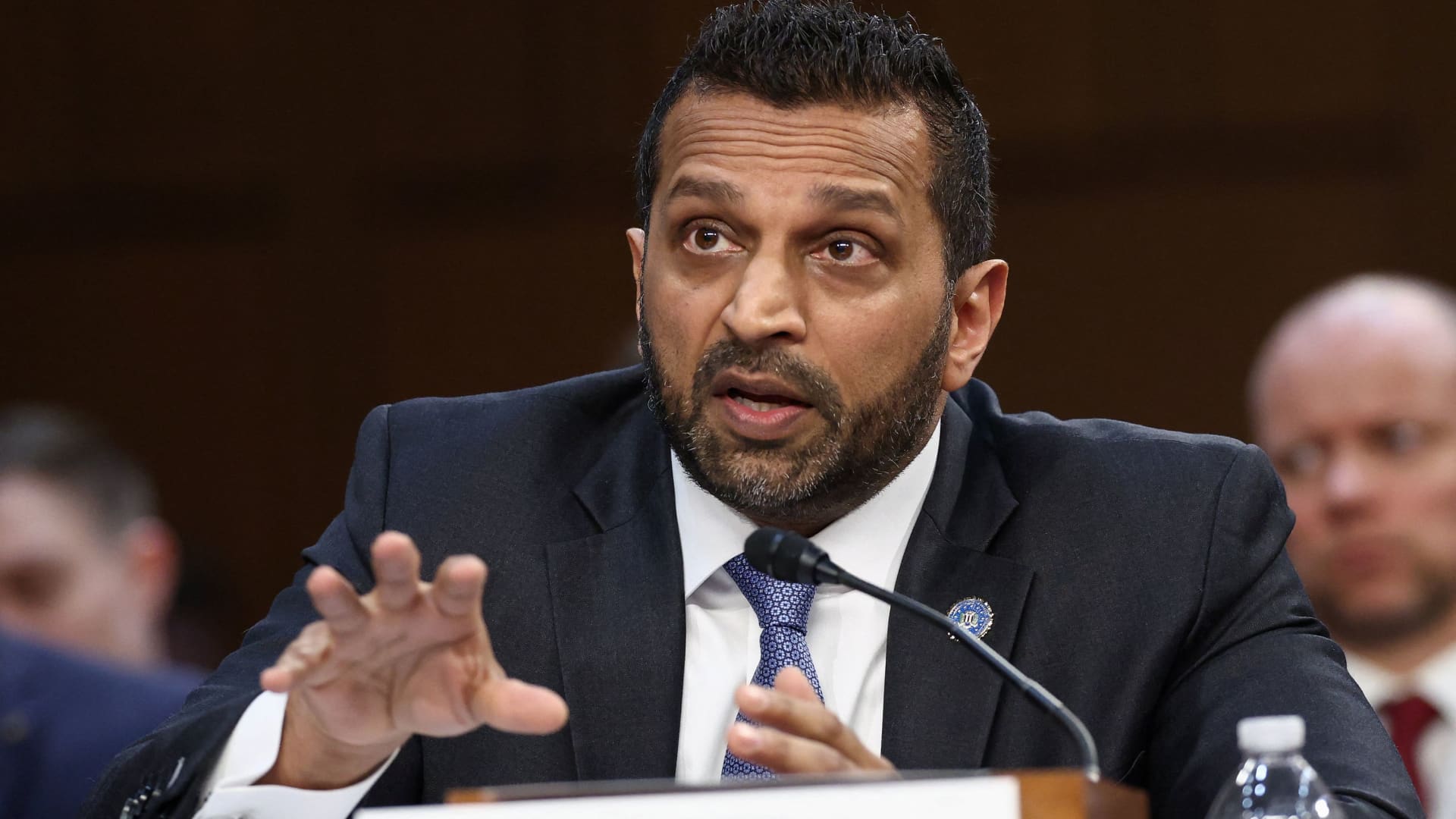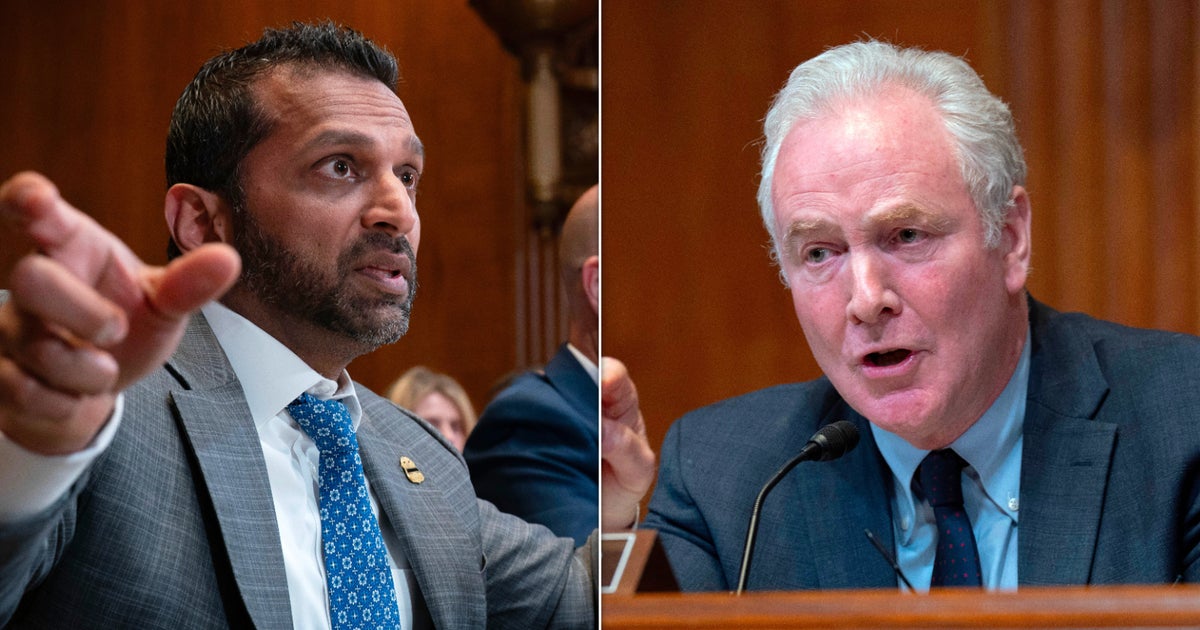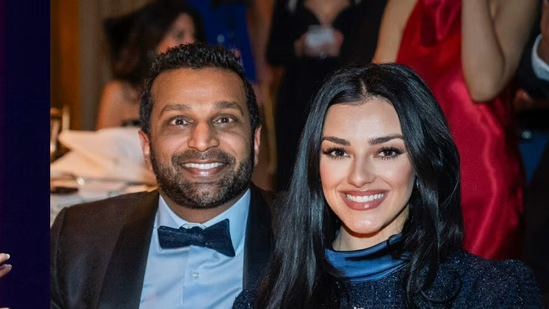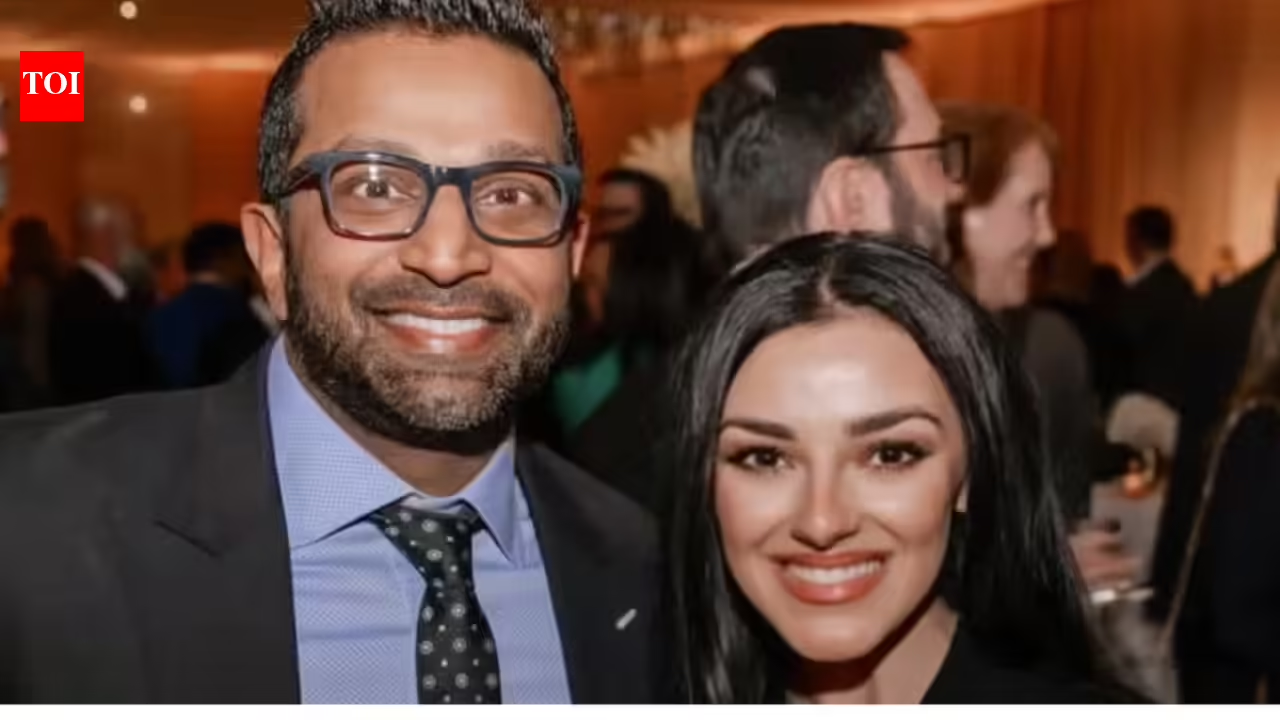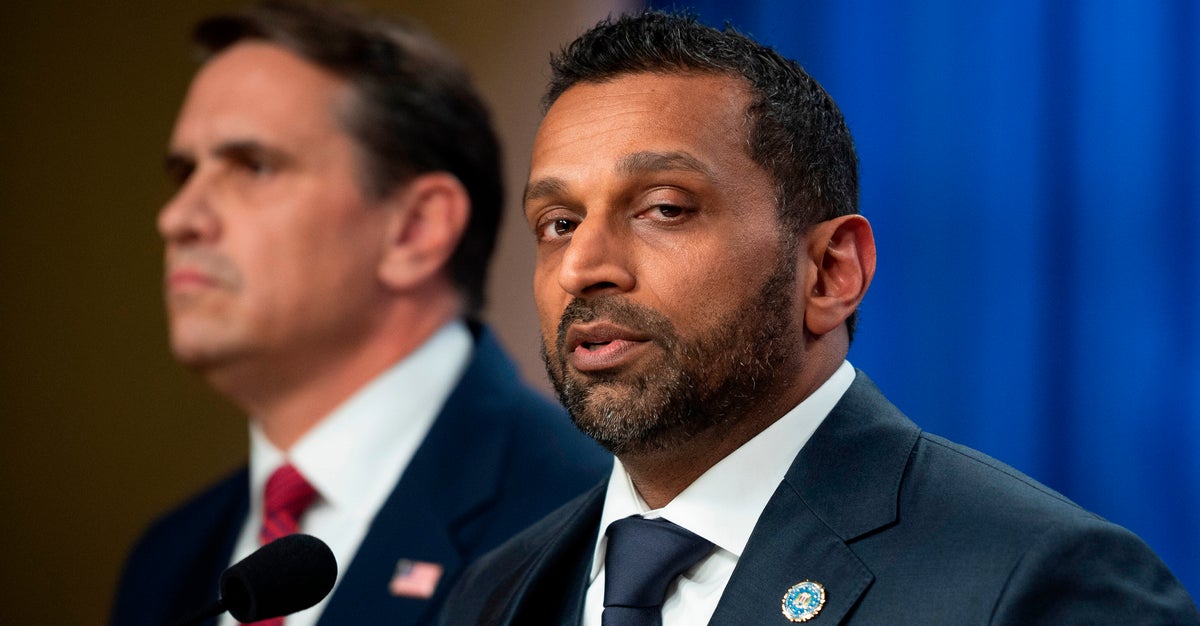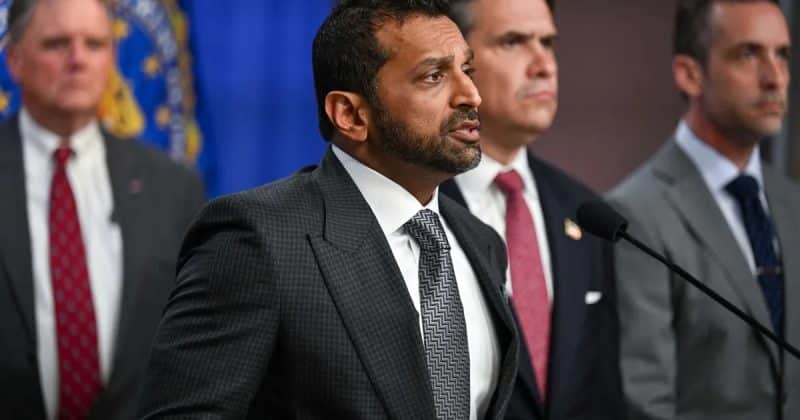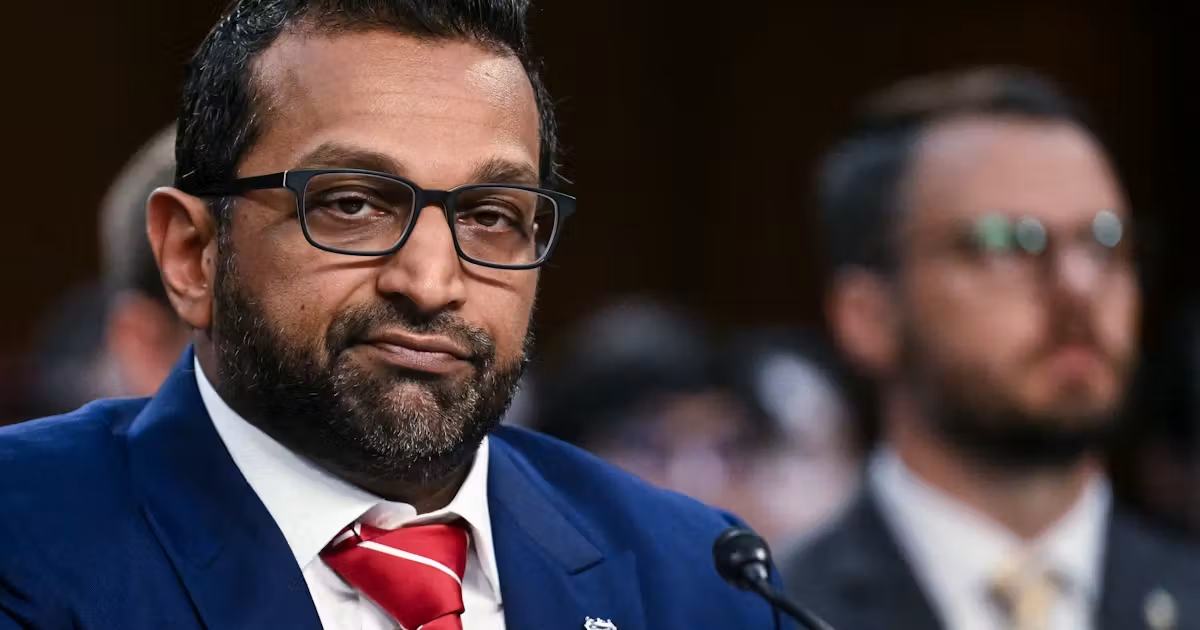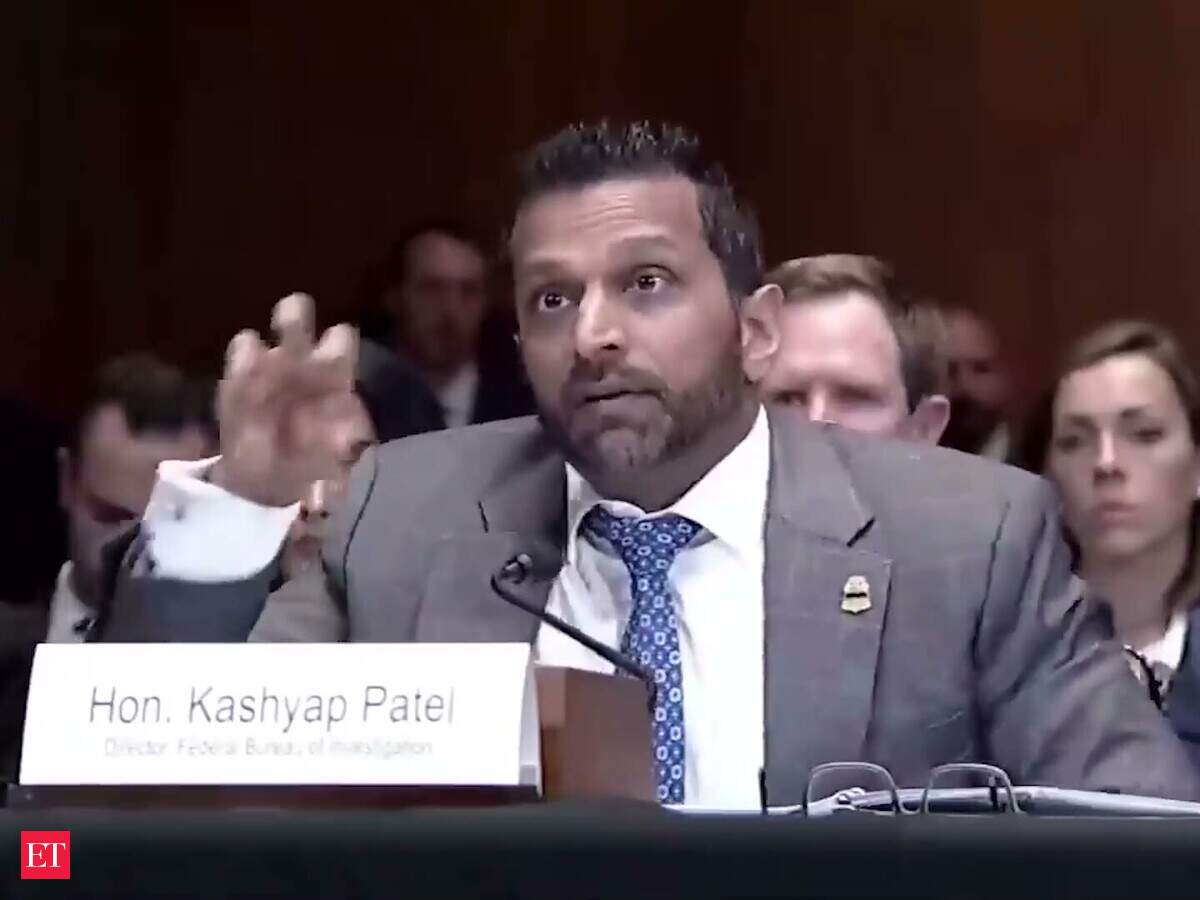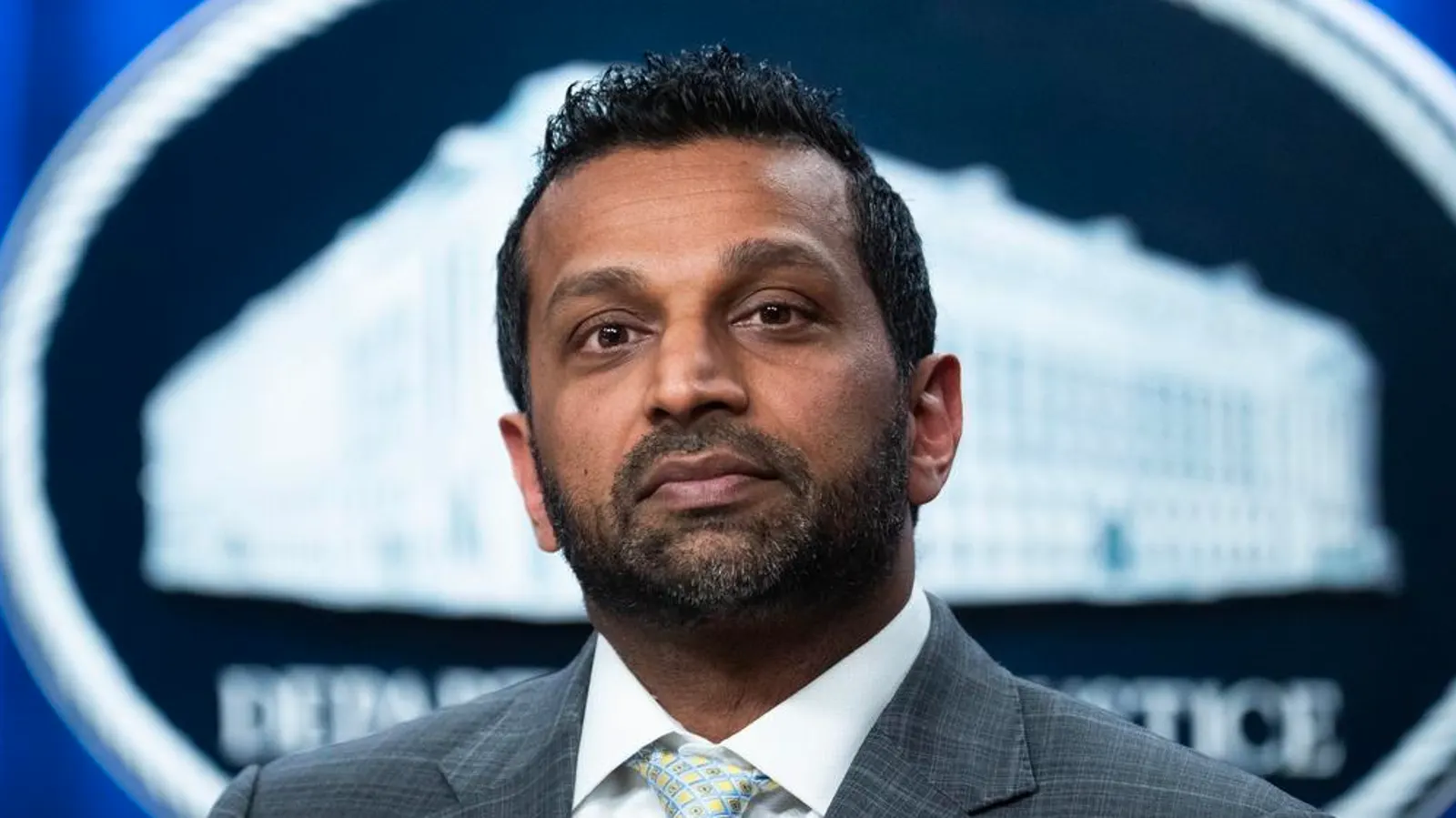
Kash Patel speaking at CPAC 2024 while wearing a scarf that reads "Fight With Ka$h." A year later, he was leading the FBI.AP Photo/Jose Luis MaganaKash Patel used to talk about law school as a straight line to money. “When I went to law school, I was like, ‘I’m gonna go be a rich corporate lawyer,’” he said in the inaugural episode of his podcast, “Kash’s Corner,” in 2021. “I want to be the guy in ‘Suits.’” The market had other ideas. Instead of becoming Harvey Specter, Patel spent the next decade inside government, trading the fantasy of seven-figure deal work for the reality of public-sector pay—and the particular sting of watching law-school classmates turn the same degree into Wall Street money.Then Donald Trump lost the 2020 election.Suddenly, Patel had it made. A darling of the Stop the Steal movement, he discovered that grievance, properly packaged, parlayed into cash. Lucrative consulting contracts. Speeches. Real estate investing. That podcast. Children’s books casting his former boss as a noble monarch and Democrats as cartoon villains who had cheated him out of his rightful throne.It stacked up fast. In 2024 alone, Patel declared over $2 million in income, according to federal disclosures. Forbes estimates that he’s worth about $6 million today. But when Donald Trump won back his throne, Patel cast it all aside to lead the FBI. His official salary: $228,000. Thanks to a pay freeze that’s been in effect since 2014, he actually pulls in $183,100. To return to the Trumpian fold, Patel shuttered his consulting business, sold off much of his stock portfolio, declined about $800,000 in shares of Trump Media and Technology Group—he sat on the board—and took over an agency he had previously called “the prime functionary of the Deep State” and “a tool of surveillance and suppression of American citizens.” Waves of resignations followed, and now, the increasingly embattled director is facing allegations of abuse of federal resources for personal travel and drinking on the job. Patel denies all wrongdoing. An FBI spokesperson declined to comment on the Forbes estimate. How did he get here? Kashyap Patel was born in New York in 1980. His father, of Gujarati Indian ancestry, had fled Idi Amin’s Uganda back to India, where he met Patel’s mother. The couple immigrated to Canada and then to New York. Patel grew up in a crowded household that included his father’s seven siblings, their spouses and half a dozen children. He studied criminal justice and history at the University of Richmond, then returned to the Empire State for his J.D. from the Pace University School of Law, graduating in 2005. Patel’s plans to make millions in corporate law quickly hit a small snag: Corporate law didn’t want him. “After all my applications, nobody would hire me,” he wrote in his 2023 book “Government Gangsters.” But he’d enjoyed a trial litigation class, which led him to his Plan B, and in 2005, Patel became a public defender in Miami-Dade County, starting near the bottom of the legal pay scale. His parents bought a two-bedroom Miami apartment that same year. They sold it at a $40,000 loss in 2014, the same year he traded the defense’s table for the prosecution’s, becoming a national security prosecutor in D.C. under the Obama administration. Trump’s arrival in Washington changed Patel’s trajectory. Soon after, he joined then-Rep. Devin Nunes—later the head of Trump Media—on the House Intelligence Committee’s investigation into alleged collusion between the Trump campaign and Russia in the 2016 election. In Patel’s telling, he agreed to help Nunes with this in exchange for help getting a subsequent “dream job” at the National Security Council under the Trump administration. That all worked out in 2019: After producing a report favorable to Trump that alleged intelligence agency wrongdoing, Patel was hired onto the NSC, apparently at Trump’s urging. He still was not getting rich. White House staffers at his level typically made between $160,000 and $180,000. His financial disclosures from this period are no longer available, but in 2019, he bought a $420,000 condo in D.C. near Howard University, fronting less than 5% as a down payment and borrowing the rest. The property hasn’t appreciated in value, and Forbes estimates his equity is around $60,000 today, net of debt.From his role at the NSC, Patel then shuffled between various executive branch positions in the White House and Department of Defense until Joe Biden’s inauguration in 2021. That’s when the avalanche of moneymaking opportunities arrived. The most lucrative were consulting gigs, including for the Qatari government, a California company that makes gas storage tanks and multiple conservative political groups. He also began contributing to the Epoch Times, a pro-Trump anti-CCP newspaper, and launched the Kash’s Corner podcast with them that year. In 2022, he published his first children’s book, “The Plot Against The King,” a fantasy retelling of the Russia investigation that put it in footie pajamas and sold it as courtly propaganda for kids. It opens with “Kash the Distinguished Discoverer,” a wizard in the Land of the Free who can discover “anything about anything.” With all the subtlety a children’s book can muster, a “shifty” knight allies with “Hillary Queenton” and a collection of “heralds” to smear King Donald. It sold well enough that he wrote two more—one spinning a tale of how a sleepy “Baron Von Biden” rigged the next election and one about King Donald’s victory over the dastardly Assistant to the King “Comma-la-la-la.” Kash Patel rallied with Donald Trump in Arizona shortly before the 2024 election.AP Photo/Ross D. FranklinMoney poured in. On his 2024 disclosure, Patel listed more than $2.1 million in consulting fees, $232,000 from various speaking and media gigs, $99,000 from the Epoch Times, and at least $145,000 from book sales. On top of all that, the parent company of Chinese clothing retailer Shein, one of his consulting clients, handed him at least $1 million in company shares. Most of it flowed into cash and investment accounts, which Forbes estimates are worth between $2.3 and $5.4 million (federal disclosures only require officials to declare asset values in ranges). At least some of it went also toward a real estate investment, buying up 3.6 acres of land in Chantilly, Virginia alongside a realtor buddy. The duo, via a nesting doll of LLCs, bought it in 2022 for $550,000. They’ve tried to sell it multiple times according to Zillow, including for $500,000 in late 2025, but haven’t had any luck. Patel’s fortune was finally moving in the right direction when Trump picked him to lead the FBI. Federal ethics rules put an end to his side hustles. He sold off most of his stocks in individual companies, which in a couple cases cost him massive gains. Patel’s 1,300 shares of chipmaker Nvidia, sold off sometime in February or March, would be worth about $120,000 more today had he kept them. His AMD stake would be up nearly $50,000. Palantir, almost $40,000. And when Trump Media’s board awarded Patel about $800,000 worth of shares in January, he declined them.Patel won confirmation by promising to restore public trust in the FBI, a sober institutional mandate he appears to have interpreted as a branding opportunity: He has reportedly handed out custom bourbon bottles emblazoned with the FBI’s seal and the words “Director Ka$h Patel.” And he’s wracked up an impressive number of scandals for a man only a year and change into the job. The Atlantic published allegations of excessive drinking, sparking a defamation suit from Patel. While on an official trip to Italy, he was filmed celebrating the U.S. men’s hockey team Olympic victory in the team’s locker room, beer in hand. His girlfriend, a country music singer, reportedly has a full-time security escort on Patel’s orders. If Patel’s tenure at the FBI is not long for this world, as Politico reported in April, he has at least solved the problem that started this whole story. He never became the guy in Suits, but did become something more perfectly Trump-era: a man making a fortune off his, and Trump’s, name. And if the whole thing ends badly, Patel will have failed upward into the one thing he wanted before all the politics: money.
Here's How Much FBI Director Kash Patel Is Worth
He minted cash as a Trump-world side hustler. Then he took the FBI gig—and traded seven figures for a federal salary cap.
1,365 words~6 min read