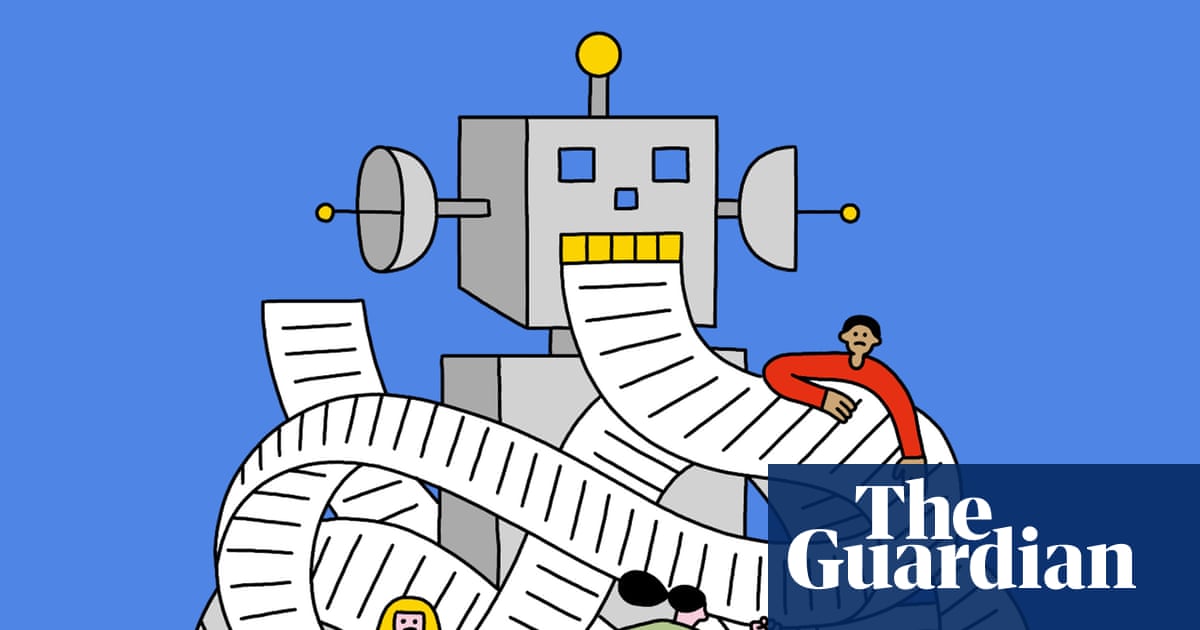
The problem wasn’t just the perfectly polished, yet mediocre prose. It’s what’s lost when we surrender the struggle to translate thought into words
Ihave been teaching fiction writing at MIT since 2017. Many of my students last wrote fiction in middle school, and very few have experienced a proper workshop, so at the start of every semester I offer these directions for writer and reader alike:
Read the story at least twice. Mark what works and what doesn’t – underline great sentences, flag clunky syntax, gaps in logic and unrealistic dialogue. Ask yourself: does the story work? Why or why not? What could improve it? Answer in a signed letter to the author, attached to their story. Give your honest opinions. Remember that an effective peer review demands close reading of the text accompanied by a boldness of spirit.
As the directions foreshadow, most of the time we’re discussing why we didn’t like the story being workshopped, because writing a good story is immensely difficult even under the best conditions, especially for Stem-centric undergrads who thrive within a structure of quantitative problems and solutions – systems where there’s a right answer and a clean method for arriving at it.