Previously prohibited use of websites such as Omoggle that connect a streamer to a stranger’s video feed now allowed
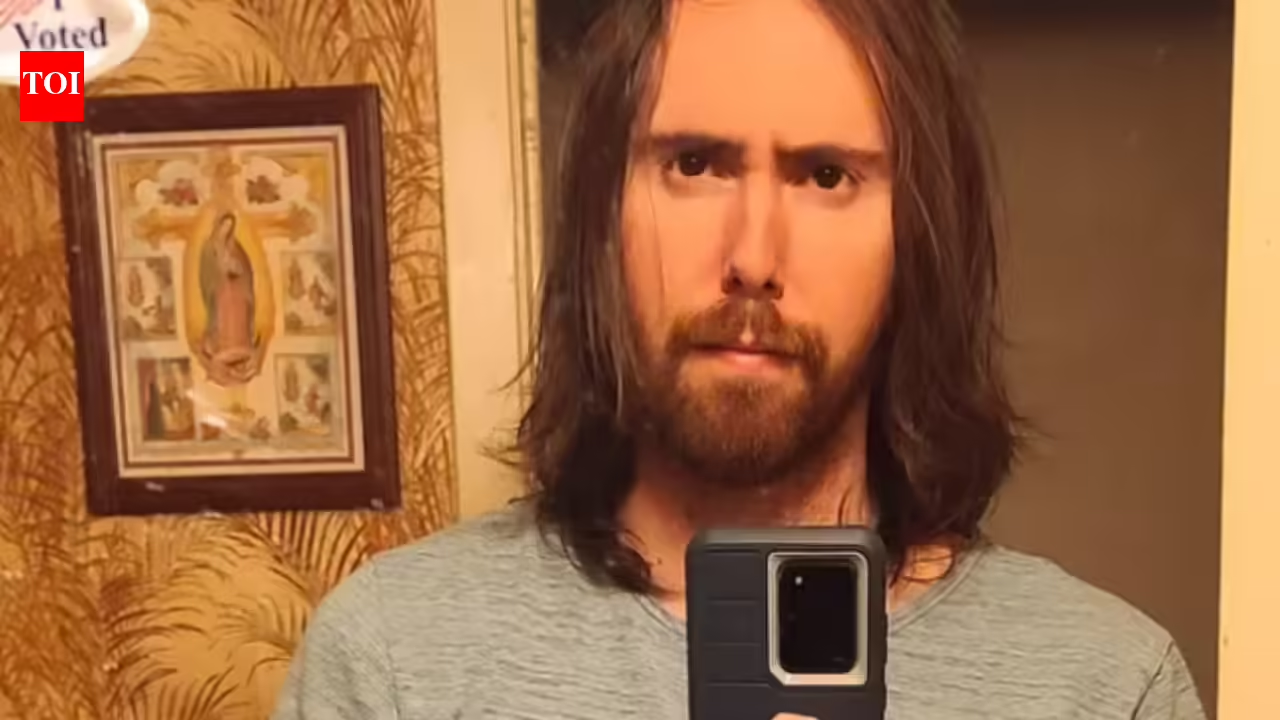
Last week, at 4am, 19-year-old Sammy Amz was scrolling through X when something caught his eye: a popular Twitch streamer was competing in a 1v1 “mog-off” with a stranger, and losing.
The next day he opened the Omoggle gaming website and began to play. Quickly he matched with another user – green dots appeared on their faces onscreen, as the website began to compare their measurements: canthal tilt, palpebral fissure ratio, nose-to-face width ratio and so on.
Omoggle enables one stranger to “dominate” another in a contest of looks, which in online slang, is called mogging. It uses facial recognition to analyse and score the faces of competitors between one and 10. Omoggle’s ecosystem is based on Omegle, a now defunct site that randomly matched strangers for video-based online chats.
“It’s not [scored] by looks, but it’s like, how your head is shaped, how your face is shaped,” said Amz.