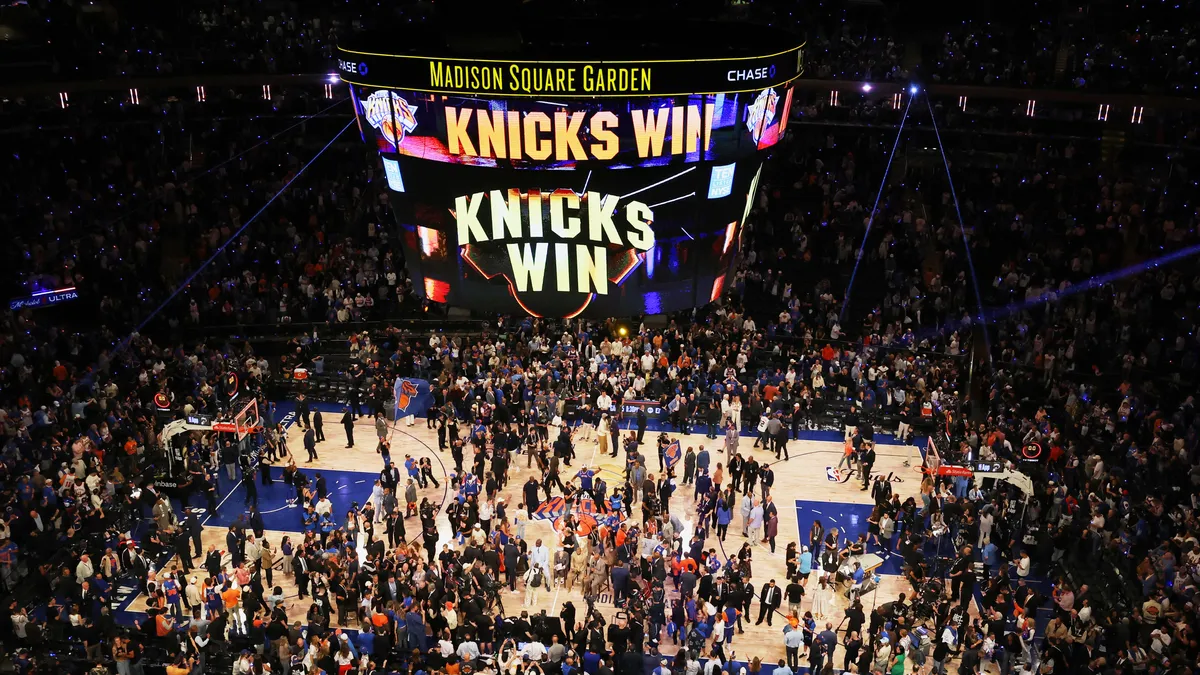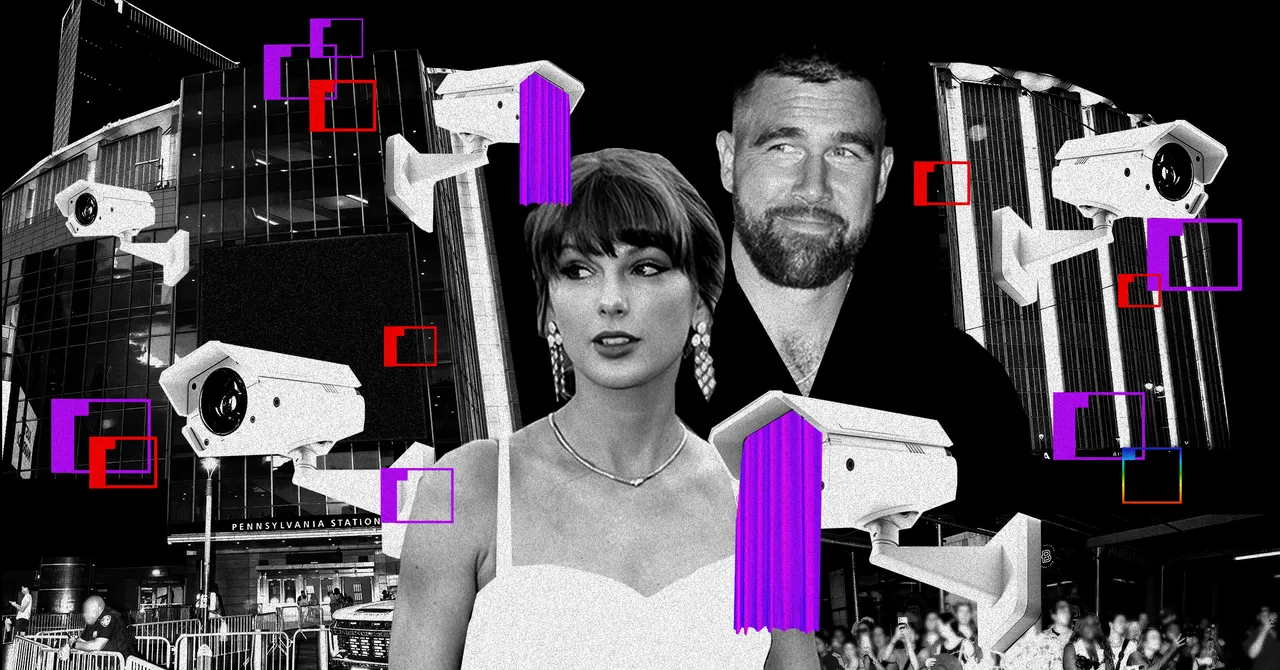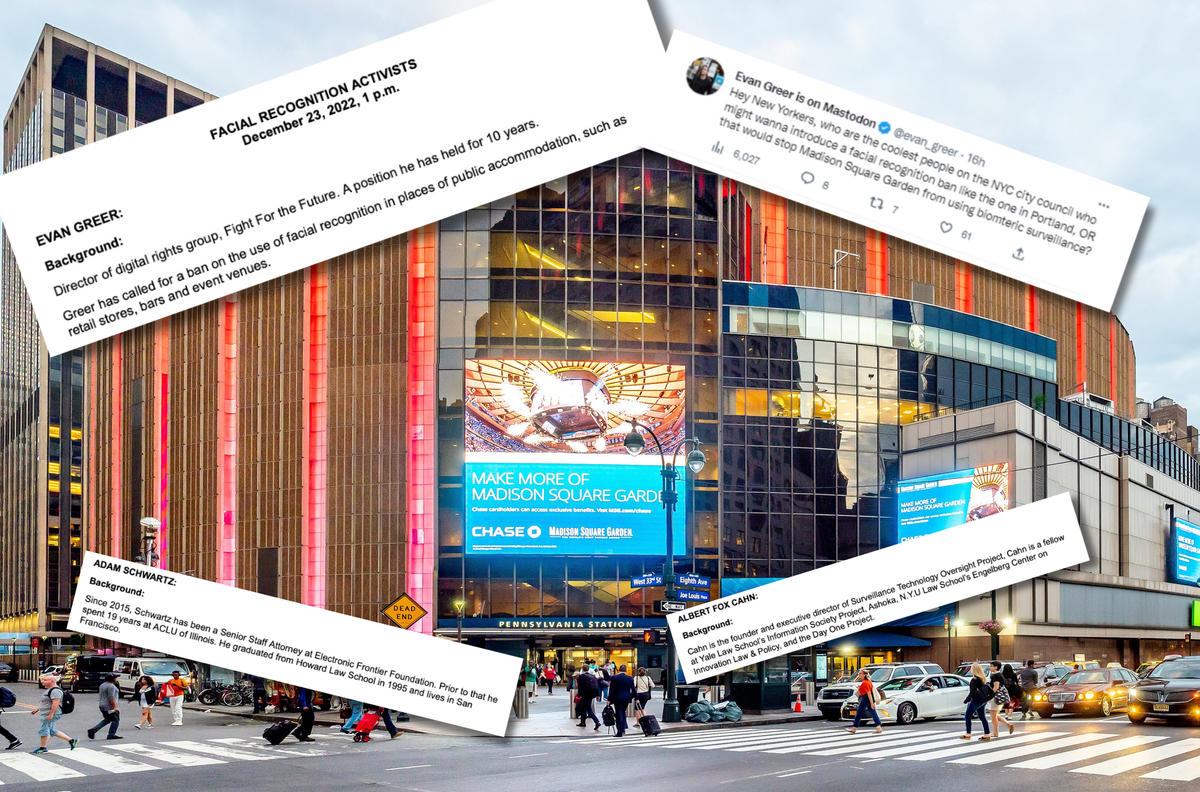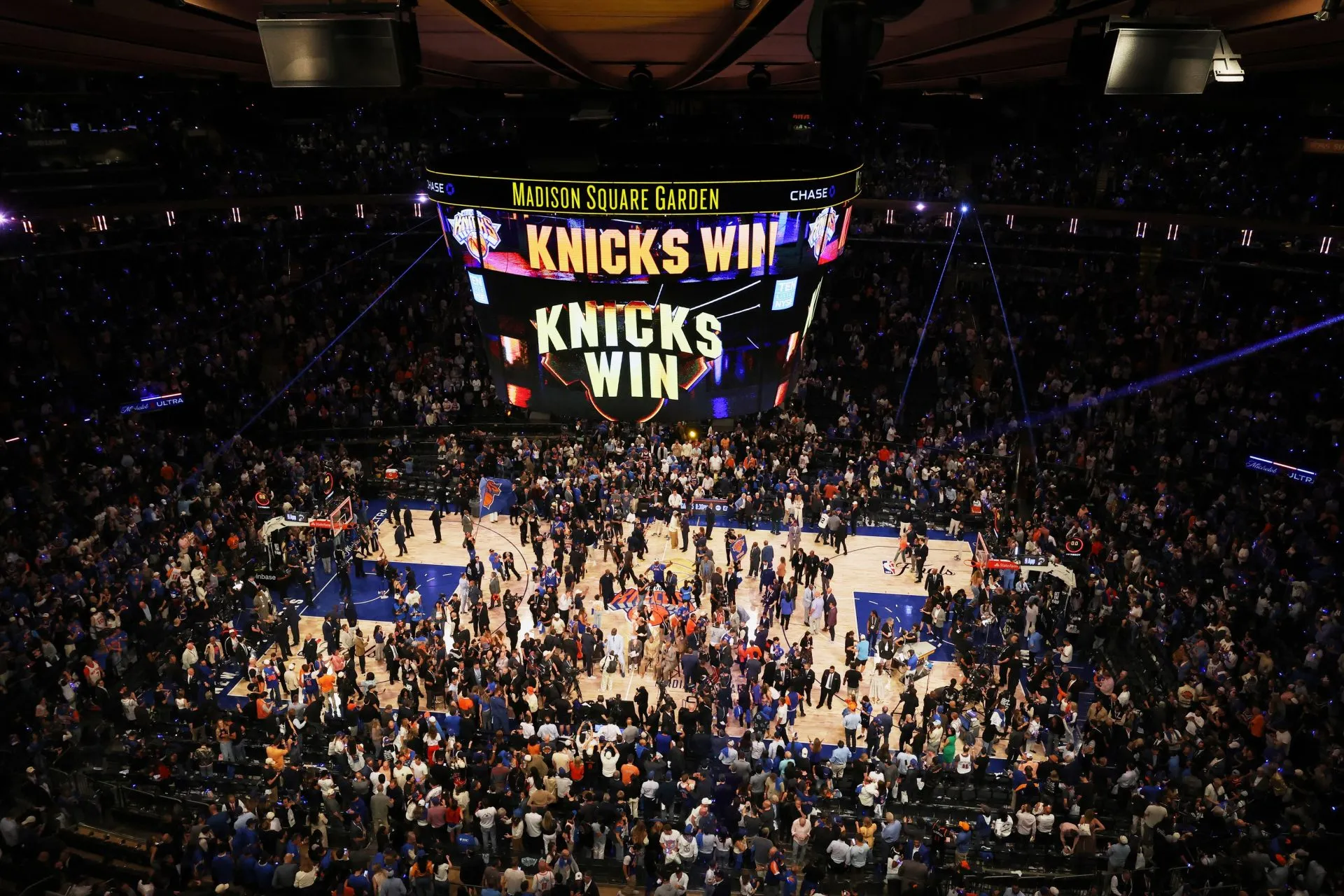
Apr 17, 2026 6:00 AMFamously vengeful Knicks owner Jim Dolan has long spied on people at his iconic arenas. WIRED goes deep inside the operation that allegedly tracked a trans woman, lawyers, protesters, and more.Animation: Patrikas SamuleviciusI. “EXECUTIVE ONE”Her movements were tracked, over and over. When she sat down. When she ordered a drink. When she went to the bathroom. When she took the elevator. Nina Richards went to New York Knicks games quite a bit, and the security forces at Madison Square Garden used the arena's network of cameras to follow her.New Yorkers have known for a long time that going to a game or concert at the Garden meant surrendering some privacy. That, as you watched the show, the Garden in a real sense watched you. Since 2018, there have been reports of the venue deploying face-recognition technology in what critics believe are increasingly intrusive ways. Owner James Dolan has watch lists of basketball fans who have dared criticize his management. He keeps a close eye on his other venues too, including Radio City Music Hall and the Sphere in Las Vegas. Last March, Dolan’s security team blocked a graphic designer from seeing a concert; the designer, years earlier, had printed and sold a half-dozen T-shirts reading “Ban Dolan.” He has locked out whole firms’ worth of lawyers, even keeping out a mom who was trying to take her 9-year-old Girl Scout to a Christmas show at Radio City Music Hall; the mom’s coworker had pissed him off.But the true extent of Dolan’s panopticon has only been caught in glimpses. A 2025 lawsuit by a former member of the MSG security team lifted the veil, just a bit. We started our own digging into the Garden's operations. We discovered that Dolan’s security teams obsessively tracked Nina Richards, a trans woman, over a two-year period, monitoring her movements through the venue down to the second. (WIRED is using a pseudonym in this article out of respect for her privacy.) Dolan's biometric surveillance is so extensive that a New York City police officer’s photo was added to a face-recognition database, and a child triggered an alert at one of Dolan’s properties. According to that lawsuit and our sources, Dolan’s head of corporate security takes such an expansive view of his mission that his employees will functionally cosplay as cops—patrolling the neighborhood, snooping on protesters if they happen to be in the area. You don't have to enter a Dolan venue to be under his watch.The outside of Madison Square Garden in New York City.Photograph: Bruce Bennett/Getty ImagesFor this story, we spoke with seven current and former employees of Dolan's security service. We reviewed some of their confidential internal reports and Signal group chat messages. Behind the scenes, the atmosphere is so rooted in paranoia that former Knicks players warn one another about rooms being bugged, and staffers worry about being watched when they go out to local bars. “People are afraid, top to bottom. You can't look at Mr. Dolan when he's walking past. No, you can't look at him,” one current member of the MSG security team says, adding that his bosses will sometimes say, “You're too close to One—that's what we call Mr. Dolan, ‘Executive One.’”James Dolan watches the Knicks play the Utah Jazz at Madison Square Garden.Photograph: Ron Antonelli/Getty ImagesMSG Entertainment declined to specifically comment on WIRED's reporting about Dolan and the activities of his security teams. A company spokesperson said in a statement that “this story is built on false, misleading and unverified allegations, including claims drawn from lawsuits filed by rapacious litigators. We categorically reject such reckless reporting and are actively evaluating our legal options against WIRED.”There’s a long and well-documented history of controversy in pro sports’ executive suites. In just the past few years, NBA owners have been accused of being either an open racist, a sex pest, an alleged fraudster, or some combination. Dolan, who owns entertainment venues and sports teams, is at the vanguard of a different, and perhaps more disturbing, trend. Companies are now routinely collecting massive amounts of highly personal data on their customers, from their finger and palm prints to their faces. Executives across industries are enlisting private enforcers and former government intelligence operatives. All of which makes Dolan something of a pioneer, and a proof point. He’s showing that with enough money and motivation, any mogul can create his own deep state and build a sprawling surveillance enterprise with him in the middle.Graphic designer Frank Miller Jr. attempted to see a concert at Radio City Music Hall and received a trespass notice.Courtesy of Frank Miller Jr.II. “DO YOU KNOW WHO I AM?”Over the past few years, Jim Dolan has been on a high. His Knicks are a celebrity magnet and an on-court success. His Rangers are the second-most-valuable team in hockey, with a $4 billion valuation, according to Forbes. His Sphere is a Vegas must-see, a novel kind of high-tech, immersive entertainment. Dolan, at nearly 71 years old, serves as CEO and executive chairman of three public companies and is the chairman of a fourth. Their combined market cap of roughly $15 billion has more than doubled since 2022, according to one estimate, with Sphere Entertainment alone valued at more than $4 billion. Dolan has joined the upper ranks of media and tech moguls, with all that entails, from the corporate spooks to the MAGA connections. (Dolan's Trump bona fides go further back than most; he got married at Mar-a-Lago in 2002.)But for decades, Dolan was seen as anything but a winner. He came into much of his empire from his father and was portrayed in New York media as a punch line: the thin-skinned, perpetually mad owner of a pair of hapless sports franchises; the nepo baby fumbling his dad’s largesse; the fedora-wearing frontman for a less-than-awesome Americana band. (One signature song: "I Should’ve Known," about Dolan's former friend Harvey Weinstein.) If Dolan was seen to have a strong suit in those days, it was generating fear. Multiple MSG executives have told reporters over the years that a "culture of paranoia" pervaded Jim Dolan's Garden. As far back as 2001, staffers reportedly feared their phones had been bugged.Charles Dolan, left, with his son James Dolan in the control room of Cablevision Systems in Hauppauge, on Long Island in New York, on April 27, 1997.Photograph: VIC DE LUCIA/ReduxThe media became an early enemy. Dolan bragged that his PR department kept dossiers on journalists; other reporting showed that their conversations were monitored by Dolan’s minions. Adrian Wojnarowski, then the dean of the NBA press corps, was tailed inside the Garden, says one source with direct knowledge of the matter. (Wojnarowski declined to comment.) Another prominent basketball reporter shared with WIRED their concerns about connecting their phone to MSG's Wi-Fi network; maybe the Garden's staff could access the data inside. "It's the gulag" is how one New York Post columnist described covering the Knicks in 2007. It could also be a clown show. While reporting on a story in 2013, one of us—Silverman—witnessed a Knick chowing down on a huge tub of popcorn in the locker room. Silverman was hustled off to the side by an MSG communications staffer, who promised that if this detail found its way into the piece, "our relationship is over!" while jabbing a finger into Silverman's chest.Jim Dolan and Harvey Weinstein.Photograph: Theo Wargo/Getty ImagesFans were next to face Dolan’s wrath. In 2014, a Wall Street trader was ejected from his Garden seat and ultimately arrested after shouting “You stink!” at Knicks star player Carmelo Anthony with 24 seconds left in the game. According to a court filing, MSG informed the trader’s employer that he'd been “belligerent” and used “offensive language,” and he lost his job. In 2017, a season-ticket holder said he told Dolan to sell the Knicks—and was tailed by security for several blocks. Even the team’s most famous fan, Spike Lee, claimed he was “being harassed by James Dolan.” (In response, MSG said at the time that “the idea that Spike Lee is a victim … is laughable.”)MSG employees got the Dolan treatment too. In 2006, MSG marketing executive Anucha Browne Sanders accused the Knicks' then general manager, Isiah Thomas, of sexual discrimination—and, according to a complaint she filed, was fired in retaliation. A jury found the defendants, including MSG, liable for discrimination, and they eventually settled with Sanders, paying her more than $11 million. Close to a decade afterward, Dolan intimated that Browne Sanders was an opportunistic liar trying to squeeze MSG for a quick buck. Dolan was also known for lashing out at subordinates. Take the time in 2013 when an MSG security guard asked for his ID. “Do you know who I am?” he reportedly bellowed at the guard. “I’m your boss! I pay your salary!” (The guard was fired, then rehired the following day.)Anucha Browne Sanders leaves court on September 12, 2007.Photograph: Mariela Lombard/ReutersSome ex-MSG employees insist that Dolan can be genuinely considerate and giving at times. Vin Baker, a former Knick, credits Dolan as one of the few people who stood by him when he was struggling with alcoholism. Many of the Knicks’ biggest stars of years past now work for the team—or have become fixtures in the front row, come playoff time.Knicks legend and frequent Dolan critic Charles Oakley is not one of them. Oakley retired from the NBA in 2004 but continued to be an outsize presence in New York. For years, the famously combative Oakley says, he was followed both inside and outside MSG, where he’d watch his old team as a spectator. It all culminated in 2017 in a high-profile altercation in which he was hauled out of the Garden by a half dozen staffers mid-game, cuffed, and arrested. Dolan later implied Oakley might be a drunk. (Oakley sued several of Dolan’s companies, and while his defamation claim was dismissed, the court is still adjudicating the lawsuit's two other counts.) It was hard not to see it as a warning to Dolan's other perceived foes; if this can happen to a rough-and-tumble fan-favorite like Oak, it can happen to anyone.Former New York Knicks player Charles Oakley watches a game against the Toronto Raptors on March 20, 2012, at Madison Square Garden.Photograph: Nathaniel S. Butler/Getty ImagesBy 2018, Dolan had a new security chief, John Eversole, and a new tool for making good on those warnings. Face-recognition technology had entered the Garden.A notice about face-recognition technology at Madison Square Garden.Photograph: Christina Horsten/Getty ImagesIII. “THIS IS NOT OK”Soon after the Garden began to relax its Covid restrictions in the spring of 2021, Nina Richards was regularly going to Knicks games there. According to one former MSG security staffer, she became a fixation for Eversole.Eversole, a former senior director of global investigations at Oracle, instructed his deputies to compile “work-ups”—open source intelligence dossiers—on her. He made sure she was in the Garden's face-recognition system and ordered the Garden's security apparatus to focus on her, former MSG security staffer Donnie Ingrasselino later alleged in a lawsuit. Not because she posed any kind of danger at that moment. Because Richards was a transgender woman, and Eversole allegedly wanted to keep her “away from the players.”Eversole targeted Richards “because of her gender identity,” Ingrasselino added in his suit. Employees who were forced to conduct the surveillance were often uncomfortable, since they believed it to be a clear act of profiling, according to the first former staffer. "She posed no threat," added a second former employee."She wasn't taking pictures in restricted areas. She wasn't trying to go places she shouldn't be,” the source continued. “This is just a very large transgender woman, being a fan, walking around.”But Eversole's orders were explicit: Keep watching. According to the lawsuit, he showed Richards' picture in several weekly meetings, misgendering her, and telling employees to watch out for “him or it or whatever it is.” Ingrasselino further contends in his court filing that “Eversole did not similarly limit access to others who socialized with athletes, including individuals who had extensive criminal histories and had the potential of posing a legitimate threat to MSG.”On January 10, 2022, the Knicks played the San Antonio Spurs at the Garden. It was Pride night. Richards was there, attending with a friend. An 18-page report prepared by Eversole's Threat Management Group and reviewed by WIRED shows just how closely she was being monitored.07:10:20 // CAM 0241 // scans her ticket to section 102, Row 8, Seat 507:11:14 // CAM 1434 // goes up terrace escalators on level 3 to level 6 concourse07:12:52 // CAM AC10 // hugs usherAppendix A of the report has a screenshot of the embrace, with Richards circled in red.08:08:58 // CAM 1093 // talking with F&B worker at the Draft Kings Bar08:10:49 // CAM 0512 // pays for the drinks08:31:19 // CAM 0485 // eating at a tableIt goes on and on. At 8:48 pm, camera 0489 spots another quick hug with an MSG “membership experience executive” (there's a grainy photo in the report's Appendix N). Two minutes and two seconds later, the same camera captures her heading into the women's bathroom. Her exit is noted after precisely two minutes and five seconds.Materials reviewed by WIREDMaterials reviewed by WIREDEvery MSG security source who was knowledgeable about this surveillance campaign used the word “excessive” or some synonym for this level of scrutiny. The report listed no reason for including these details on her movements. But when Richards and her guest on that January night began to move to some of the best seats in the house, the document's background turns red. It catalogs Richards talking to a security guard at 9:06 pm; that same guard walking over to section 1, row 1—right next to the Garden's famed “celebrity row” and Richards taking one of those seats 34 seconds after.That night, Richards posted photos to her Instagram account. The images were included in the MSG security report. “What a great night,” she wrote in the captions. “I pray that this new year brings more peace, love and understanding to everyone.” In three of the photos, she's standing on the court, presenting a striking figure in a glittery jacket and boots. The post got 13,501 likes.People who make it courtside often take such pictures or are caught on camera during TV broadcasts. According to Ingrasselino's lawsuit, Eversole claimed that if an “openly” trans woman were noticed, it could “damage MSG’s reputation.” The first former employee adds that they were told the very sight of Richards made the Garden brass uncomfortable.“This was harassment. This was not OK,” the third former staffer said.Got a Tip?Are you a current or former Madison Square Garden employee who wants to talk about what's happening? We'd like to hear from you. Using a nonwork phone or computer, contact the reporters securely on Signal at NoahShachtman.01 and RobertSilverman.71.There's been centuries' worth of theorizing about the effects of surveillance on people's actions. More recently, neuroscientists have demonstrated what happens to the brains of people under the spycam’s gaze. Associate professor Kiley Seymour of the University of Technology Sydney has theorized that it induces a kind of hyper-reactivity, a constant state of fight-or-flight. “Being watched,” Seymour told Scientific American, “drives this hardwired survival mechanism into overdrive.”Richards used to have an active, vibrant presence online. Today, Richards has functionally erased herself from the internet. Her 44,000-follower Instagram account has been nuked. Richards didn’t respond to requests for comment about her treatment by the Garden’s staff, other than to ask that WIRED not use her real name.(An MSG spokesperson didn't respond to detailed questions about the treatment of Richards. But in a court filing, Garden lawyers said the allegation that “Eversole directed the use of facial recognition software to monitor the activities of a transgender woman” was “a clear attempt to cast Eversole in a negative light”—one carried out in “excessive, needless detail.”)Richards was banned from the Garden, right when the Knicks have been fielding their best teams in decades. “Mr. Eversole [f]abricated a stalking allegation to justify banning” her from the Garden, according to Ingrasselino's suit. Every knowledgeable MSG security source we spoke to about this felt the charge was a smear. But it worked.If a plutocrat’s corporate enforcer can put Richards in that position, it opens any of us to being the subject of the next paranoid campaign. “You have all this work going into tracking someone who's not doing anything tangibly wrong,” the second ex-staffer says.These Garden security sources—and several others—claim the pursuit of Richards was very much in character for Eversole, who brought an intensity to his role at the Garden that colleagues alternatively described as scary, cartoonish, ruthlessly effective, or a combination of all three.IV. “HE PULLS THE STRINGS”Around the office, Eversole would flash his gun “like he was in Miami Vice in the ’80s,” a fourth former staffer says. Sometimes the gun was in a shoulder holster; other times it’d be on his hip. “He'd use it as an intimidating factor, put his hand on the gun.” Ingrasselino also alleged in his complaint that Eversole displayed his gun in the office “in a manner intended to intimidate people.” Eversole’s former coworkers added that, in their experience, carrying a gun in this way was the opposite of standard practice for pro sports security staff. These sources back up Ingrasselino’s allegation that Eversole encouraged others to come to work strapped. “Shoulder holsters, there's a time and place for them. An office building is not one of them,” the second ex-staffer says. In August 2024, Eversole posted to Facebook a picture of a black cat with pink claws, its paw lying on a revolver. An Eversole family member commented, “Best pic ever.”A former global security senior director at Symantec and a retired US Marine and Army warrant officer, Eversole also stated on his LinkedIn profile that he previously served as “executive protective detail lead” for the Office of the Secretary of Defense. At that time, the defense secretary was Robert Gates; sources close to Gates say they don't remember Eversole.Some sort of military, intelligence, or law enforcement background was fairly common at MSG security, as it is at many major corporations. Veterans of the FBI, CIA, DEA, and NYPD have all worked there in recent years. Eversole's approach, according to two former MSG security sources, could at times seem like a caricature of a drill sergeant—or like Dolan’s clone. It was not uncommon, Eversole's former subordinates say, for him to scream and point his finger at them. Employees who fell out of favor might get a “write-up”; at one point, WIRED was told, an employee was written up for being a few minutes late for work. People were constantly shuffling in and out of the organization. “After three months, I was the most senior member of [my] team,” the third former staffer says.Former staffers tell WIRED that they made human resources aware of how they felt about Eversole carrying a gun in the office. In his lawsuit, Ingrasselino wrote that employees “expressed similar feelings of intimidation and lack of safety” because Eversole carried “a gun in connection with his job.” Ingrasselino described how his colleagues felt about Eversole’s behavior, alleging that displaying his firearm was “unhinged,” “scary, ” and “menacing.”Eventually, WIRED’s sources say, it is their understanding that Eversole stopped carrying a gun. But what continued was Eversole’s apparent influence over the human resources operation, these sources add. “It was a common theme discussed by others at MSG that ‘Eversole had HR in his pocket,’” Ty Munn, a veteran of both the NYPD and MSG security, claimed in a written filing.“Eversole would get anything he wanted,” the fourth former staffer believed. “He pulls the strings, because he puts the idea in the head of everybody that he's close to Dolan.”Overseeing security for any sports team is a brutal job. You've got to keep the millionaire twentysomething players safe from stalkers and thieves and their own worst instincts. You need to get tens of thousands of hyped-up fans in and out of an arena in a hurry. You have to do so all while quickly spotting and carefully excising the handful of actually malignant bros. And all the while, you better make sure everyone keeps their mouths shut; gamblers and competitors can make a mint off players’ medical data, scouting reports, and analytics. And if that all sounds easy, try doing it in New York City, where teams are worshipped and detested in equal measure, and the opportunities for trouble never sleep.Jalen Brunson of the Knicks is introduced before a playoff game against the Indiana Pacers on May 8, 2024.Photograph: Elsa/Getty ImagesOn top of all that, Dolan’s valued security team often performed other roles—jobs that went far beyond protecting corporate assets. According to the lawsuit and sources who spoke with WIRED, the security department acted as Dolan’s enforcers and his eavesdroppers, carrying out missions that would sometimes take them far from the Garden or any other Dolan property.Eversole was relentless in his pursuit of these tasks. On a Sunday in February 2021, he allegedly dug into the inbox of the company’s VP for internal audits, Lorraine Peoples. “Instead of Ms. Peoples' termination being the result of an ordinary course investigation,” said a lawyer representing shareholders in a lawsuit related to the costs of the Sphere, “we now know that John Eversole, the same person who went to the website of over 90 plaintiffs' firms and screengrabbed the photos of 1,200 lawyers and fed them into the MSG facial-recognition software to enforce Jim Dolan's ban letter, was effectively doing an electronic dumpster dive of Ms. Peoples' emails on Super Bowl Sunday.” (In court, a lawyer representing an MSG affiliate said that reading emails “is a normal thing for corporations to do.” The two shareholder suits connected to this civil action have both been settled.)This was part of a larger pattern, the plaintiffs allege, and was used against other executives. They went on to cite an exhibit of a presentation from the MSG Threat Management Department that showed the team could “identify employees who were planning on ending their employment at MSGE” ahead of time. They claimed to the court that Dolan told Eversole and his subordinates “to dig into employees' emails and then covertly record them to manufacture reasons to fire them.” And the plaintiffs cite a deposition from Dolan; in it, their lawyer says, Dolan allegedly “admitted he instructed Mr. Eversole to do these things.”The Sphere lights up during the venue’s grand opening on September 29, 2023, in Las Vegas.Photograph: Ethan Miller/Getty Images“You always had to watch what you say, watch what you do,” says a different former MSG insider. “These guys, they got video of everything.”After they stop working for the Garden, veterans of Dolan's operation continue to look over their shoulders. One of us—Shachtman—spent years covering national security and never encountered people taking such elaborate steps to avoid being outed as a source. There were warnings about being tailed; an insistence to meet outside during New York’s worst winter in decades; even a brush pass, just like when spies in the movies pretend to bump into one another to plant information.Oakley was one of the few people willing to talk on the record. Years ago, he claims, he was attending a game at MSG with his friend Anthony McNair. His former Knicks teammate, Hall-of-Famer Patrick Ewing, was the associate head coach on the opposing squad, and sought out Oakley before tip-off. The pair embraced, chatted briefly, and made plans to talk at the game's conclusion. Oakley and McNair said they were soon approached by security, who informed Oakley he wasn't allowed to stray from his seat or venture into areas where fans are restricted. After the final buzzer, Oakley met Ewing alone near the visitors’ locker room. There, according to Oakley, Ewing warned him about talking because listening devices were everywhere. “Don't talk too loud,” Oakley said Ewing told him. “This place is supposed to be mic'd up.” (Ewing, now a basketball ambassador for the Knicks, did not comment on this reporting.)Patrick Ewing is honored on alumni night during a game between the Phoenix Suns and the Knicks on January 17, 2026.Photograph: David L. Nemec/Getty ImagesPatrick Ewing shoots over Antonio Davis of the Indiana Pacers at MSG.Photograph: STAN HONDA/Getty ImagesOakley wasn't aware, but according to another MSG security source there were discussions about tracking Oakley, even as he traveled hundreds of miles away. “They wanted to have us doing covert surveillance operations on him,” the source says, referring to Oakley, “just to see where he was at, what he was doing at the time, to try to dig up something to use.” As a series of court cases would later allege, the Garden security’s staff viewed the surveillance of perceived enemies as a normal part of doing business.This source and others assumed many of these directives were coming from Dolan himself. Even as Eversole grew in importance at the Garden, he stayed glued to Dolan's side—working as part of the CEO's personal protective detail and as the overseer of his vast security, intelligence, and surveillance enterprise. That gave, at the very least, the impression of someone with real influence, even if MSG Sports chief operating officer Jamaal Lesane is widely understood to be Dolan's top deputy. “He's with Jim everywhere,” says a former MSG employee, who describes Eversole as “more of an adviser to Jim than just a guy doing security.” Eversole even had an office on the executive floor.“Jim has a very small circle of people at the top that he talks to and confides in,” this source adds. “They're together all the time.” Perhaps that proximity helps explain why Eversole would react so quickly to even the pettiest slights against Dolan.James Dolan attends a game between the San Antonio Spurs and the Knicks in New York.Photograph: Matteo Marchi/Getty ImagesV. “LOAD IN FACIAL”On May 5, 2021, the Rangers were playing the Washington Capitals. The game started out nuts, with 14 players fighting in the first five minutes. But Eversole's crew was more concerned with policing the fans when the Capitals took a commanding lead into the third period.“Just heard a sell the team. Any idea who screamed it,” Eversole asked a Signal group chat of MSG security staff reviewed by WIRED. Two minutes later, he added: “Now Dolan sucks. Where is it.”“All of Section 109 now,” texted one of his subordinates. “Section 110,” added another. A few minutes later, the perceived instigators were located. “Forwarded the IDs to the Intel team for work-ups,” a third staffer texted.“Thank you,” Eversole responded. “Load in facial.”Back then, the system was somewhat rudimentary. Cameras were attached to the crossbars of the metal detectors at the Garden's entrances, which wasn’t ideal. The face-recognition system could only process so many people at a time and only worked intermittently. In the early days, face recognition was mostly used as an after-the-fact investigative tool rather than a proactive technique to keep people out. Ingrasselino, in his lawsuit, said he was “especially concerned by the fact that MSG had no standard operating procedures for the storage and dissemination” of this personally identifiable information “and that MSG employees would often send the information through apps and Signal chats that had numerous users added, at least some of whom had no need to see this sensitive data.”Facial-recognition technology at MSG in March 2018.Photograph: BENJAMIN NORMAN/ReduxThings changed, in part, because of a man whose prior experience included owning a quick-lube shop in Montana. Back in the ’90s, Henry Valentino also had his own telecom company. He found himself using some of that know-how after he moved to Vegas to help franchises like the Burger King at the then-McCarran Airport with its cashier theft problem. He extracted data from the cameras monitoring BK’s workers. Valentino realized he could get other information out of those videos. Eventually, he learned, he could catalog faces. Like everything in Vegas, that eventually led to some casino work—specifically, the MGM Grand's Hakkasan nightclub, which was, at the time, majority owned by a Dolan company. Valentino's firm, eConnect, was recommended to the Sphere as it was being built.Around the same time, MSG made an initial $6 million investment in a company making next-gen metal detectors called Xtract One. The detectors rely on a combination of ferromagnetic interference detection and minuscule electrical pulses to spot knives, small guns, and the like. They're faster than old-school metal detectors, which process about six people per minute, Xtract CEO Peter Evans claims. His machines average about 40. They also have built-in cameras, including one focused just “between the temples,” Evans tells us, to get a clean look at the faces coming in.Evans’ company began to run eConnect's face-recognition systems on what that camera saw. After some tinkering to speed the algorithm up to the 40-person-per-minute rate, the combination was deployed at all of Dolan's properties in New York.Dolan gave an interview around that time to a local Fox television affiliate. “Facial recognition is just a technology,” he said. “When I walked into the studio did you recognize my face? … Facial recognition. Technology just makes you better at it.”“The real issue,” he continued, was how that technology is employed.Here's how sources say they saw it working at MSG.A group of Garden security executives—a “council,” one source called it—nominates which faces should be on the eConnect watch list and assigns a score to each. The score determines if someone is likely to be casually observed from afar, get a not-so-friendly welcome from a Garden security officer, or get banned outright.There can be some lag in the system, forcing guards to chase down banned individuals. But in theory, it should provide a pretty solid—if certainly Orwellian—layer of security for the kind of high-profile venues that have been the sites of mass chaos before. In the 2015 attack on the Bataclan theater in Paris, 90 people were killed; another 22 victims were slain at a bombing during an Ariana Grande concert at the Manchester Arena in 2017. “What facial recognition does is it recognizes your face and says, ‘Are you someone who is on this list?’ If you’re a terrorist it’ll say, ‘That’s a terrorist,’” Dolan said in that Fox interview. “It’s very, very useful for security.”Exactly how useful is a matter of some dispute. An NYPD spokesperson tells us the department doesn't send face-recognition or any other kind of data to the Garden. (“We don't share things with them,” the spokesperson added.)An MSG insider tells WIRED that there were discussions about incorporating FBI most-wanted lists, but the notion fizzled out. However, in a YouTube video highlighting its work for the Sphere, eConnect features the headshot of at least one member of that list, an Iranian hacker. Ingrasselino claims that MSG later uploaded photos from the list to create “an after-the-fact false narrative in an attempt to legitimize its practices … when in reality, the technology was used to bar individuals perceived by the Company, Mr. Dolan, and Mr. Eversole as personal ‘threats.’” And when Ingrasselino asked what would happen if such a wanted criminal was actually identified, he says those “questions were met with curt dismissals from Mr. Eversole.”One possible reason why, a former MSG security employee says: Some Garden security staff aren't sufficiently trained to stop truly dangerous criminals. “If you upload the list, what's the protocol?” asks that source. Call in the FBI, and they’ll “shut down the whole arena,” a move which could sow panic and cost the Garden millions. Deploying “union security guards to go after the guy” presents even more problems. They’re not prepared for such a confrontation, as another MSG security staffer notes.“It's been years since I got actual security training,” that staffer says. “If there's a fight, no one knows what to do. It's just scary.”Fans at a Swedish House Mafia concert.Photograph: Michael Loccisano/Getty ImagesAt the same time, basic security measures have been curtailed, former Garden employees allege. For example, there was a “rule” that bomb-sniffing “K-9” units were not to be seen whenever Dolan or Eversole “walked near the venues,” Munn noted in his filing. The directive came from “Mr. Dolan's disdain for dogs,” Munn added, introducing the possibility that the security team might “miss identifying a weapon or explosive device.” (MSG's lawyers contend that the mention of security dogs in Ingrasselino's lawsuit is “scandalous” and serves to “inflame the reader.”)Meanwhile, people continue to get caught up in the biometric drift net who don’t appear to match any threat profile. One screenshot reviewed by WIRED shows a little girl hugging an adult’s arm as she entered the Sphere in October 2023. She's flagged by the system as “priority 8.” What that indicates is unclear, but it's telling that she was entered into the system at all.Materials reviewed by WIREDA very different situation arose in January 2024, involving a person who used to work on MSG’s security team. A screenshot from that time shows a “Priority 2 Watchlist” alert. “OBSERVE: DO NOT APPROACH,” it reads. The individual’s photograph was later loaded into the eConnect system; it shows the person in the dress uniform for a member of New York City Police Academy. They have been on the force since July 2024.Materials reviewed by WIREDThen there are the lawyers whose firms are involved in disputes with Dolan and are meanwhile banned from his venues. One court filing estimated the number of banned attorneys at over 1,500; a Dolan lawyer says he thought it might be more like 900 in the New York area. A lawsuit against the Garden was filed in response. (A court dismissed all but two counts. Some of the bans have been lifted, which allowed the lawyers from roughly half of the previously excluded firms to visit Dolan properties.) But for ongoing cases, ESPN reports, Dolan's legal blacklist continues to this day.In 2024, a TikTok creator named Garrett Fedewa went to the Garden to watch wrestling. Fedewa, who goes by “GFed” online, says he was targeted by MSG security shortly after he walked in. Fedewa had gone viral for his videos of touring various stadiums, sometimes when they weren’t open. Thanks to face-recognition tech, he claimed in a later video, MSG security seemed to be on him from the moment he entered the building and then escorted him out when the bout was done. While security didn't appear to track him during an October 2024 visit to the Sphere, Fedewa suggested he was tailed again when he returned to the Garden in April 2025. “I’ve been to every NBA arena in the entire country,” Fedewa told WIRED. “I haven’t had an experience like I had at MSG anywhere else.”Courtesy of Garrett Fedewa
The Shocking Secrets of Madison Square Garden’s Surveillance Machine
Famously vengeful Knicks owner Jim Dolan has long spied on people at his iconic arenas. WIRED goes deep inside the operation that allegedly tracked a trans woman, lawyers, protesters, and more.
8,042 words~37 min read