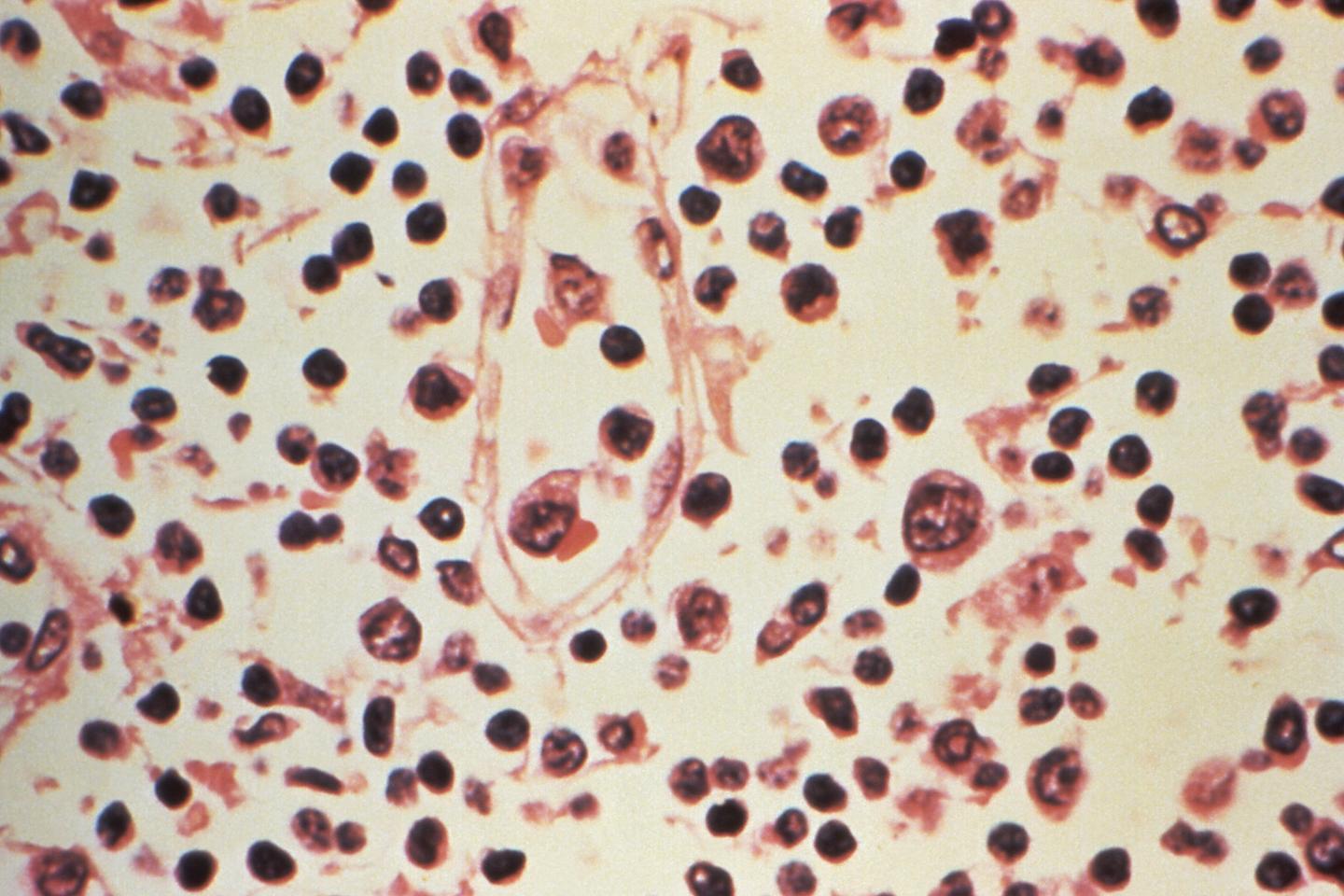
Cross-section of a lymph node sample taken from a patient suspected of having a hantavirus infection, May 6, 2026. CENTRES AMÉRICAINS DE CONTRÔLE ET DE PRÉVENTION DES MALADIES (CDC)/AFP
The term "hantavirus" has suddenly entered daily conversation. This group of viruses is behind an unprecedented outbreak in scale on the MV Hondius cruise ship, infecting eight passengers and resulting in three deaths, confirmed by the World Health Organization (WHO) on Sunday, May 3. The gravity of the situation has sparked panic reminiscent of the early days of the Covid-19 pandemic. "At this stage, the overall public health risk remains low," said the director general of WHO, Tedros Adhanom Ghebreyesus, on Wednesday.
From the nature of hantaviruses to concepts such as "contact cases" or "fatality rate," this new crisis comes with a range of scientific and medical terms that can be difficult to grasp all at once. Here is a glossary to help navigate.
Hantaviruses
Hantaviruses are a type of virus that can cause respiratory and cardiac distress as well as hemorrhagic fevers. They are named after the Hantan River, which is located on the border between North and South Korea. During the Korean War (1950-1953), more than 3,000 soldiers fell seriously ill after being infected by these viruses.