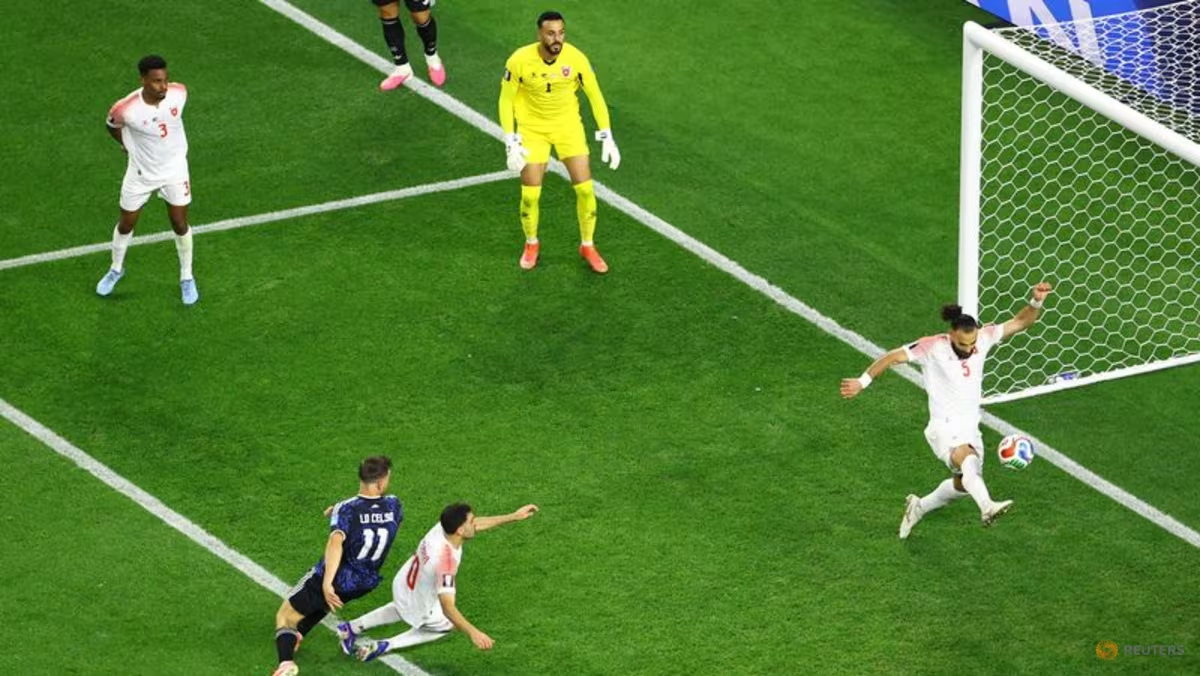
The Frenchman believes the rule change will make the game more open and exciting. If it succeeds in the Canadian Premier League it could go global
When Alejandro Díaz scored, he did not realize he was making history.
It was only hours after his club’s 2-2 draw with the Halifax Wanderers – a hard-fought match in which the Pacific FC striker grabbed the opener with a left-footed volley – that he learned that he had become the first professional player to score as a result of the so-called daylight offside rule.
Díaz plays in the Canadian Premier League, the first professional soccer league in the world to pilot the rule, which deems a player onside as long as some part of them, even a trailing foot, remains in line with the second-to-last defender. It’s a marked change from offside as it is currently called everywhere else – where an attacker cannot even be an inch ahead of that defender.
Supporters, players, coaches and Fifa officials are watching closely. Daylight offside has supporters and skeptics. If Fifa’s Arsène Wenger has his way, it may alter how the game is played everywhere, from the sport’s highest to lowest levels. The former Arsenal manager, now Fifa’s head of global development, has long advocated for the change as a way to drive scoring opportunities and limit the fine-margin offside calls that trouble referees and torment supporters. The Frenchman’s fondness for the idea is famous and long-running enough for some to call it the Wenger Law.