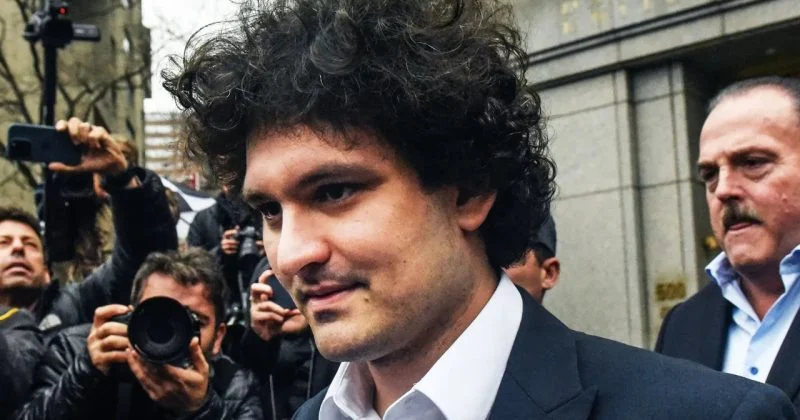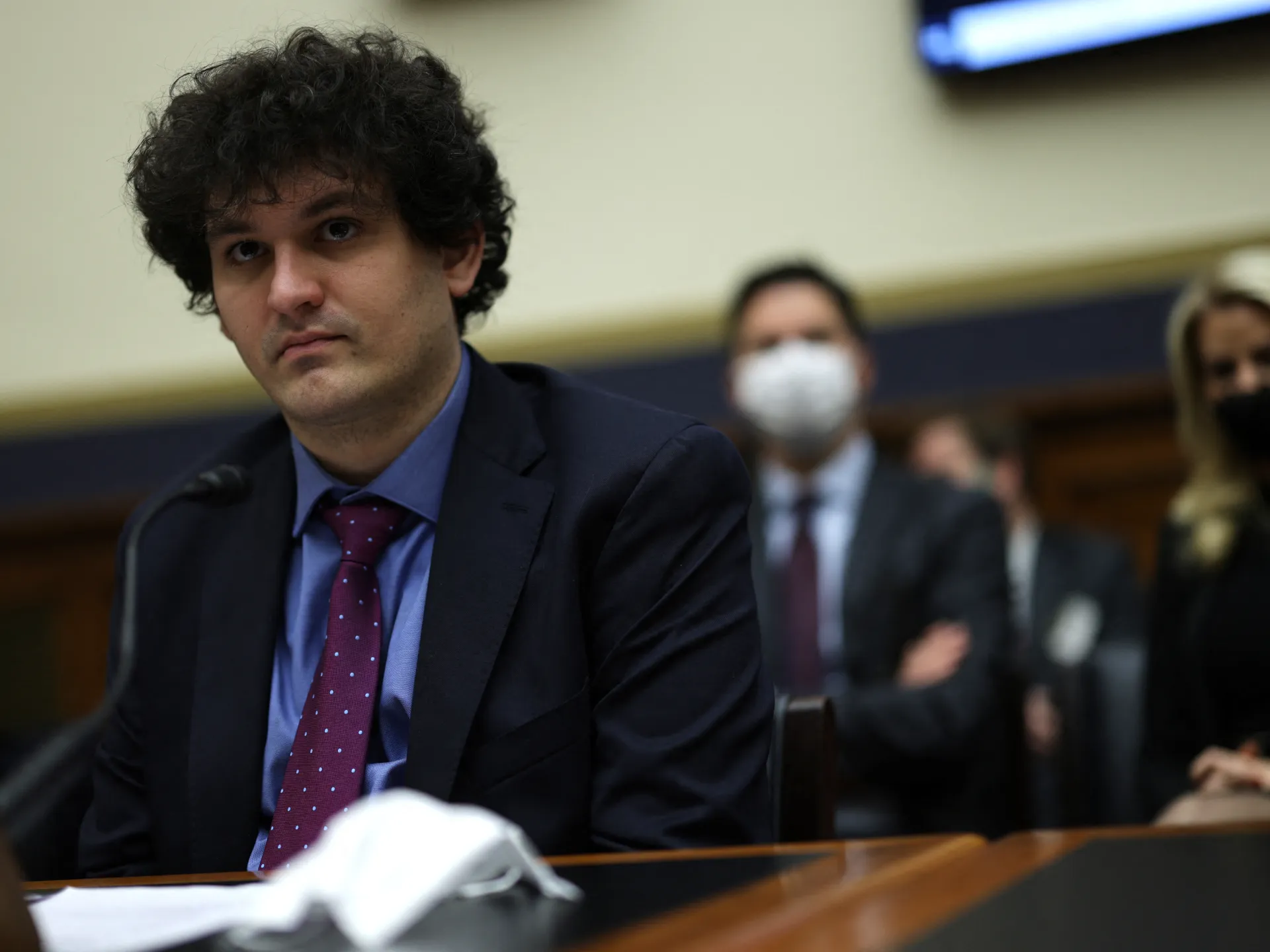
Spend enough time on X these days and you may see a number of posts marveling at Sam Bankman-Fried’s venture “genius.”Had FTX not imploded, its founder might now be remembered as one of the greatest venture investors ever, they say. Anthropic, Cursor, Robinhood — these were just a few of the hundreds of bets Bankman-Fried made when his crypto empire was thriving. “The fact that Sam invested early in Anthropic and Cursor is astonishing,” marvels Rory O’Driscoll, a partner at Scale Venture Partners, of two of Silicon Valley's leading artificial intelligence companies. Cursor, an AI coding specialist, has recently struck a deal with SpaceX potentially valuing it at $60 billion, and Anthropic, one of the AI leaders, is being valued at $900 billion. “To pick two of the most important companies in the post-’21 crash and nail it…What a talent, what a willingness to look at new stuff before the ChatGPT moment, when people were saying, ‘this might work, who knows.’”Except, of course, for the matter of whose money Bankman-Fried was investing. Once hailed as the “next Warren Buffett,” he is serving a 25-year federal prison sentence in San Pedro, CA for orchestrating one of the largest financial frauds in history and stealing more than $8 billion from FTX customers, in part to fund these investments. Before his arrest in December 2022, he graced the cover of the Forbes 400 and was estimated to have a personal fortune of $24 billion at its peak.FTX launched in 2019 and raised approximately $2 billion in venture funding. The crypto exchange quickly became one of the world's largest. Bitcoin was racing toward what was then an astonishing high of roughly $69,000, and FTX was printing money the way exchanges do: by collecting fees on every trade. Alameda Research, Bankman-Fried’s trading firm, was also everywhere — market making and placing risky bets all across crypto and beyond.Flush with cash, Bankman-Fried went on an investing spree.As an early backer of the Solana blockchain, he accumulated close to 60 million SOL tokens in 2020 and 2021. The following year, just months before FTX’s collapse, Bankman-Fried bought a 13.56% stake in Anthropic for $500 million (following the company’s subsequent fundraising, it got diluted to about 8%). He also wrote one of the first checks to Cursor, paying $200,000 for a 5% stake. Then his crypto exchange invested $700 million into venture capital firm K5 Global, approximately $200 million of which K5 invested in SpaceX. One of his last major allocations was the purchase of a 7.6% stake in Robinhood for $648 million. Had FTX’s bankruptcy estate not sold off the portfolio, those few marquee positions alone would now be worth around $100 billion.At the high end of recent private-market estimates ($1 trillion), the Anthropic stake alone would be worth $80 billion, implying a 160-fold return on Bankman-Fried’s $500 million investment. Add the indirect exposure to SpaceX through K5 Global. That position could be worth as much as $15 billion, or about 75 times the original allocation, depending on how K5’s stake is valued. SpaceX is preparing for what would be the largest IPO ever, targeting a $2 trillion valuation.The Cursor investment is now worth $3 billion, a 15,000-fold return, as SpaceX recently announced a deal giving it the option to acquire the company for $60 billion later this year. Bankman-Fried’s Robinhood shares would add another $5 billion or so, based on the company’s current market capitalization of $66 billion. The Solana stash would also be worth around $5 billion, a roughly 27-fold gain.“If Sam Bankman-Fried did nothing illegal, he might have been the best VC in history,” wrote Michael Burry, best known for predicting and profiting from the subprime mortgage crisis. “Instead he’s tweeting from a Federal Correctional Institution.”By November 2022, FTX was facing a liquidity crisis. Customers were trying to get their money out, and Bankman-Fried, who had spent years cultivating an image of crypto’s benevolent boy genius, resigned as chief executive and the company filed for bankruptcy. What investigators and bankruptcy lawyers found next was not merely a failed exchange, but an $8 billion hole. Prosecutors later argued that Bankman-Fried had treated customer deposits as a personal piggy bank, using them to bankroll investments, political donations, luxury real estate and the losses of his trading firm, Alameda Research.The cleanup fell largely to bankruptcy lawyers at Sullivan & Cromwell, a firm that had also represented FTX before its collapse. Through 2023 and 2024, they liquidated the remnants of Bankman-Fried’s empire, including the venture portfolio.At first, the liquidation appeared to be a rare bright spot in one of the most spectacular bankruptcies in modern finance. Some of FTX’s assets rose so sharply in value that customers seemed likely to recover more than the dollar amount they had frozen on the exchange — an outcome almost unheard of in a major bankruptcy.But some investors argued that the estate, in its rush to return cash, had destroyed billions of dollars in future value by selling assets too early and too cheaply.The sale of the Anthropic stake was the most glaring example. FTX sold it for roughly $1.3 billion, largely to a group of institutional investors that included a unit of Abu Dhabi’s sovereign wealth fund Mubadala, Jane Street, Bankman-Fried’s former employer, Fidelity Management and HOF Capital. The deal looked lucrative at the time. In hindsight, as Anthropic’s valuation soared, it appears to be one of the greatest vulture investments in history. The estate also sold SOL tokens at steep discounts, largely because the tokens were subject to a four-year vesting schedule. Buyers included some of the most sophisticated names in crypto and venture investing: billionaire Mike Novogratz’s Galaxy Digital, Pantera Capital, Brevan Howard Digital and the Solana Foundation, which oversees the growth of the blockchain.The Robinhood shares tied to Bankman-Fried were seized by the U.S. Marshals Service and later repurchased by Robinhood itself. The 5% stake in Cursor was sold to undisclosed buyers at its original 2022 pre-seed price. FTX sued K5 Global, which had bought shares of SpaceX, to claw back its funds but ultimately agreed to retain its stake in the firm. If SpaceX goes public at $2 trillion, that position could still deliver billions of dollars to the bankruptcy trust and, eventually, to creditors.Bankman-Fried’s lawyers tried to make something of this during his criminal proceedings. They pointed to the appreciation of FTX’s assets and the likelihood that customers would be repaid in full as evidence that the damage was not what prosecutors claimed. But restitution is not exoneration.When Forbes last estimated Bankman-Fried’s net worth, most of his fortune came from his stake in FTX, the exchange’s affiliated FTT token and cryptocurrency holdings. Today, FTX equity and FTT are essentially worthless. And because at least some of the crypto holdings Bankman-Fried once appeared to control may have been held by Alameda Research—which raided FTX customer funds at his direction—estimating what his net worth would be today is difficult.It’s highly likely that if FTX had survived, Bankman-Fried might now be one of the richest people on the planet. But that version of the story requires omitting the central fact. The portfolio did not exist apart from the fraud. It was, in fact, one of its by-products.More from ForbesForbesThe Billionaire Donors Behind Trump’s Midterm SuperweaponBy Kyle Khan-MullinsForbesHow A Chicago Accountant Quietly Built A Billion-Dollar Fortune Amassing Humdrum BusinessesBy Kirk OgunrindeForbesAmerica’s Top Architects: A Prairie House By Wisconsin’s Johnsen Schmaling ArchitectsBy Fred AlbertForbesSeven Ways Social Security Benefits Are UnfairBy William BaldwinForbesGlobal ‘10 Most Urgent’ List For 2026 Focuses On ‘Anti-State’ Charges Against JournalistsBy Katherine Love
Sam Bankman-Fried’s Venture Bets Would Have Made Him $100 Billion Richer Had He Stayed Out Of Prison
Before FTX collapsed, Bankman-Fried assembled a prescient portfolio brimming with home runs, including Anthropic and Robinhood. Lucky vulture investors will reap astonishing returns, as crypto’s boy wonder serves out his 25-year sentence.
1,255 words~6 min read