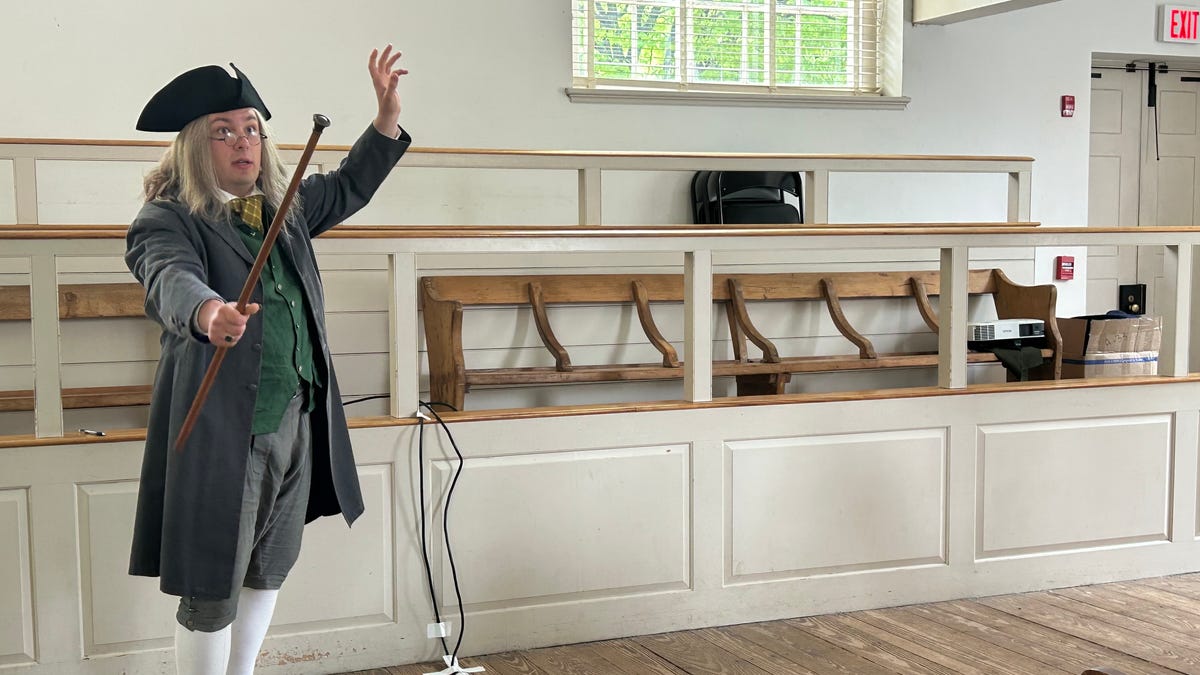
PHILADELPHIA — The room still smelled a bit like the hoagies they'd had for lunch, but the Free Quaker Meeting House felt like it was stuck in an 18th-century time warp, except for the video crew and the street noise outside.
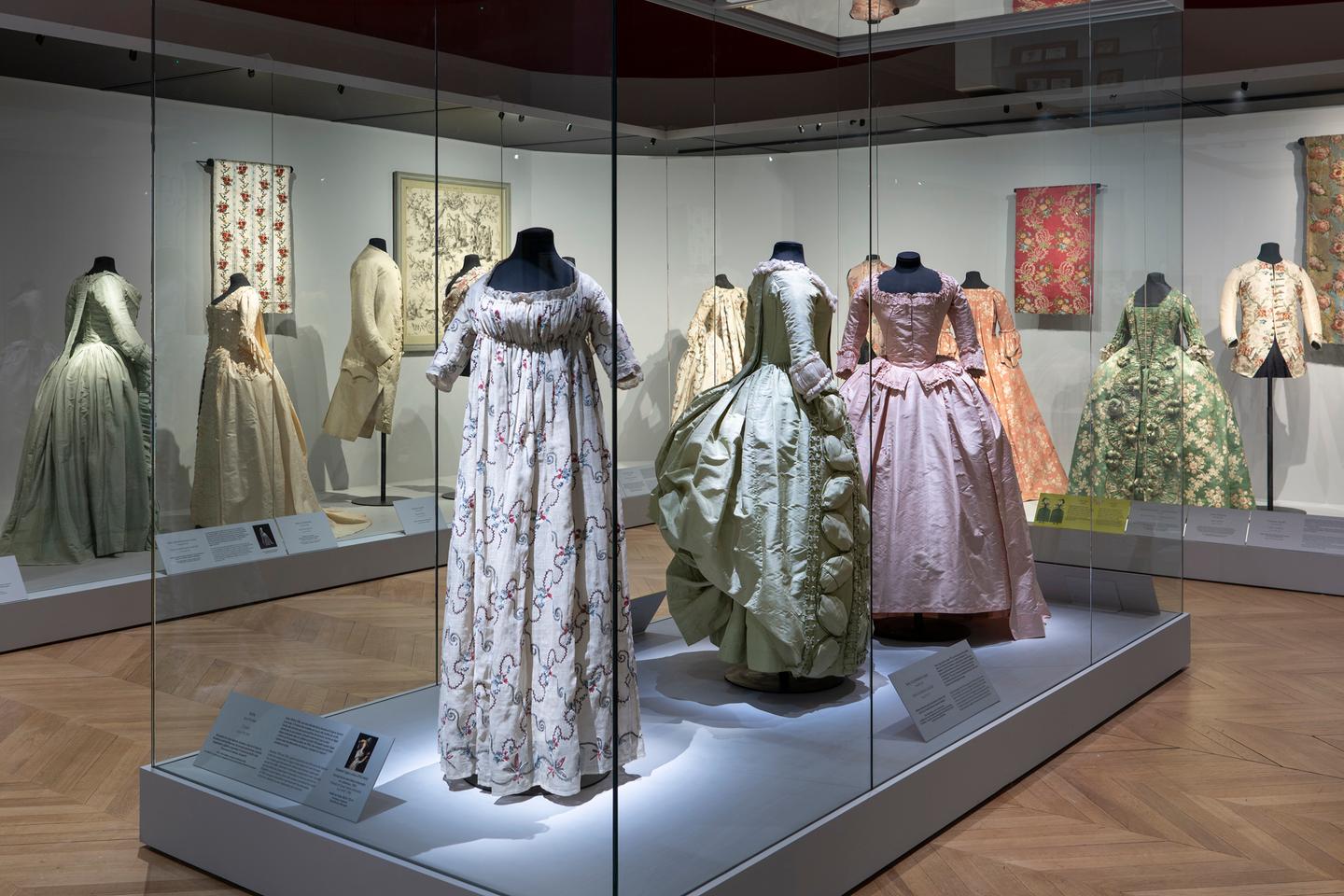
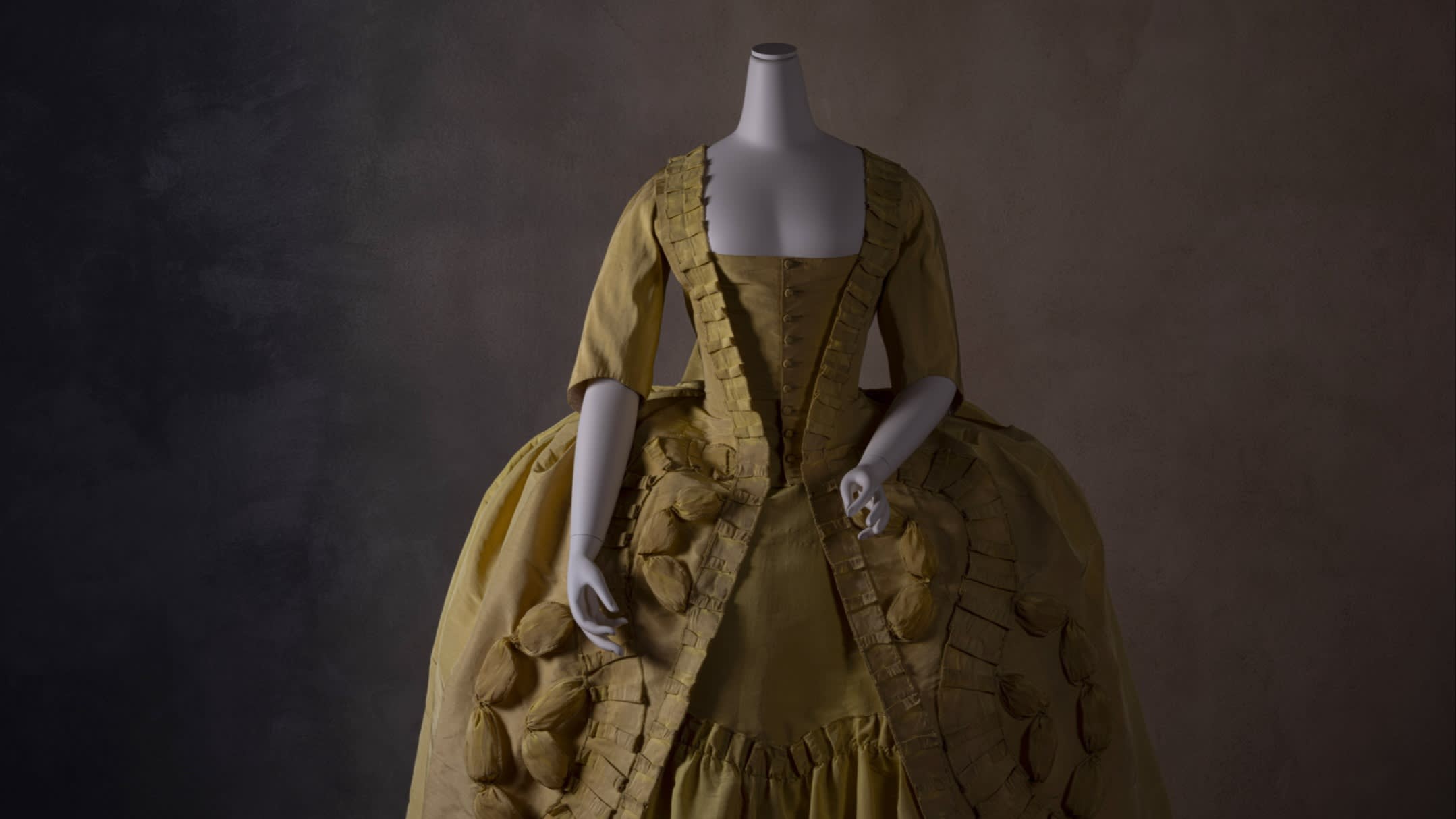
Men wore tri-corner hats, white stockings, and long coats. Women wore their hair in bonnets, with long skirts and aprons. The wooden benches in the vintage 1783 brick building at the corner of 6th and Arch streets in the heart of Philadelphia's Old City looked like they might have when congregants gathered, the open space illuminated by natural light entering from its large windows.
Actors in period costumes looked over scripts and chatted with one another. One brought her knitting, and most carried some sort of prop — a cane, a book, satchels like those carried by people who made Philadelphia their home in the 1700s.
But this was not a Quaker meeting. It was a rehearsal for the Benstitute, a training program for historic interpreters and storytellers through Historic Philadelphia's Once Upon a Nation.
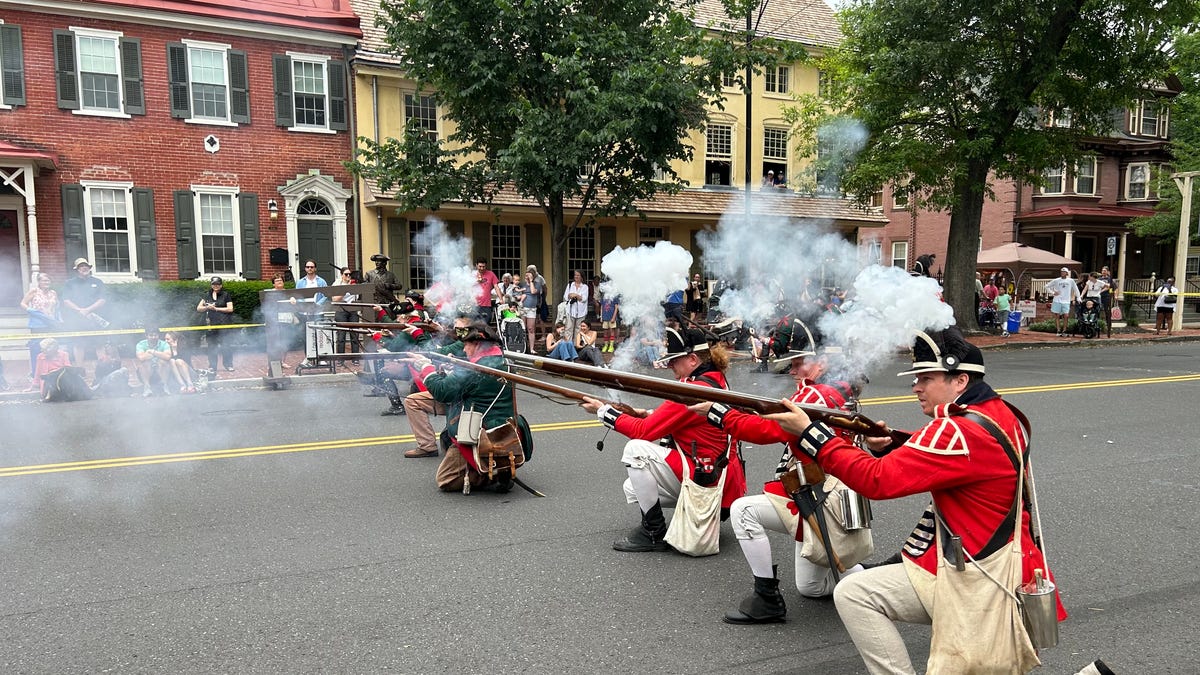
For reenactors (hobbyists who usually act out historic events) and interpreters (actors who inhabit the persona of a historic figure on an ongoing basis), bringing historic figures to life is more than dressing in period costumes and weekend cosplay. It requires preparation and research, a love of history, and a dedication to accuracy.