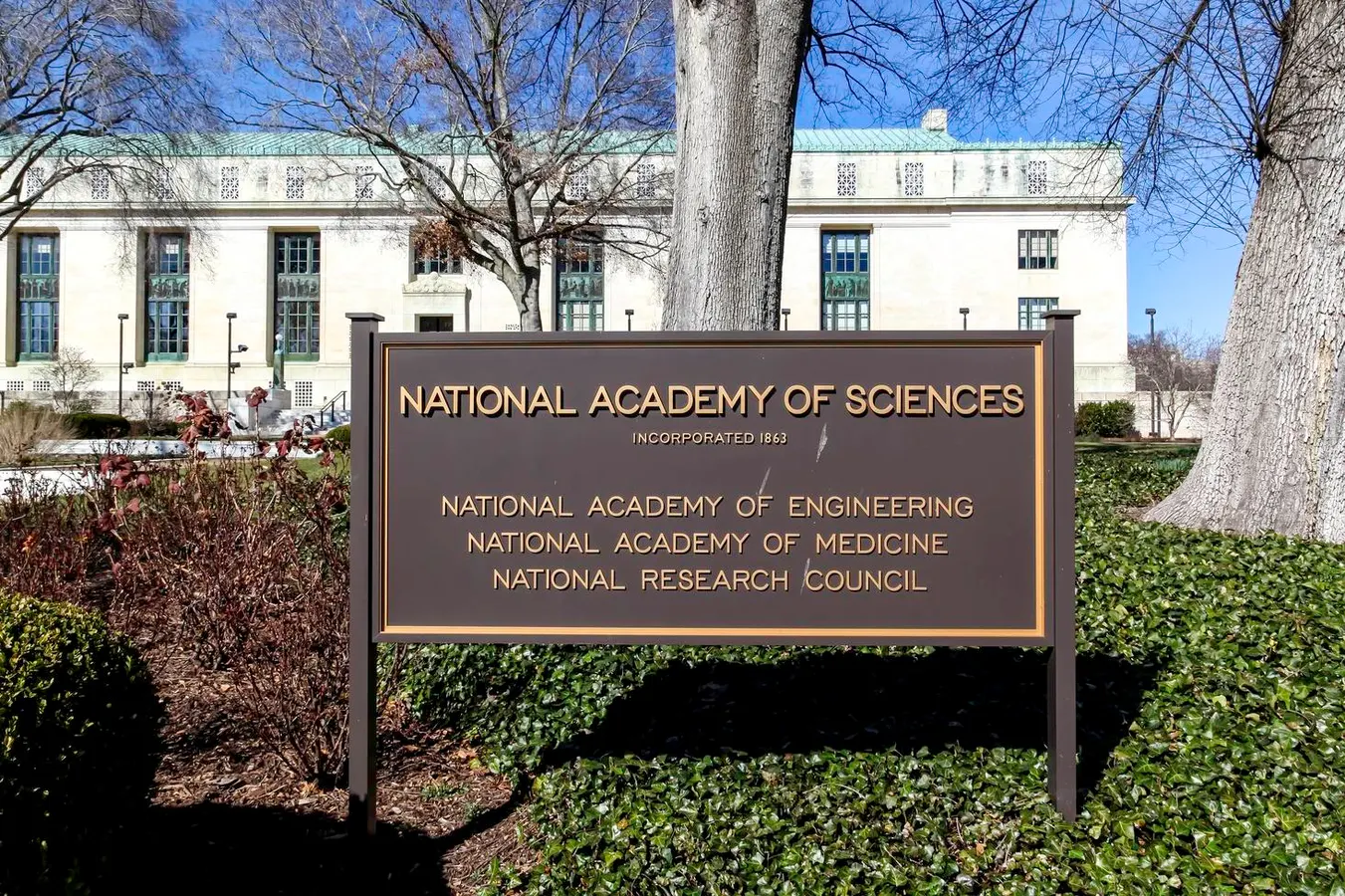
The National Academy of Sciences has elected 120 members for 2026. Harvard University led the way with the election of 15 of its faculty to the NAS.gettyThe National Academy of Sciences has announced the 2026 election of 120 new members and 25 international members.Election to the academy is for scientists who have been judged by their peers to have made distinguished and continuing achievements in original research. Membership in the Academy is widely regarded as one of the highest honors that can be bestowed on a scientist.With the new members elected this year, the total number of active NAS members now stands at 2,705, and the number of international members is 557. The international members, who are scholars with citizenship outside the United States, are considered nonvoting members of the Academy.Nominations to be a member of the NAS can be made only by the existing members; there is no membership application process. Following a candidate’s nomination, an extensive vetting process is conducted, resulting in a final election ballot at the Academy’s annual meeting in April each year. Currently, a maximum of 120 members can be elected annually; the maximum number of international members who can be elected is set at 30 each year.Elected members are affiliated with scientific discipline in one of six categories:Physical and Mathematical SciencesBiological SciencesEngineering and Applied SciencesBiomedical SciencesBehavioral and Social SciencesApplied Biological, Agricultural, and Environmental SciencesThe full list of the new members can be found here. This year, the new members were elected from a broad array of more than 50 colleges, universities, national laboratories and other research institutions.MORE FOR YOUHarvard University led the way this year with the election of 15 of its faculty to the Academy. It was followed by Stanford University, which had 9 faculty elected; Princeton University, with 8 faculty; the University of California at Berkeley with 6; MIT with 5; the University of Texas Southwestern Medical Center , University of California at San Diego, University of Michigan, UCLA, and Columbia University, each with 3.About the AcademyThe National Academy of Sciences is a private, nonprofit institution that was established under a congressional charter signed by President Abraham Lincoln in 1863. Its mission is to recognize outstanding scientific achievements, foster a broad understanding of science and provide independent, authoritative, scientific advice to the government.The National Research Council was formed by a presidential executive order from Woodrow Wilson in 1916 to expand the expertise available to the NAS in fulfilling the mission of its original Congressional charter.Under the authority of that charter, the National Academy of Sciences established the National Academy of Engineering in 1964 and the Institute of Medicine in 1970 (which in 2015 became the National Academy of Medicine).Today, the three Academies work together as the National Academies of Sciences, Engineering, and Medicine to “provide independent, objective analysis and advice to the nation and conduct other activities to solve complex problems and inform public policy decisions.” The Academies also encourage education and research and attempt to increase public understanding about science, engineering, and medicine.The current president of the National Academy of Sciences is Marcia McNutt, who previously served as the editor-in-chief of the Science journals (2013-2016) and director of the U.S. Geological Survey (2009-2013). McNutt is scheduled to give a State of the Science address on June 2 in Washington, D.C., where she will describe the current status of U.S. research and discuss how the scientific community can respond to a new and rapidly changing research environment.“Science is our best hope for creating a future we all want — one in which our economy thrives, our country is safe and secure, and every American can enjoy a good quality of life,” McNutt said in a recent news release. “For decades, science has been the bedrock of U.S. economic growth and national prosperity. In my address, I will explore reforms that could make the research enterprise more resilient so that science can continue to produce the foundational advances we depend on to drive progress and ensure U.S. leadership.”
The National Academy of Sciences Elects 120 New Members For 2026
The National Academy of Sciences has elected 120 new members and 25 international members. Harvard led the way with 15 electees, followed by Stanford (9) & Princeton (8).
665 words~3 min read