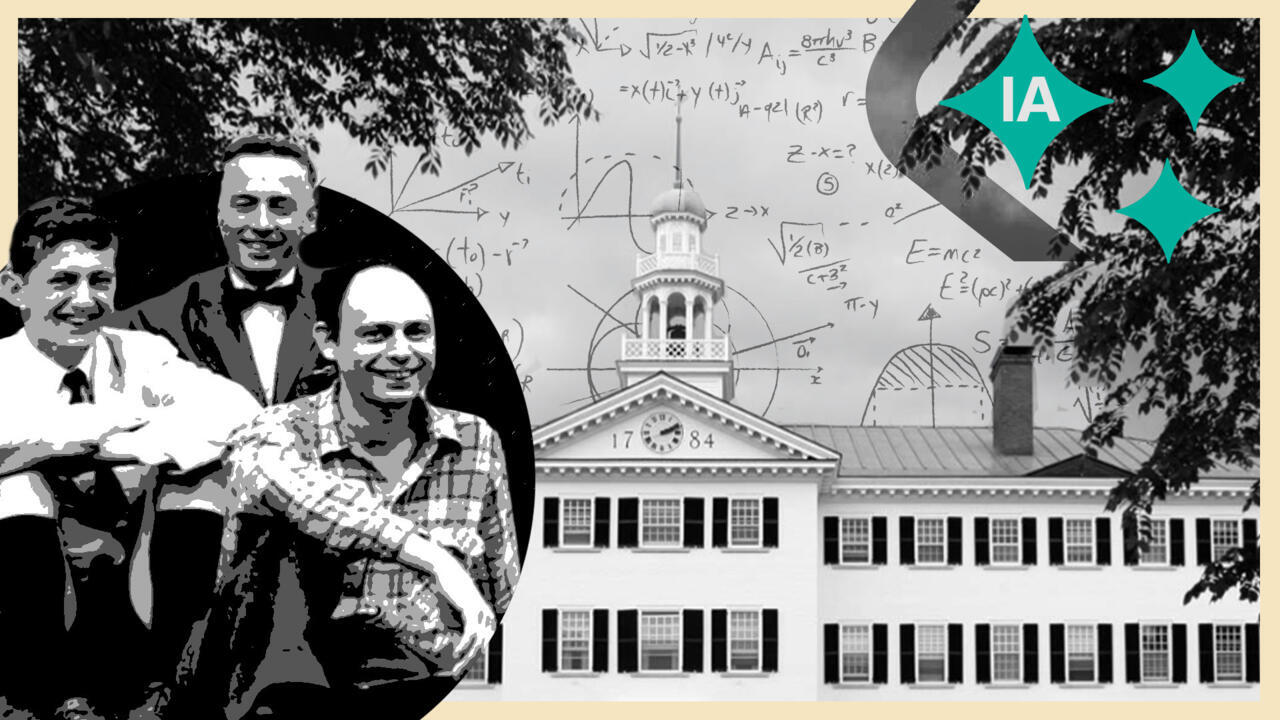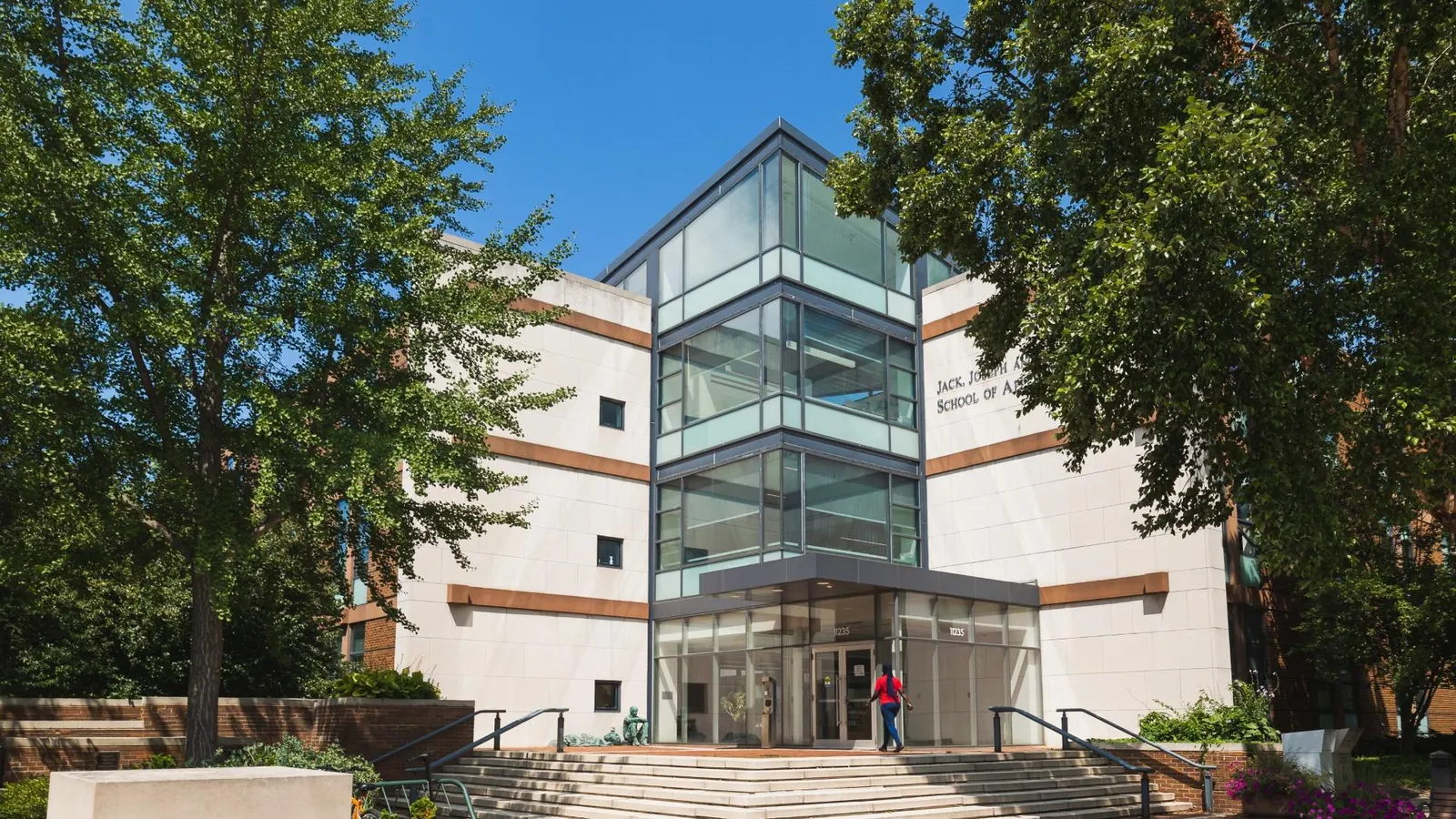
Over the last two decades, the humanities and social sciences have been in retreat on many college campuses, as debt-burdened students have sought better-paying careers in STEM (science, technology, engineering, and mathematics) and state legislatures and private university boards have pushed to eliminate low-enrollment, low financial return majors. That trend has accelerated with recent federal funding cuts. Meanwhile, universities have been scrambling to beef up their artificial intelligence offerings, while billionaire donors like Mark Zuckerberg have poured money into keeping their alma maters in the AI race. (See Billionaire Givers below.) But dramatic changes in the job market and a just-announced, record-breaking $125 million gift to Case Western Reserve University from the Jack, Joseph and Morton Mandel Foundation, suggest a resurgence could be in the offing for the humanities and social sciences, and for programs that produce double majors schooled in both STEM and the humanities. With the advances in AI, “a traditional STEM degree in a technical discipline is proving to be more fragile than we thought even 10 years ago,” David Gerdes, the dean of Case Western’s College of Arts and Sciences and a renowned physics professor, told Forbes. He argues that the humanities are becoming even more important today, as AI automates much of the work traditionally done in entry-level roles and employers demand such skills as high-level communication, empathy, critical thinking and persistence. Those, he adds, “are what separates humans from machines and what separates workers who cut and paste answers from AI models to workers who are really innovators and leaders.” Case Western, in Cleveland, was honored earlier this month on Forbes’ 2026 New Ivies list of 10 private and 10 public universities employers love. It has long been known for its strength in STEM, especially its engineering, biomedical engineering and medical programs. And like other New Ivies, it has jumped into AI, tripling the number of its AI course offerings to over 100 across 40 departments. It also began offering an AI minor for engineering students this year, with an AI major in the process of being approved.But the majority of the $125 million gift, the largest to higher education in Ohio history according to the school, is going to Case Western’s humanities program, including to fund the creation of a new 50,000 square foot humanities building, as well as support the Humanity & Technology major (where students simultaneously pursue one humanities and one STEM major) and the Mandel Fellowship in the Experimental Humanities, which launched on a pilot basis three years ago. One Mandel fellow is pursuing mechanical and aerospace engineering and a philosophy major to explore the ethics of AI robotics, while another is studying both neuroscience and dance with the aim of advancing neuroprosthetics to help with damaged motor functions. Much of the rest of the donation will go to scholarships and support for those studying social work.The Mandel brothers (left to right) Joseph, Jack and Morton, in November 5, 2007. They appeared on the first Forbes 400 list in 1982.Courtesy Daniel Milner“We are leaning into the humanities here, despite being a strong STEM school, at a time when some institutions are closing down humanities departments,” says Joy Ward, provost and executive vice president at Case Western and a biology professor. In fact, the number of humanities bachelor's degrees awarded in the United States declined 30% between 2012 and 2024, with more traditional disciplines like history, English, foreign languages and religious studies plummeting nearly 50%. As of 2024, the latest year with federal data, the humanities made up just 8.4% of all bachelor's degrees awarded—the smallest share since records began in 1987. Robert Townsend, the humanities director at the American Academy of Arts and Sciences, notes the shift to more career oriented majors began in the wake of the Great Recession, when debt-burdened humanities grads working as baristas became a painful cliche. But the Academy also points to a particularly sharp 13% drop in humanities degrees from 2021 to 2023, coinciding with OpenAI’s public launch of ChatGPT in late 2022. Now, with more advanced AI modes from Anthropic and others limiting the need for entry-level workers (including programmers) doing rote jobs, the narrative may be shifting. “The pendulum is swinging,” says Scott Muir, the education advocacy director at National Humanities Alliance. Sure, he’s a humanities advocate. But he makes a compelling point: “The post-2008 logic of needing technical training to guarantee a job is shifting to a realization that narrow technical education may be obsolete within a short time frame and you actually need a more foundational education that's going to help you adapt to a very disruptive job market.” Ifthe tide is turning on humanities education, the Mandel Foundation, founded in 1953 by brothers Jack, Joseph and Morton, is well equipped to see it and fund it. Including the family’s supporting organization at the Jewish Federation of Cleveland, it now controls $6.9 billion in charitable assets, a Foundation spokesperson says.The connection to Case Western is longstanding. Morton Mandel, the last of the brothers to die (in 2019 at the age of 98), dropped out of the school in 1940 to team up with his two older brothers and buy an auto parts distribution business from their uncle for $900. He was the only sibling to even start college and the only one born in the U.S., after his father and later mother and brothers immigrated from Poland. The three brothers built that small business into electronic components distributor Premier Industrial Corp. They landed the final three spots on the very first Forbes list of America’s 400 richest in 1982 with an estimated net worth of $75 million each (or about $253 million in today's dollars) thanks to their stakes in the company.In 1996, Premier Industrial was acquired for $2.8 billion, with the Mandel family making an estimated $1.8 billion from the sale. The brothers began to focus on their philanthropic work (a majority of the family’s wealth went to charity) and on unfinished business. In 2013, at the age of 91, Morton finally completed his bachelor’s degree at Case Western. His senior “capstone” project was a 177-page treatise on leadership. “Morton was particularly dismayed by some of the ethical lapses of big business leaders and wondered if it had to do with how they were educated,” says Steve Hoffman, a long-time associate of the family and now chairman of the Mandel Foundation. “He believed that the humanities had a lot to say to a person and that we needed more well-rounded people to be leaders.” The foundation has concentrated its philanthropic giving on the Cleveland area, the humanities and Jewish causes. Recent donations include a $50 million grant to the famed Cleveland Clinic and a $50 million grant to the Cleveland Orchestra. Over the years, it has donated $56 million to Brandeis University to establish the Mandel Center for the Humanities and fund related research grants, and, in 2023, made a $2.7 million donation to several local community colleges to redesign humanities curricula for career readiness.The Foundation’s $125 donation to Case Western, announced today, is its largest single gift ever and adds to a previous $70 million in donations to the school, including for the establishment of the Jack, Joseph and Morton Mandel School of Applied Social Sciences. With nearly $200 million gifted over the years, it now ranks as the school’s largest donor.While $72 million of today's donation will be going to the humanities building and programs, another $28 million is dedicated to the school’s social work program under the School of Applied Sciences. The aim is to encourage more students to pursue a career that isn’t well paid, but is in high demand. “AI is an incredible aid to many disciplines, but AI will never replace the human element that’s at the core of what social workers do,” says Dexter Voisin, dean of the School of Applied Social Sciences. “The current educational marketplace cannot produce enough social workers to meet an exploding need.” The remaining $25 million will go to the president’s office for discretionary funds. “The rate of change of our society right now—due largely but probably not completely to AI—is just so fast that it’s only becoming harder for people to make ethical decisions, to make decisions that are grounded in our history and tradition,” Case Western president Eric Kaler, a former chemical engineering and materials science professor, told Forbes. “Everybody needs to be familiar with where we came from and how we get to where we're going to go—that's really at its core what the humanities provide.” Billionaire GiversFor Artificial IntelligenceIn 2026, Morningstar founder Joe Mansueto donated $50 million to the University of Chicago to recruit and support faculty with expertise in AI across disciplines. In 2026, Bloomberg cofounder Thomas Secunda gave $30 million to Binghamton University, SUNY, for the first independent AI research center at a U.S. public university.In 2021, Meta cofounder Mark Zuckerberg and his wife Patricia Chan, pledged $500 million to Harvard for the creation of an AI Institute. For HumanitiesIn 2024, Uniqlo founder Tadashi Yanai donated $31 million to the UCLA College Division of Humanities for the Yanai Initiative for Globalizing Japanese Humanities.In 2024, KKR co-CEO Joseph Bae and his wife Janice Lee donated $20 million to Harvard to endow the Arts and Humanities deanship and support financial aid.In 2019, Blackstone cofounder Stephen Schwarzman gave £150 million ($188 million) to Oxford University to establish the Schwarzman Centre for the Humanities, including a new Institute for Ethics in AI.More from ForbesForbesThe New Ivies: 20 Great Employer-Friendly Colleges Embracing AIBy Alicia ParkForbesHow Forbes Selected The New Ivies For 2026, Our Third Annual ListBy Alicia ParkForbesAmerica’s Top 25 Philanthropists — And Why Musk, Page And Ellison Aren’t On The ListBy Forbes Wealth TeamForbesA College Double Major Could Be A Ticket To Career SecurityBy Emma Whitford
Record $125 Million Gift To Case Western Boosts Humanities In AI Age
The Mandel Foundation, started by three brothers on the first Forbes 400 list, is giving $125 million for, among other things, interdisciplinary studies such as the ethics of robotics.
1,631 words~7 min read