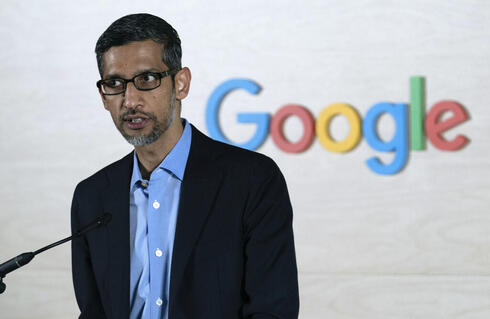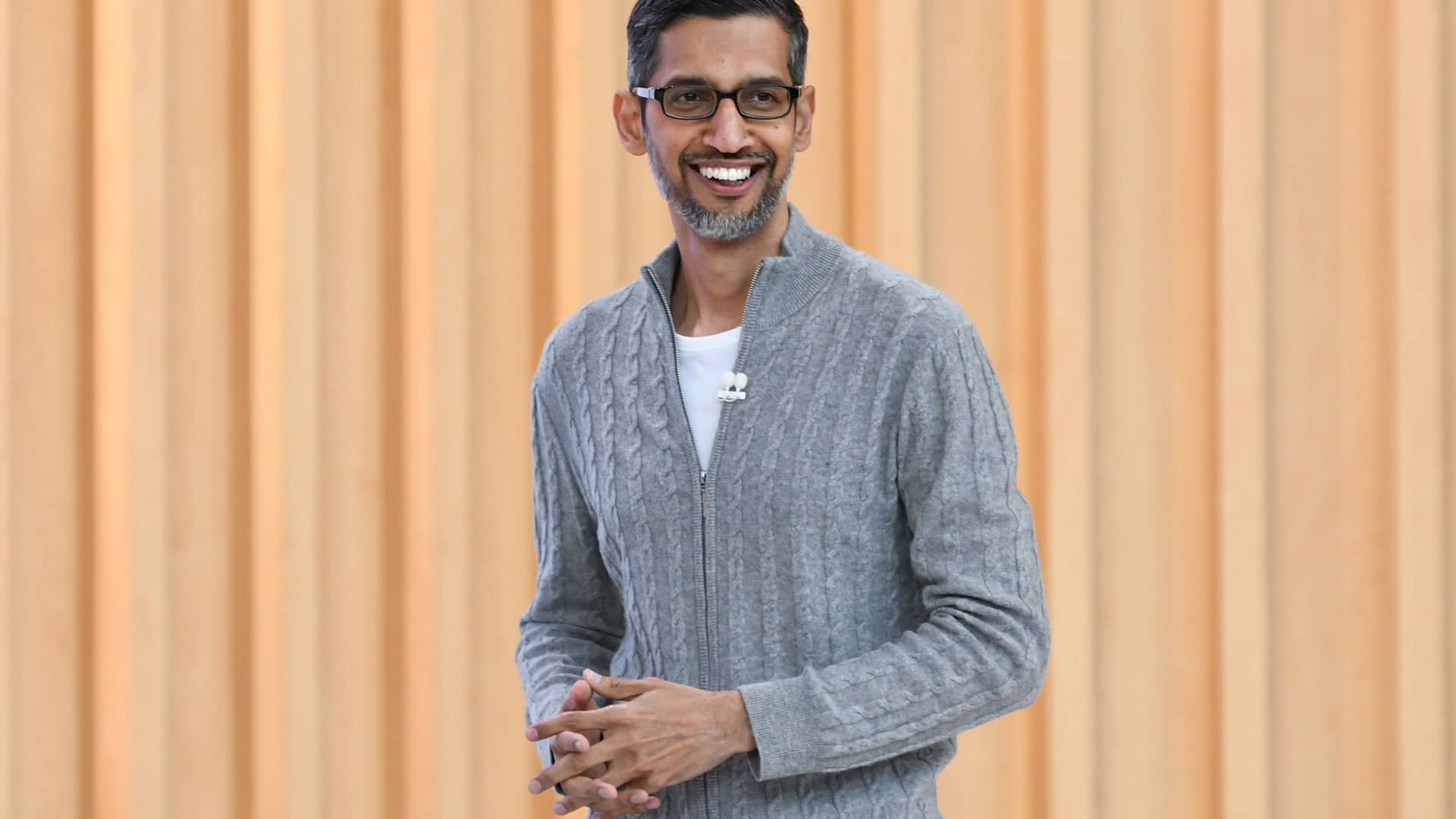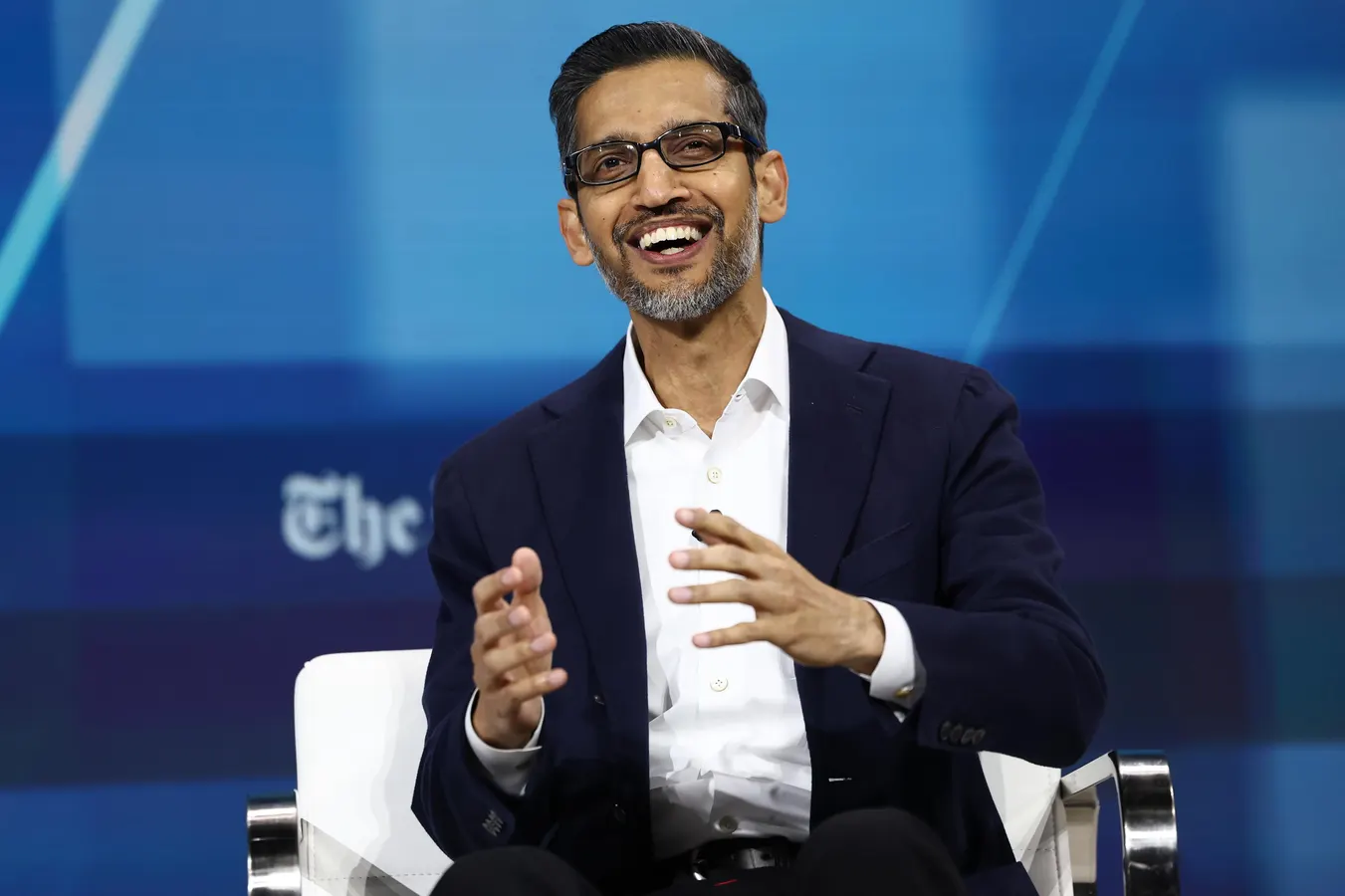
NEW YORK, NEW YORK - DECEMBER 04: Sundar Pichai, C.E.O. of Google and Alphabet, speaks during the New York Times annual DealBook summit at Jazz at Lincoln Center on December 04, 2024 in New York City. The NYT summit with Andrew Ross Sorkin returns with interviews on the main stage including Sam Altman, co-founder and C.E.O. of OpenAI, Jeff Bezos, founder and executive chairman of Amazon and owner of the Washington Post, former U.S. President Bill Clinton and Prince Harry, The Duke of Sussex, among others. The discussions will touch on topics such as business, politics and culture. (Photo by Michael M. Santiago/Getty Images)Getty ImagesA single night of Big Tech earnings made one thing unmistakably clear: investors are no longer rewarding AI spending — only AI payoffs. Alphabet surged while Microsoft and Meta sank, as Wall Street drew a sharp line between hyperscalers turning massive AI capex into cloud revenue and those still waiting for returns.On the evening of April 29, four highly valued companies — hyperscalers that together represent 18% of the S&P 500 — released quarterly results. All beat Wall Street’s revenue and earnings estimates, but the market reaction diverged sharply based on each company’s ability to convert AI investment into measurable growth.Alphabet was the night’s winner, sending the stock up about 7% in pre-market trading. Shares of Amazon (+2.3%) also rose, whereas Microsoft (-2.4%) and Meta (-9%) declined.Read on to learn why return on AI investment made the difference — and whether Alphabet’s short-term win will persist, rewarding the Google parent’s investors with the biggest 2026 stock market gains of the hyperscaler pack.Alphabet: The Only Clear AI Payoff StoryAlphabet’s stock rose because the company grew faster than expected due to business demand for its AI services.MORE FOR YOUThe Google parent’s revenue increased 22% to $109.9 billion — $2.9 billion more than the consensus estimate. Most significantly, Alphabet’s Google Cloud revenue jumped 63% to $20 billion, and the cloud backlog nearly doubled to more than $460 billion. The stock rose because Alphabet demonstrated a quick return on AI investment compared to the other three peers. AI solutions were the primary growth driver for Google Cloud “for the first time,” Alphabet CEO Sundar Pichai said during the earnings call. "We are compute-constrained in the near term. Our cloud revenue would have been higher if we had been able to meet demand." Analysts boosted their price targets on the premise that if Google — which 32 analysts forecast on average will rise 10.6% — had more AI chips, it could grow even faster. Pivotal Research raised its price target to a Street-high $470. BMO Capital and Bank of America both reiterated bullish targets, and BofA’s Justin Post called GOOGL his firm’s top stock pick.Amazon: Strong AWS Growth, But Capex Mutes The ReactionDespite expectations-beating growth, investors reacted cautiously because capital expenditures rose while free cash flow collapsed.Amazon’s total, AWS and advertising revenue all grew rapidly. The company’s total revenue of $181.5 billion was $4.2 billion above the consensus estimate of $177.3 billion.AWS’s 28% growth to $37.6 billion was its fastest pace in 15 consecutive quarters. The AWS revenue backlog increased 49% from the fourth quarter of 2025 to $364 billion in Q1 2026. Meanwhile, advertising revenue rose 24% to $17.2 billion — pushing the business to a trailing 12-month run rate above $70 billion.Investors’ enthusiasm was capped because rising capital expenditures paired with declining free cash flow. Amazon’s full-year capex budget is forecast to hit $200 billion — 53% above last year’s $131 billion — while trailing free cash flow fell 95% from $25.9 billion in the first quarter of 2025 to $1.2 billion in Q1 2026.Nevertheless, bullish analysts expect incremental cloud backlog at AWS to follow increased capex. AWS can hit 38% growth in 2026 — 12 points above Street consensus — driving a price target of $304, according to UBS analyst Stephen Ju, whose 2027 operating income estimate is 39% above consensus.Amazon stock’s latest price target of $320 suggests 22% upside.Microsoft: Big Beats Overshadowed By A $190 Billion Capex ShockMicrosoft beat expectations on revenue and AI momentum, but its capital-expenditure guidance weighed on the stock.Total, AI and Azure revenue exceeded expectations. Total revenue rose 18% to $82.9 billion — $1.5 billion above estimates. Azure revenue growth increased 40%, and Microsoft’s AI business’s annual revenue run rate soared 123% to $37 billion.Microsoft celebrated the results. The quarter marks "the beginning of one of the most consequential platform shifts" toward agentic computing, CEO Satya Nadella said on the investor call. The stock declined — after Microsoft’s market capitalization had already fallen $357 billion in 2026 ahead of the announcement — likely because of a jump in capex. CFO Amy Hood raised 2026 capex guidance to roughly $190 billion for the full year — $35 billion above consensus due to rising memory-chip costs. Some analysts remained bullish. The report was "a pleasant surprise," Jefferies analyst Brent Thill said, noting Microsoft is "the last thing CIOs would cut." Microsoft stock is undervalued according to 30 Wall Street analysts offering 12-month price targets. To reach the average target of $553.52, the stock would need to rise about 31%.Meta: Strong Growth, But Investors Fixate On SpendingLike Microsoft, Meta delivered expectations-beating revenue growth, but investors focused on rising capex and other negatives.Total revenue increased 33% to $56.3 billion. Ad impressions increased 19% as AI-driven targeting pushed the average ad price up 12%. The Facebook parent’s adjusted earnings per share of $7.31 were 52 cents above estimates of $6.79. Investors focused on Meta’s negatives. Higher component pricing and data-center costs increased the company’s capex guidance by $10 billion to $135 billion.Investors also reacted to the more than $4 billion loss in Reality Labs and a drop to 3.56 billion in Family Daily Active People during the quarter compared with March 2026, partly due to internet disruptions in Iran. Analysts remain optimistic. The stock would need to rise 24.4% to reach the $832.37 average price target based on 36 Wall Street analysts. Bulls include Evercore ISI’s Mark Mahaney, who maintained a Buy with a $900 price target. "Meta continues to earn the right to invest as long as it delivers faster top-line growth," Truist’s Youssef Squali said.AI ROI: The New Hyperscaler DivideAbout two years ago, I anticipated — through my AI Value Pyramid — that the most value would flow to companies using generative AI to boost revenue growth rather than cutting costs or increasing productivity.Since then, investors have sharpened that distinction. With these four hyperscalers increasing AI capital expenditures, investors are rewarding companies that generate expectations-beating cloud-services revenue alongside higher capex. Conversely, investors punish companies that do not provide enough offsetting proof of growth when they spend more on AI data centers.That’s why Alphabet — with 63% cloud growth, demonstrated AI return on investment, the lowest valuation in the group and a $460 billion backlog — looks positioned to remain the leader of the pack.
Earnings Reveal The First Real Winners And Losers Of The AI Arms Race
Alphabet surged while Microsoft and Meta fell as Big Tech earnings revealed a new divide: investors reward AI payoffs, not spending. Here’s how each hyperscaler performed.
1,148 words~5 min read