ToplineThe number of people who filed for unemployment benefits last week plummeted to its lowest level in decades, according to Labor Department data released Thursday, signaling labor market stability even as Federal Reserve officials warned of uncertainty.The Federal Reserve said the labor market faced an "unusual and uncomfortable" balance.Getty ImagesKey FactsUnemployment benefit applications totaled 189,000 in the week ending April 25, the Labor Department reported, falling well below consensus analyst estimates of 214,000, according to FactSet.That’s the fewest jobless claims filed in a single week since 1969.Continuing jobless claims, or the number of Americans already receiving benefits, dropped to 1.79 million, the fewest since April 2024 and below economist projections of 1.83 million.What To Watch ForThe Bureau of Labor Statistics will report unemployment data on May 8, and Wall Street anticipates the unemployment rate to settle at 4.3%. Job growth is expected to have slowed down in April, following a surge of 186,000 nonfarm jobs added in March, with an estimated 60,000 jobs added to the U.S. economy. Job openings data, to be published on May 5, is expected to show a slowdown in job availability, dropping from 6.8 million in February to 6.4 million in March.What Has The Federal Reserve Said About The Job Market?Fed Chair Jerome Powell, who spoke on Wednesday after the central bank voted to hold interest rates between 3.5% and 3.75%, said the job market was showing “more and more signs of stability.” Demand for workers has “clearly softened,” Powell said, noting job openings, layoffs, hiring and wage growth had shown “little change” in recent months. “In a sense, the labor market is in balance, but it’s an unusual and uncomfortable kind of balance where people who don’t have jobs will have a hard time breaking in unless somebody quits their job,” Powell said, adding it “doesn’t feel like a good labor market.”Key BackgroundThe job market has shown signs of stability despite inflation settling well above the Federal Reserve’s 2% target. Fed officials have cautioned about potential instability throughout the Iran war, warning the conflict’s impact on the U.S. economy is still unknown. Firms have announced large-scale job cuts in recent months as spending on AI infrastructure has accelerated over the last year: Microsoft reportedly said earlier this month it would initiate its first-ever employee buyout program to some 7% of its U.S. workforce. Meta last week told employees it would lay off 10% of its workforce and wouldn’t hire for 6,000 open jobs as the tech giant offsets the funds to integrate AI. Oracle cut up to 30,000 roles in March as the company invests in building out AI infrastructure, and Snapchat parent Snap said 1,000 jobs would be cut this month because of “rapid advancements in artificial intelligence.” Further ReadingForbesKey Inflation Meter Jumped Again During Iran War—As Consumer Prices Remain HighBy Ty Roush
Unemployment Claims Plummet To Nearly 60-Year Low
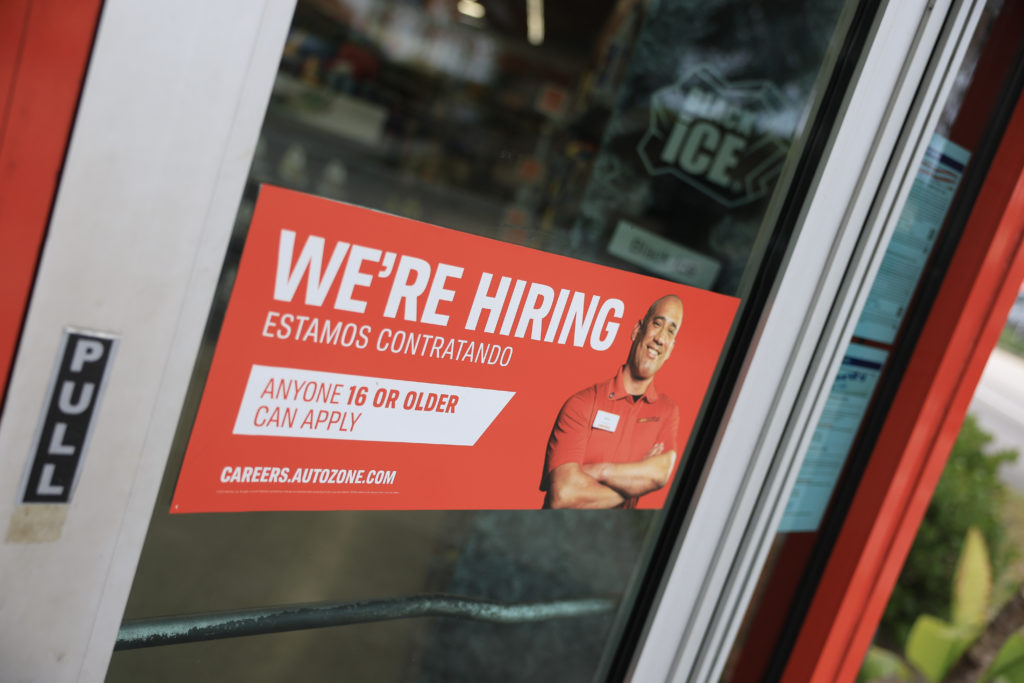
The Federal Reserve said the labor market faced an “unusual and uncomfortable” balance.
470 words~2 min read