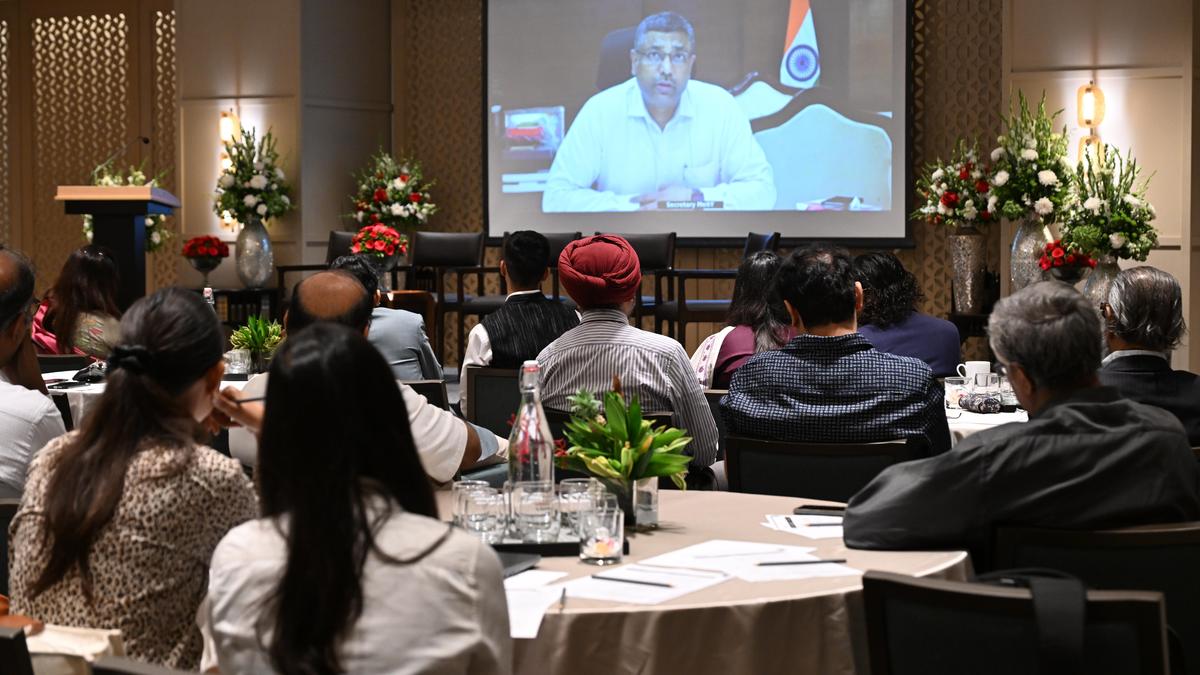
Ministry of Electronics and Information Technology Secretary S. Krishnan virtually addresses a conference on ‘AI Governance: Ethics, Data Protection and Legal Framework’ in Chennai on April 28, 2026.
| Photo Credit: M. SRINATH
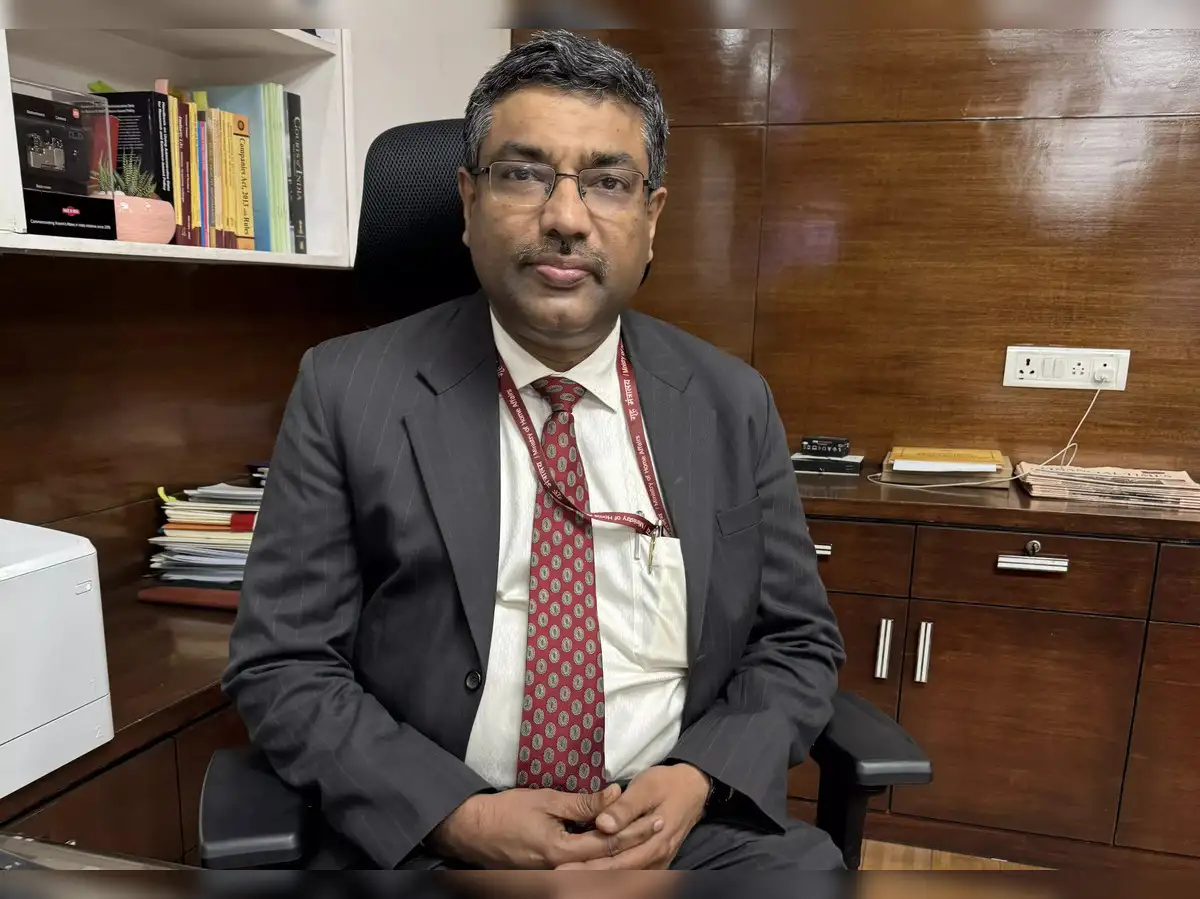
The Government of India is speaking to Anthropic about the concerns over Mythos, a top official of the Ministry of Electronics and Information Technology (MeitY) said on Tuesday (April 28, 2026).In his virtual address at a one-day conference on ‘AI Governance: Ethics, Data Protection and Legal Framework’, MeitY Secretary S. Krishnan termed it a “real threat”. The conference was organised by the Deccan Centre for International Relations, Chennai; Dhirubhai Ambani University’s School of Law, Gandhi Nagar; and IITM Pravartak, with the support of MeitY.Mr. Krishnan listed the efforts being made by the Ministry. The impact of artificial intelligence (AI) on cybersecurity had emerged as a “very real threat” and it had come up in “very real terms” with the release of Mythos by Anthropic, he said. “And the concerns have led to a lot of discussions within the government. The government is speaking to Anthropic.”The Computer Emergency Response Team India (CERT-In, an agency under MeitY), which looks after cybersecurity, “has put out a set of guidelines, after extensive consultations, and an advisory on how this particular issue needs to be handled”, Mr. Krishnan said. The Finance Minister and the Minister for Electronics and Information Technology had addressed all the leading bankers and other financial institutions so as to alert them to where this threat was and how this particular area needed to be looked at, he said.In his presentation, Professor Balaraman Ravindran, Centre for Responsible AI, Wadhwani School of Data Science and Artificial Intelligence, IIT Madras, spoke about AI regulation and flagged the challenges in enforcement. He underlined the need for voluntary commitment because enforcement would become a challenge.Referring to India’s AI Governance Guidelines, he said there were seven key principles or sutras: Trust is the Foundation; People First; Innovation over Restraint; Fairness and Equity; Accountability; Understandable by Design; and Safety and Resilience and Sustainability.Earlier, T.S. Tirumurti, former permanent representative of India to the United Nations in New York, welcomed the gathering. In his speech, he underlined the need for India’s leadership in AI governance. He also referred to a scenario wherein geopolitics was determining geotechnology and geoeconomics and said the U.S. and China were setting their own standards and laying down their own rules in the emerging areas of technology such as AI, data ownership, and state control.“The question we need to ask ourselves is how do we make sure that Indian interests are protected when rules are being re-written in technology governance. That’s why the focus on AI governance is crucial.” Contending that effective AI governance could not be led by the state alone, Mr. Tirumurti said it required sustained collaboration of the government, the industry, the academia, and civil society.“The need for India’s leadership in AI governance is not only about norms-setting, [but also] about co-creating pathways with other developing countries. The task ahead is to move from principles to practice and from dialogue to design,” he said.Senior Advisor at the Deccan Centre Balasubramanian C. proposed a vote of thanks. Published - April 28, 2026 07:26 pm IST