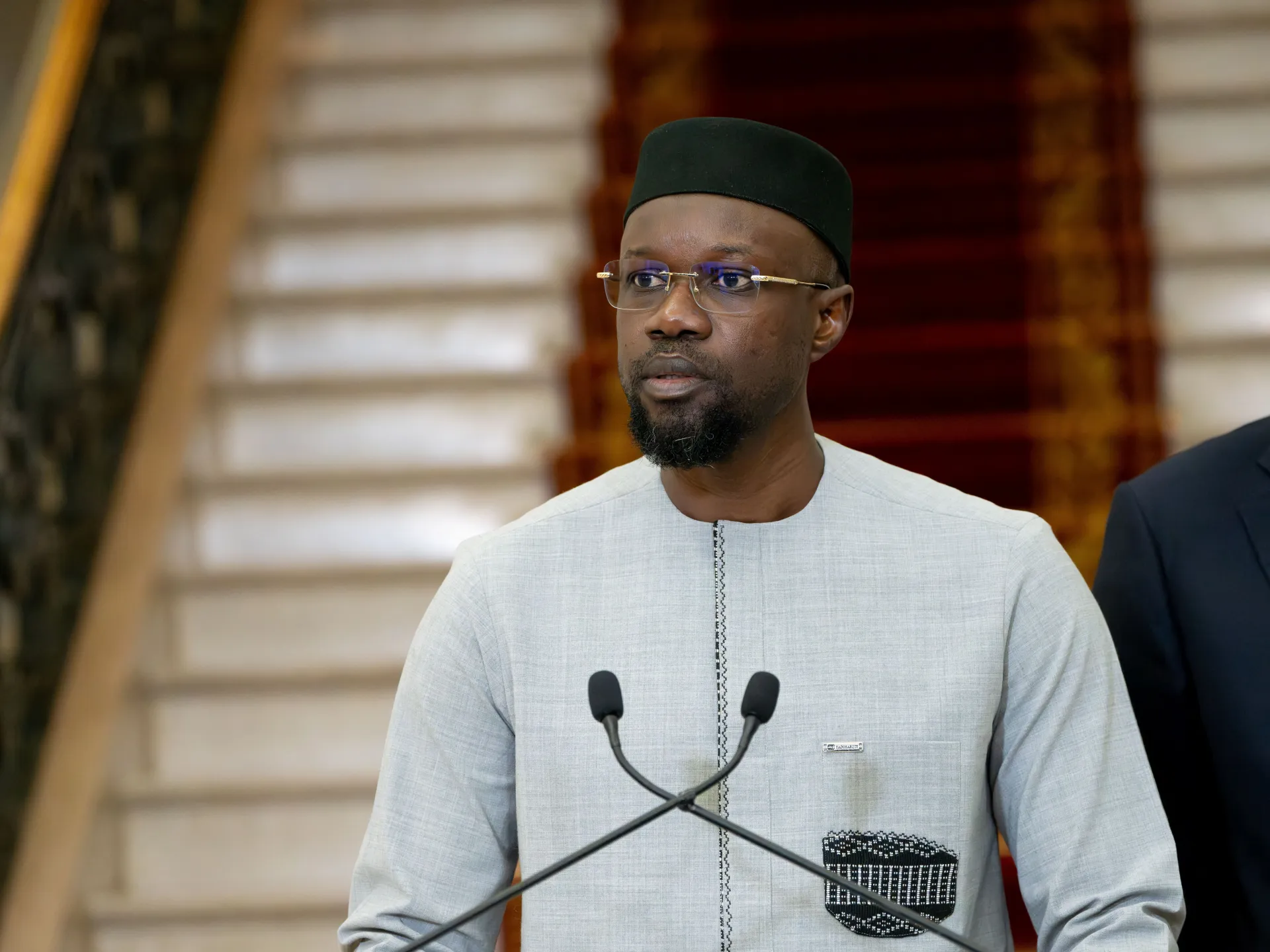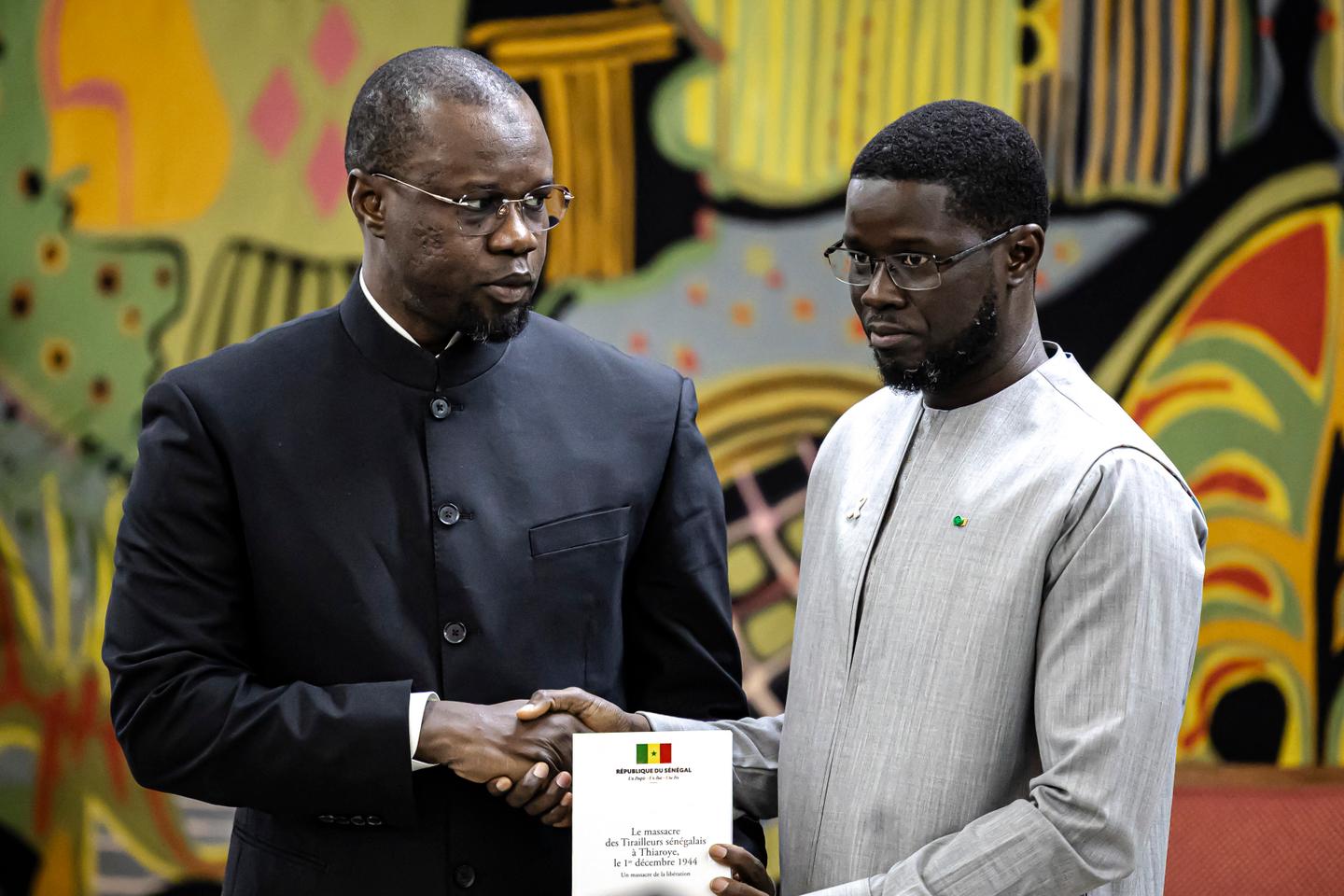
Senegalese Prime Minister Ousmane Sonko (left) and President Bassirou Diomaye Faye during a ceremony at the presidential palace, Dakar, October 16, 2025. PATRICK MEINHARDT / AFP
When Senegalese Prime Minister Ousmane Sonko addressed lawmakers on February 26 to announce a doubling up of prison sentences for gay people, he offered a revealing admission: "This is the first law I myself have submitted to the Assemblée Nationale." Tellingly, this was in fact the first since Sonko's movement, the African Patriots of Senegal for Work, Ethics and Fraternity (PASTEF), had won power two years earlier.
Did the prime minister truly have no more pressing issues to address, given the country's increasingly deep economic stagnation and social discontent across the transportation, education and health sectors? "This homophobic law is a smokescreen to appease religious leaders, and most of all to distract from [the government's] inaction and growing anger – including among young people, their electoral base," said a former minister from the Macky Sall era (2012-2024) who now prefers anonymity and is no longer active in politics.
With this bill, Sonko was, at least in part, honoring a campaign promise from the 2024 presidential election to "criminalize acts against nature." Some have quietly expressed outrage in private over a piece of legislation that lumps consensual homosexuality together with necrophilia and bestiality, all amid a deafening media frenzy. Yet Sonko knows this theme has wide support in Senegalese public opinion; already, around 100 people have been arrested without sparking any reaction.