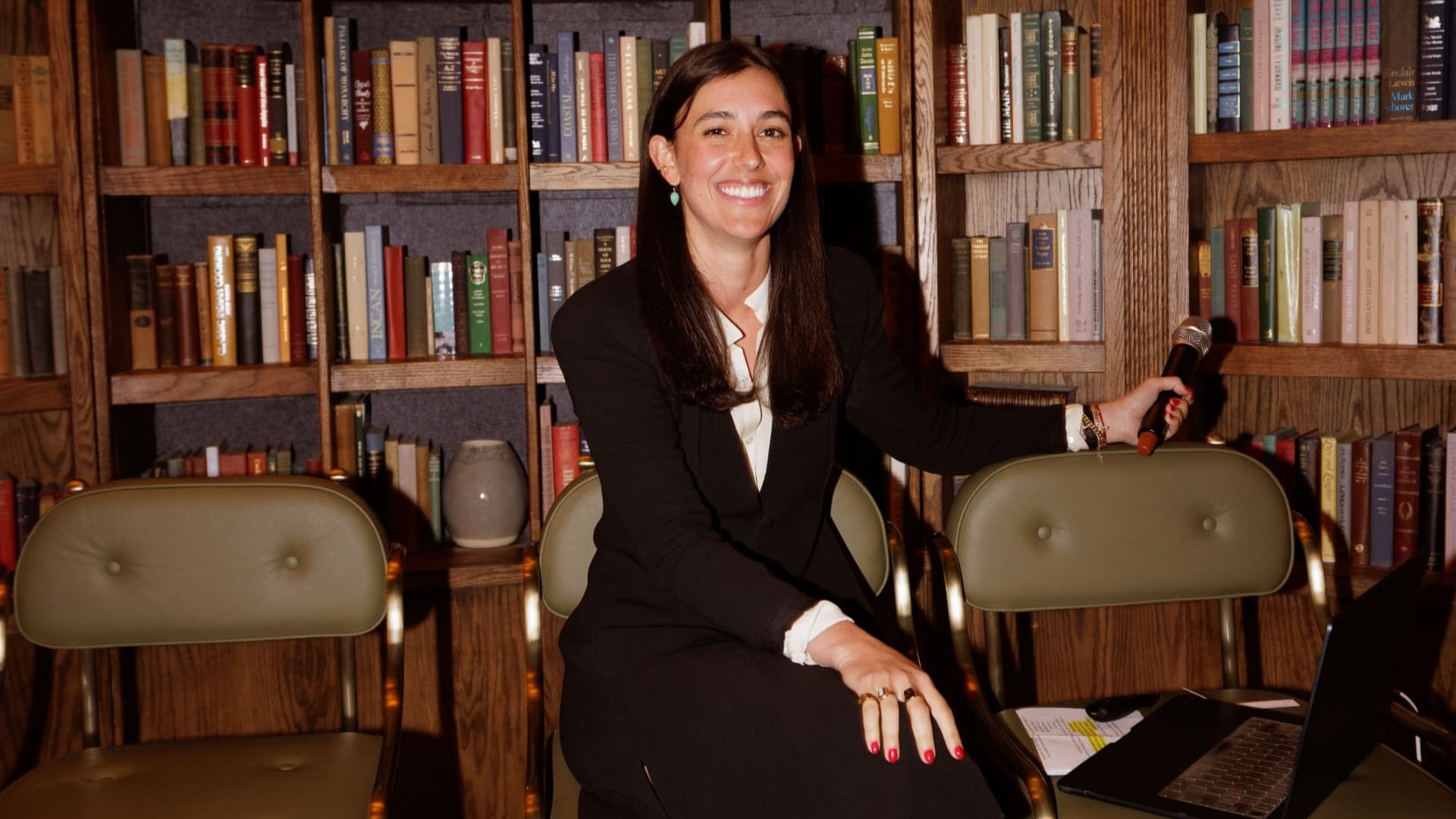
Amelia Miller’s second job is a bit uncommon.
Miller, a fellow at Harvard University’s Berkman Klein Center for Internet & Society, is also a relationship coach — specifically, one for people who’ve formed emotional connections with artificial intelligence chatbots. “Whether your chatbot acts as a therapist, assistant, lover or friend, I’m here to help you be intentional about the relationship you want — and how to build it,” her website reads.
She primarily aims to help her clients, mostly men working in tech, keep their relationships with chatbots from eroding their “capacity to connect with real people,” she says. Since launching her coaching business in June 2025, Miller has received “so much outreach,” typically from an inquiry form on her website, she says. The 29-year-old has conducted one-on-one sessions, which can be in-person in New York City or virtual, with more than a dozen clients so far, she says.
“The limit is my ability to dedicate my time and energy to it, not interest. I’m taking on as many people as I have the bandwidth for at the moment,” says Miller.
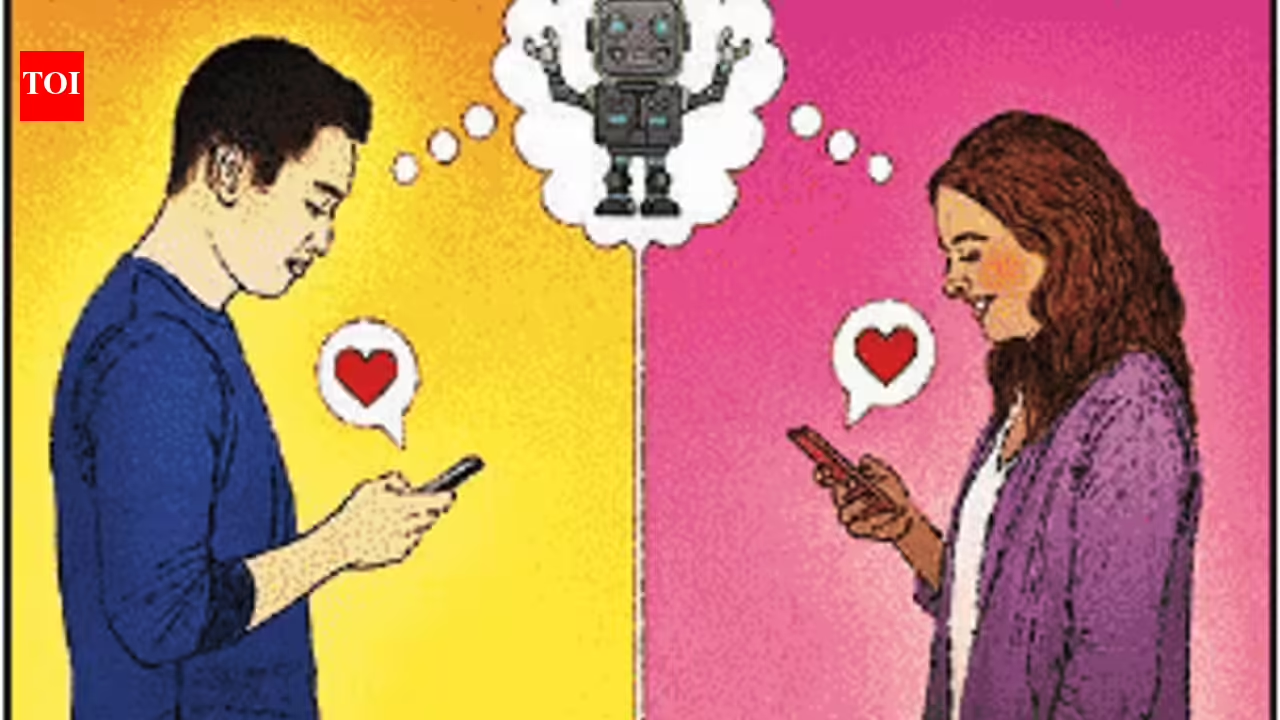
The mere existence of Miller’s second job highlights a new, still-developing dynamic in modern life: some AI users’ growing personification of the technology, their increasing daily reliance on it and what it means for their mental health and social well-being. More than 10% of U.S. adults use generative AI daily, and of them, almost 90% use it for personal reasons like emotional support and advice, according to a health research survey of more than 20,000 U.S. adults published on Jan. 21.