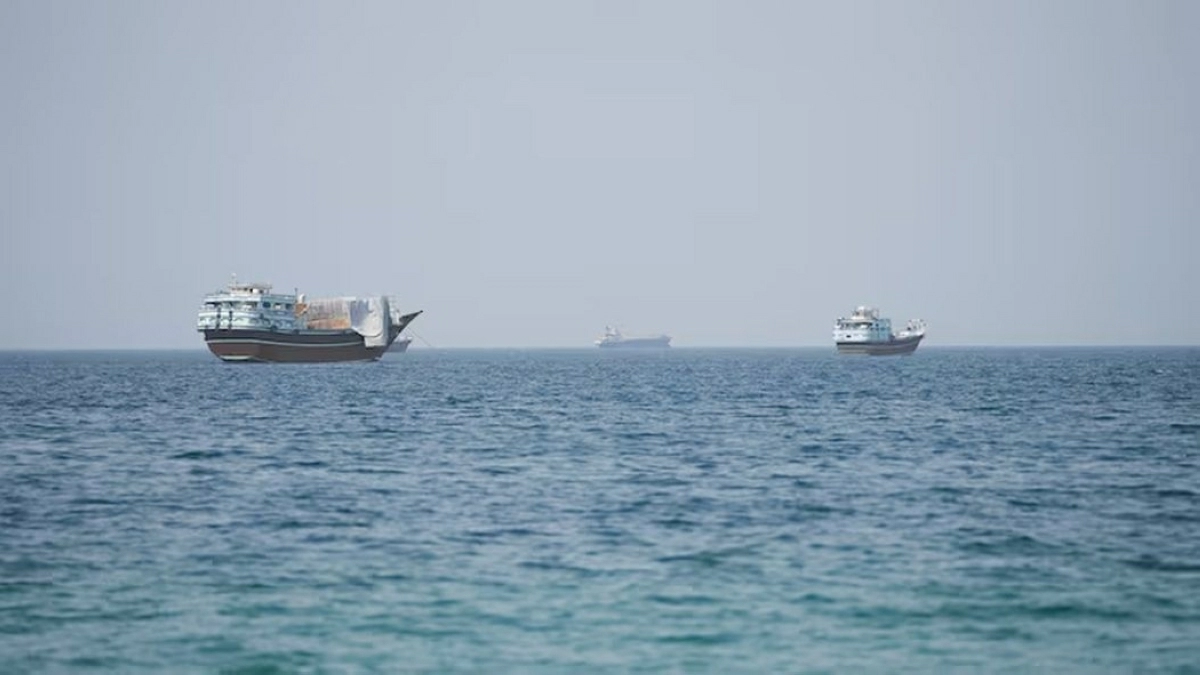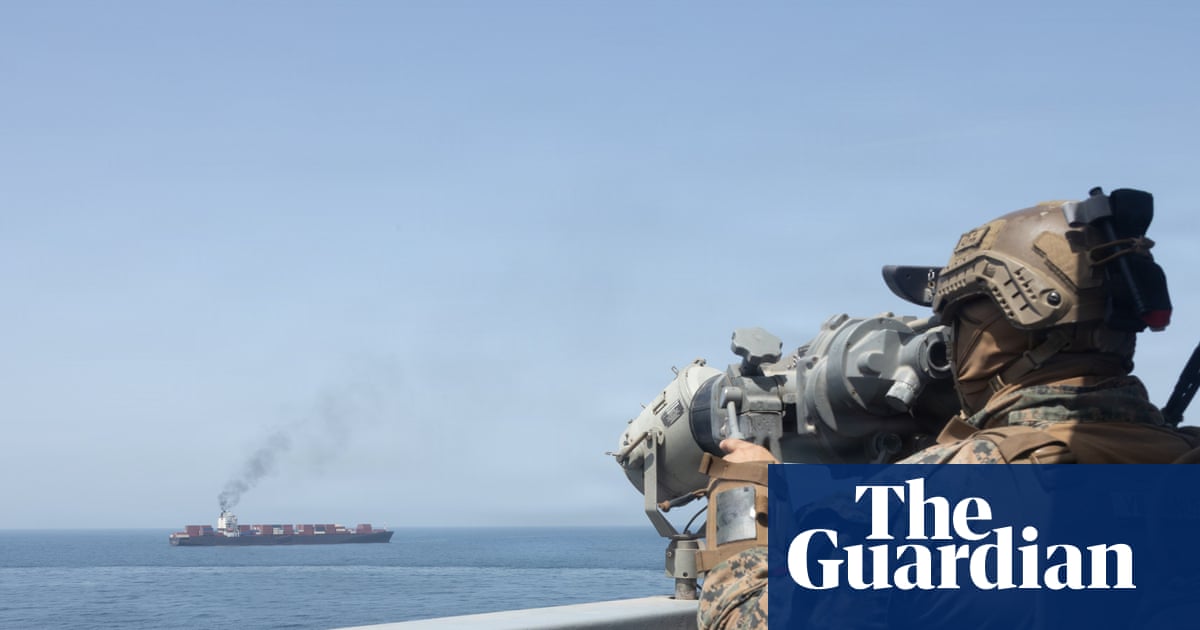
Battle of the blockades may still have more time to run as both the US and Iran try to assert control over the strait of Hormuz
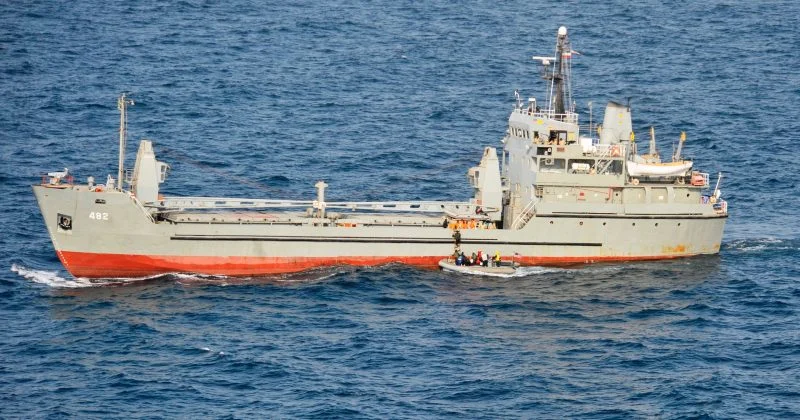
Donald Trump’s decision to extend the naval blockade of Iran indefinitely may do nothing to reduce world oil prices – but it could amount to a recognition that further US military escalation in breach of the nominal ceasefire comes with greater risk against a regime disinclined to surrender.
In theory, Trump’s military options are increasing. A third US carrier strike group, the George HW Bush, is due to arrive in the Middle East within days after rounding South Africa. A second taskforce of 2,500 US marines is sailing from the Pacific and is due to arrive by the end of April.
The extra forces may only be available for a short period, creating an extra pressure for their deployment. It is not clear how much longer the USS Gerald R Ford, now in the Red Sea, can remain given the aircraft carrier has been at sea for over 300 days.
A possibility is that the US tries to seize Iran’s Kharg Island oil terminal, where 90% of the country’s oil exports are loaded, with the 2,000 paratroopers from the 82nd Airborne Division, who have been in the Middle East since the beginning of the month, or with US marines not engaged in enforcing the blockade.