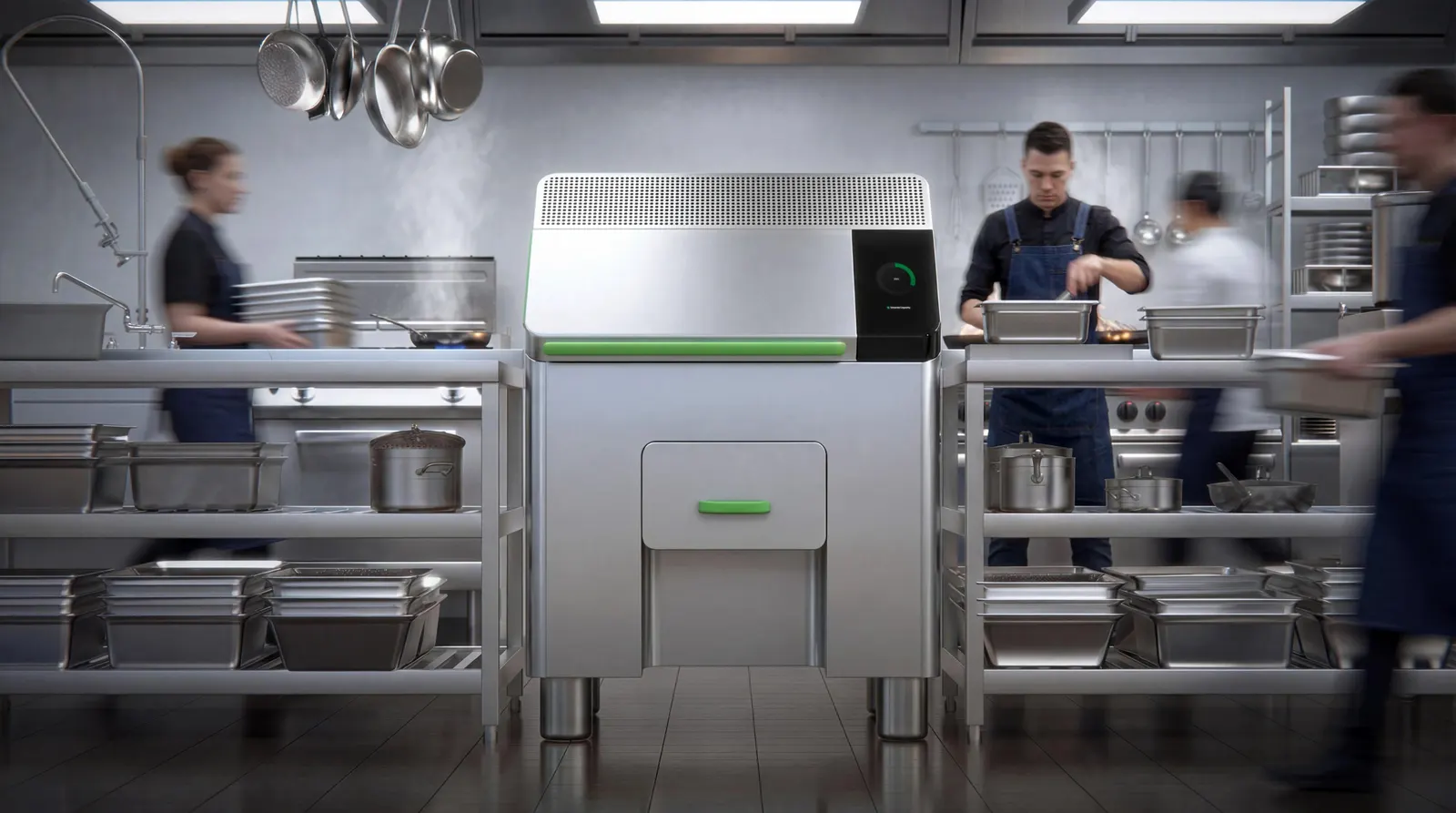
Google is partnering with Mill, a company that makes a high tech trash bin, to train AI algorithms that can identify food scraps.Courtesy Mill In modern Silicon Valley, free food for employees is pretty much table stakes, but when Google started offering it more than two decades ago, it was a new and opulent perk. Now, the tech giant is doing something novel with the stuff employees don’t eat: it’s training AI. On Thursday, Google announced a partnership with Mill — maker of a $1000 “smart” trash bin — to use a dataset Google created from its own food waste, which it labeled and annotated years ago for computer vision research. Under the terms of the deal, Mill will also get early access to unreleased versions of Google’s flagship Gemini AI models, as well as a team of its AI engineers and researchers. Mill is the second startup from Matt Rogers, a Nest cofounder who joined Google after the company bought Nest in 2014. He left and co-founded Mill in 2020 with a single obsession: food waste. Mill’s high-tech trash can processes food scraps into grounds for soil or animals like chicken. (For a fee, customers can get that chicken feed shipped to farms.) The startup sells the trash cans to consumers, and last year announced a commercial version for businesses like grocery stores, restaurants and offices, which can deploy the bins in their kitchens and cafeterias across locations. Amazon-owned Whole Foods, for example, was announced as a corporate customer in December.The startup also makes a consumer version of the trash bin for households.Courtesy Mill The idea is that by knowing what food is in your trash — via a camera inside the bin — businesses could make better decisions about their procurement. If a company's catered lunches reliably end with pounds of macaroni and cheese in the trash, the company can order less. Or if a grocery store sees that much of the Caesar salad from its prepared food section is routinely discarded on Tuesday and Thursday nights, it could adjust its menu accordingly. In theory, tracking like this can also make it easier to route surplus to food banks and document donations for tax breaks. "No one is going to sort and sift through this stuff and go to the CFO to say, 'Let's do something different,'" said David Krane, CEO and managing partner of Alphabet’s venture arm GV, and one of Mill’s earliest backers. “If you look into the future, like 10 or 20 years, I think we would be embarrassed if we were still wasting as much food as we are.”
Google’s Weirdest AI Dataset Yet: Its Own Garbage
The search giant had previously created a machine learning data set out of food scraps from its kitchens. Now it’s partnering with Mill, which makes a high-tech trash bin, to use that data to train its AI algorithms.
863 words~4 min read