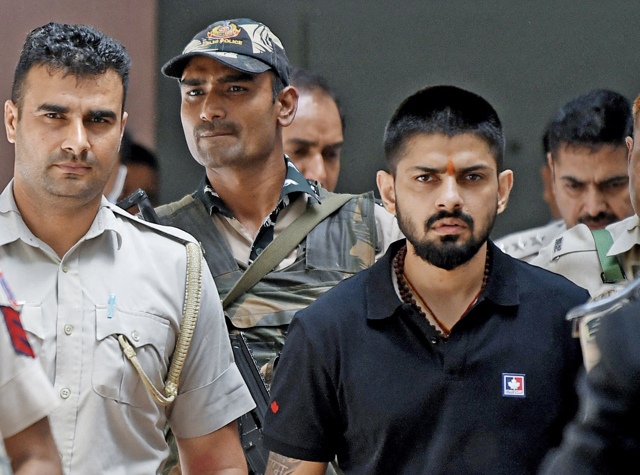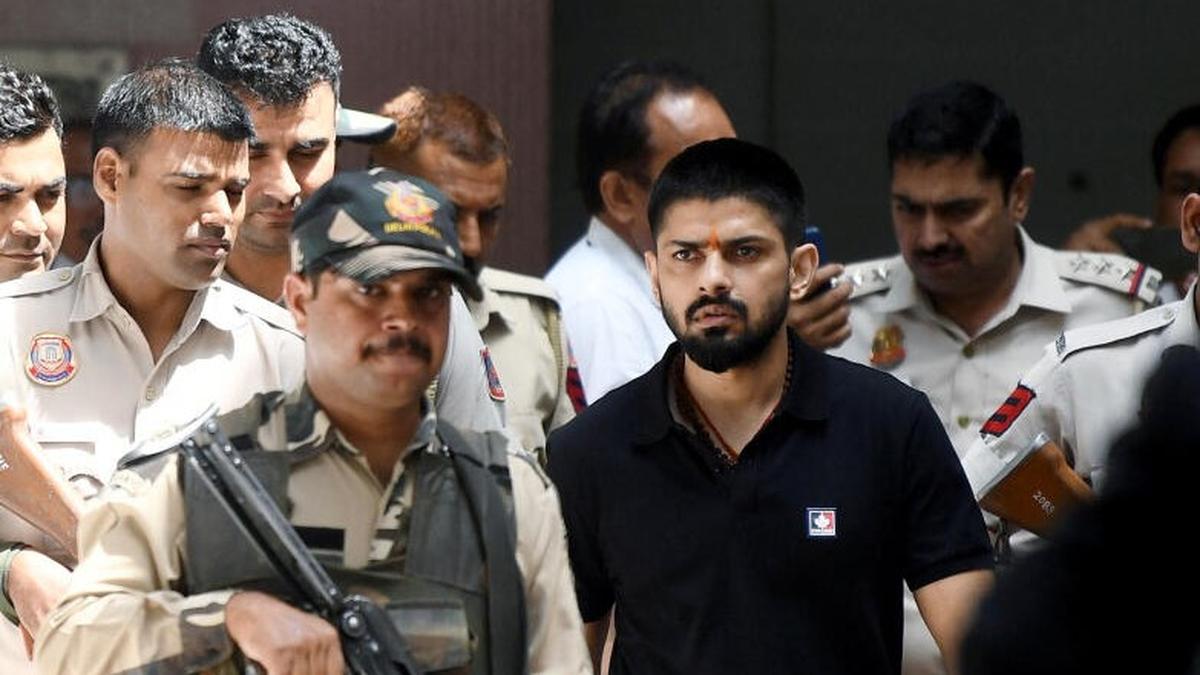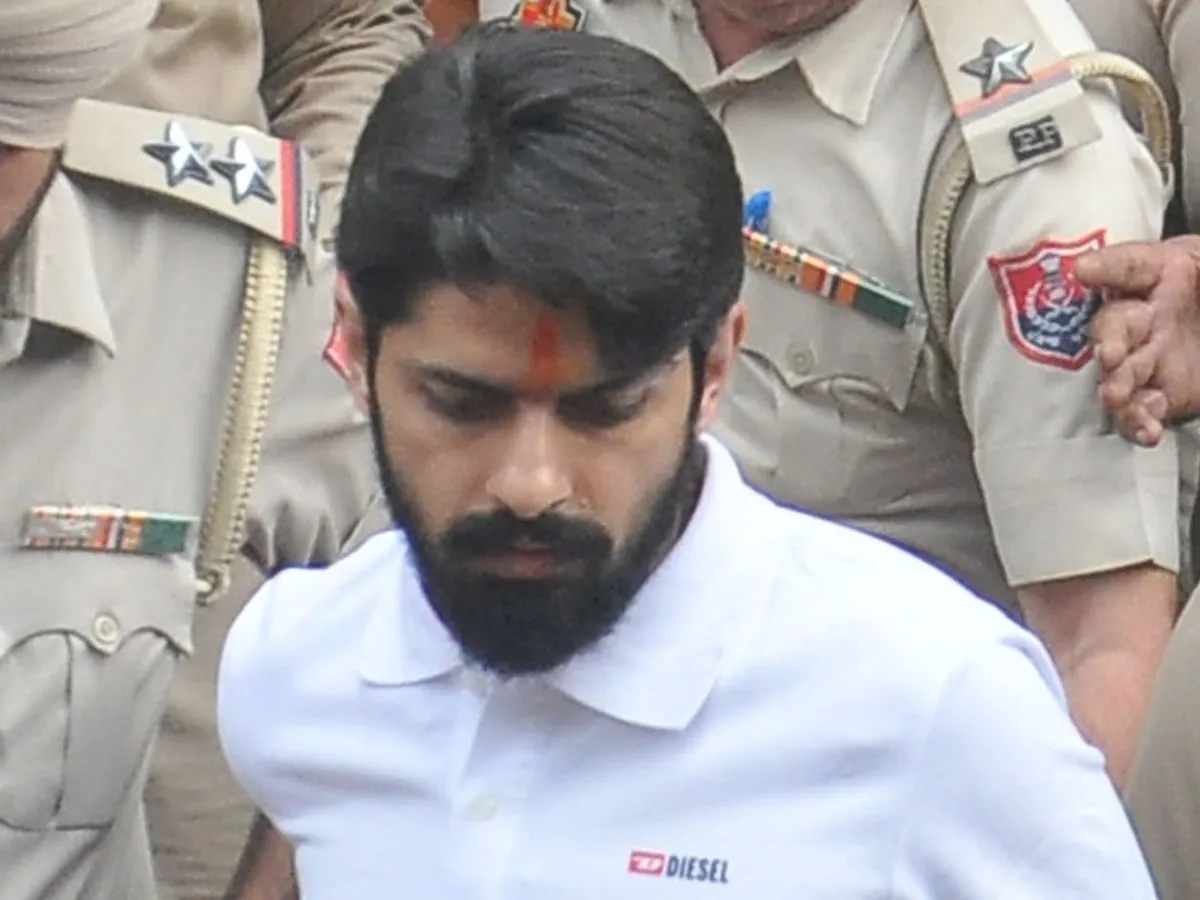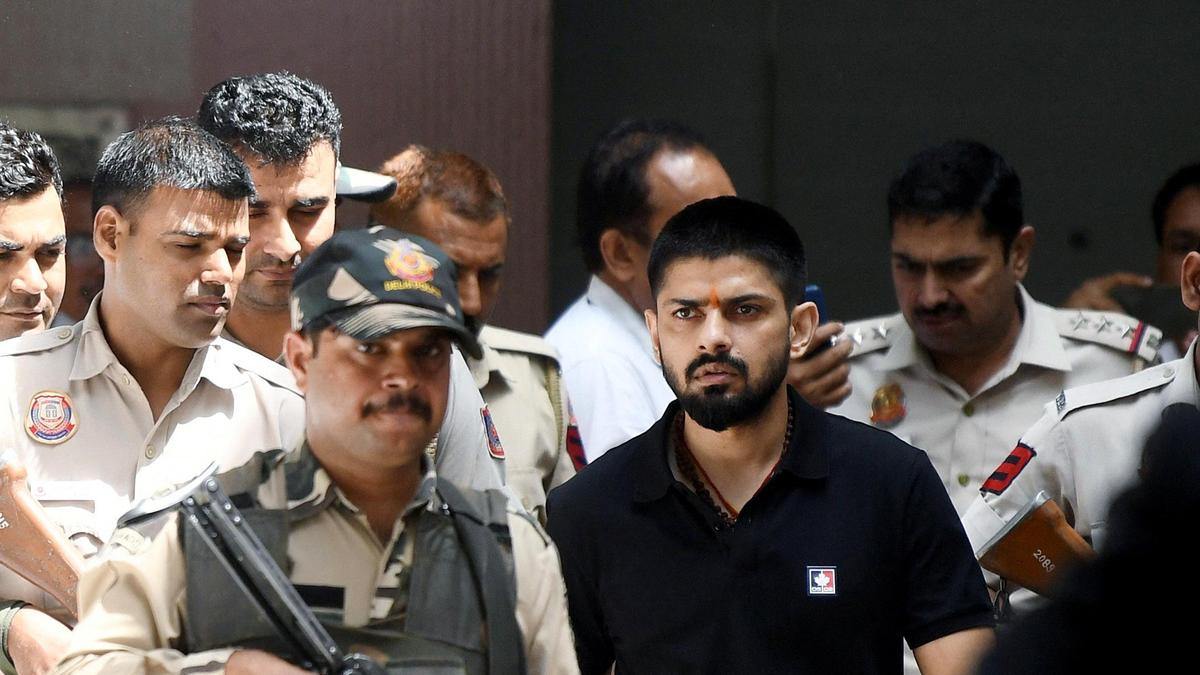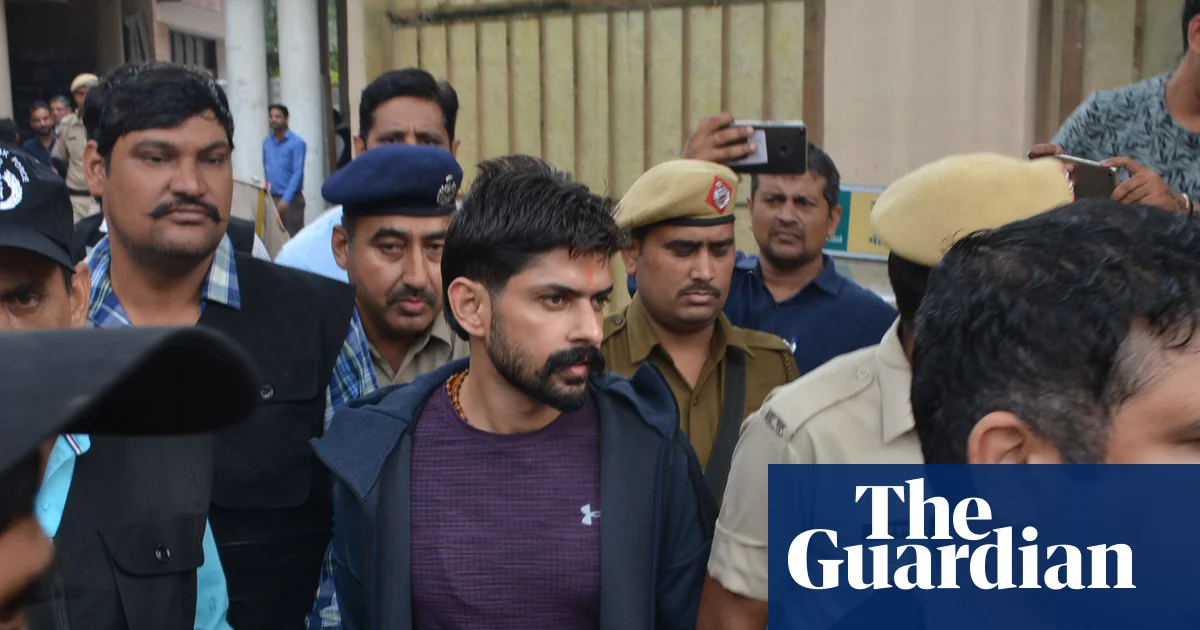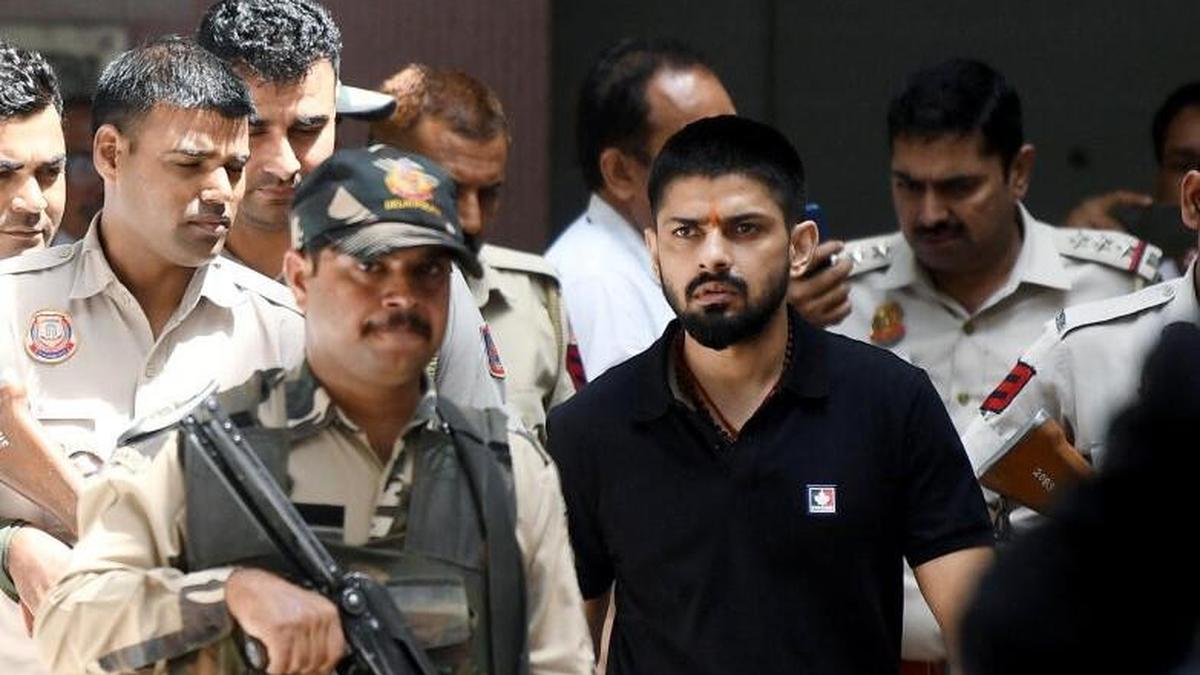
Lawrence Bishnoi has been in high-security custody for more than a decade. During that time, he has been linked to multiple high-profile killings, both in India and as far afield as Canada. What explains his seemingly undimmed power?
T
he border that separates India from Pakistan is lined with 50,000 towering poles that hold 150,000 floodlights, which at night create a glare that is visible from outer space. Passing through the towns on the Indian side of the border, it can be difficult to tell, even in daylight, where one ends and the other begins. Curving along the rolling fields of wheat are nameless dirt roads where men sit on rope benches, whiling away their afternoons, staring as you pass by.
Dutarawali, right by the highway, is slightly different: here, the houses are big, with spacious courtyards. One of the houses – three storeys, painted white with red accents – has a 7ft boundary wall topped with barbed wire and four CCTV cameras overlooking the unpaved street. The symbol of Om is curled on its brown iron door, which has no nameplate. It is the house of Lawrence Bishnoi, who is today, at the age of 33, India’s most notorious gangster.
In October 2024, members of the Bishnoi gang carried out one of the most high-profile murders in recent memory: Baba Siddique, a senior Indian politician, was left in a pool of blood next to his car in a wealthy Mumbai neighbourhood. Shortly afterwards, Bishnoi was linked to a number of killings and attempted assassinations on Canadian soil. By this point, he was already well known. Two years earlier, he had given the orders to shoot and kill Siddhu Moosewala, a Punjabi rapper with an international following, who was gunned down near his village in Punjab. Moosewala was killed, Bishnoi told the National Investigation Agency (NIA) in 2023, to avenge the killing of a member of the Bishnoi gang.