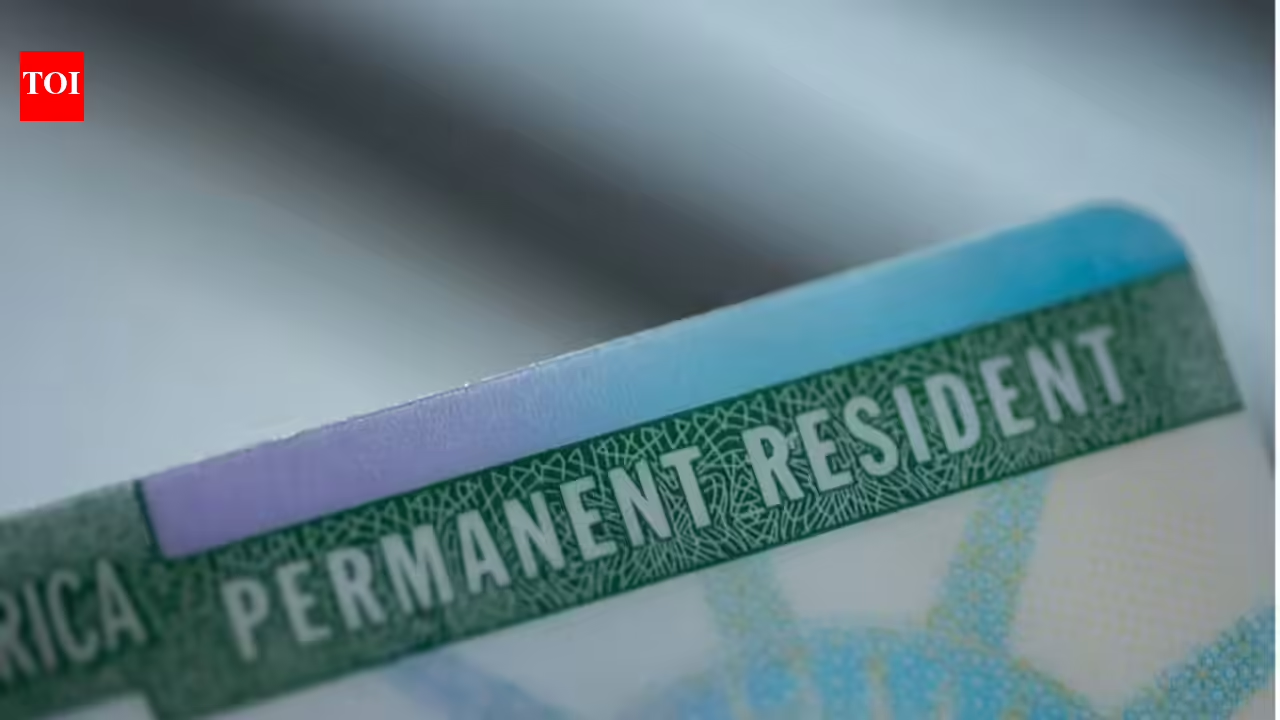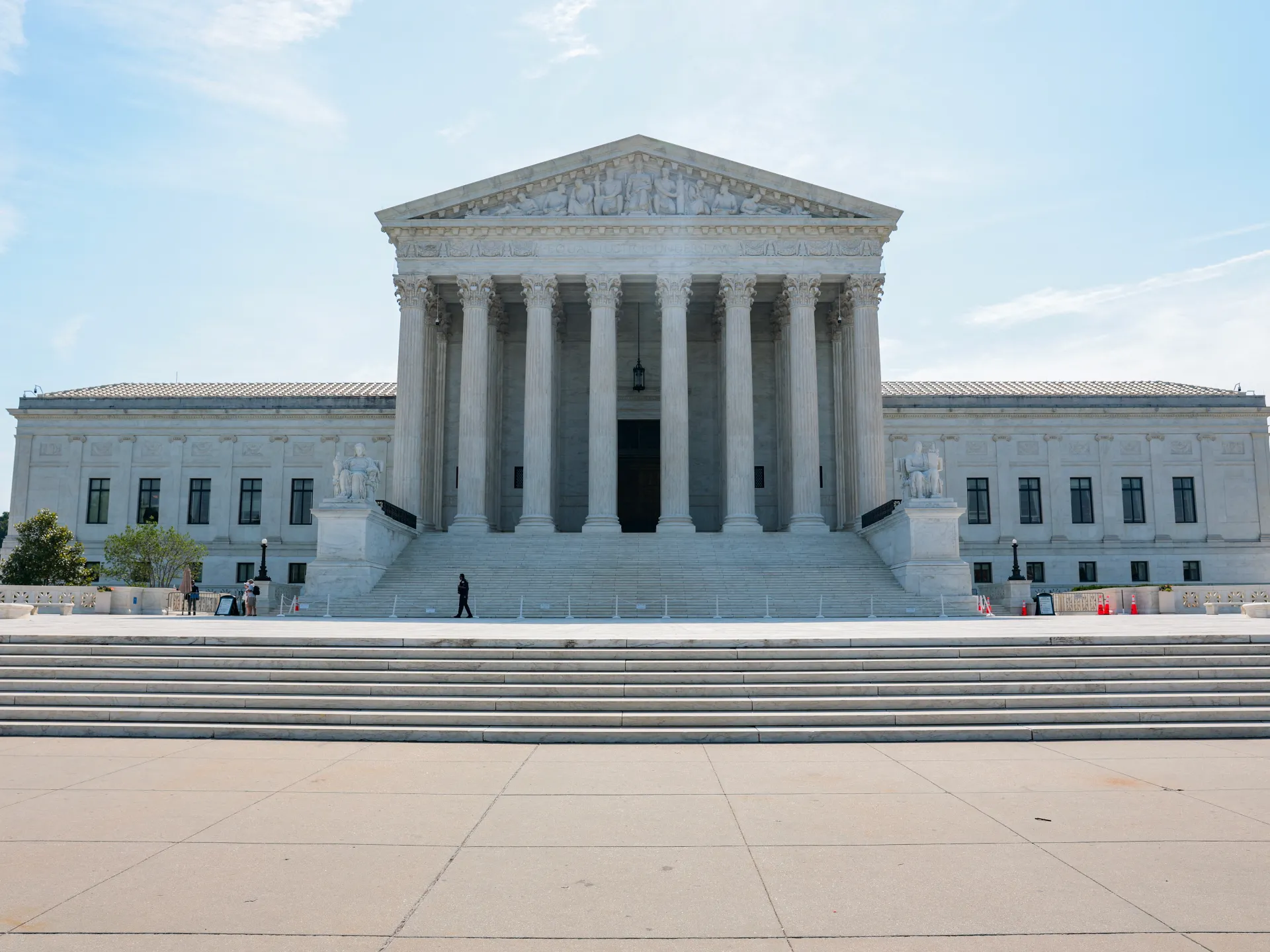
WASHINGTON, April 22 (UPI) -- The Supreme Court will hear arguments Wednesday whether immigration officers can place permanent residents charged with a crime on parole if they leave and then re-enter the country.
In immigration, parole is a temporary, discretionary permission granted by the Department of Homeland Security that allows a person to enter or remain in the United States, even though they are not formally admitted.
Parole does not cancel a person's green card, but essentially gives the Department of Homeland Security time to decide whether the person should be admitted or deported based on how the issue is resolved.
The court is poised to hear oral arguments in Blanche vs. Lau, which would determine when immigration officers can demote a permanent resident's status to parole, a temporary status that can be revoked and result in deportation.
Lau is Chinese immigrant Muk Lau, a permanent resident with a green card. Blanche is Todd Blanche, the acting U.S. attorney general and named defendant in the case.