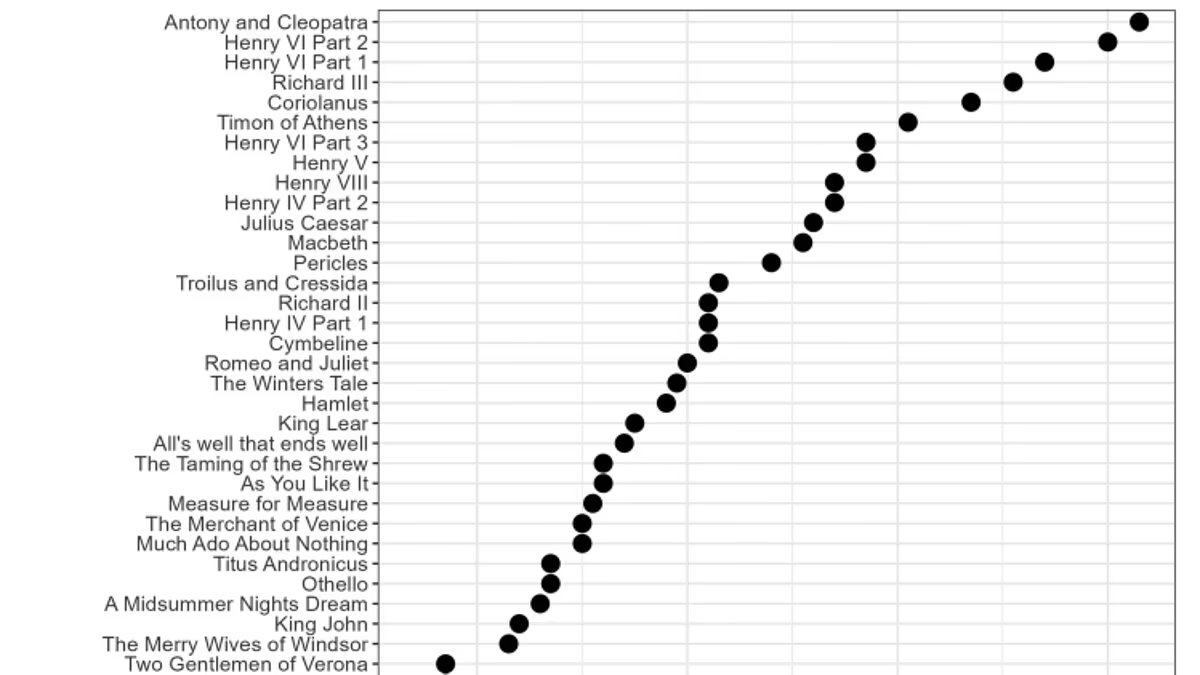
Antony and Cleopatra? Exhausting. Lear? Magnificent but flawed. Hamlet? Limitless. For Shakespeare’s birthday, the Guardian’s former theatre critic ranks all the plays
With its improbable plot, comic opera outlaws, and attempted rape being rewarded with the “mutual happiness” of a double marriage, this early study of friendship and betrayal is no one’s favourite comedy. Yet it has hints of later, greater plays, boasts some memorable lines (“The uncertain glory of an April day”) and often works on stage, most recently in a Greg Doran production with Oxford students.
Dr Johnson talked of its “unresisting imbecility” and Shaw called it “for the most part stagey trash of the lowest melodramatic order”. The plot is a mish-mash of Holinshed and Boccaccio, classical Rome and Renaissance Italy, but in Imogen it contains one of Shakespeare’s most celebrated heroines: the soul of honour and faith beautifully embodied over the years by Peggy Ashcroft, Vanessa Redgrave and Judi Dench.
Omitted from the First Folio, this is now accepted as Shakespeare’s final work, on which he collaborated with John Fletcher. Based on Chaucer’s The Knight’s Tale, in which two Theban cousins fall for the same woman, it has some authentically Shakespearean lines (“give us the bones / Of our dead kings that we may chapel them”). However, when the play opened Stratford’s Swan theatre in 1986, it was Fletcher’s scenes, involving a jailer’s crazed daughter played by Imogen Stubbs, that came off best.