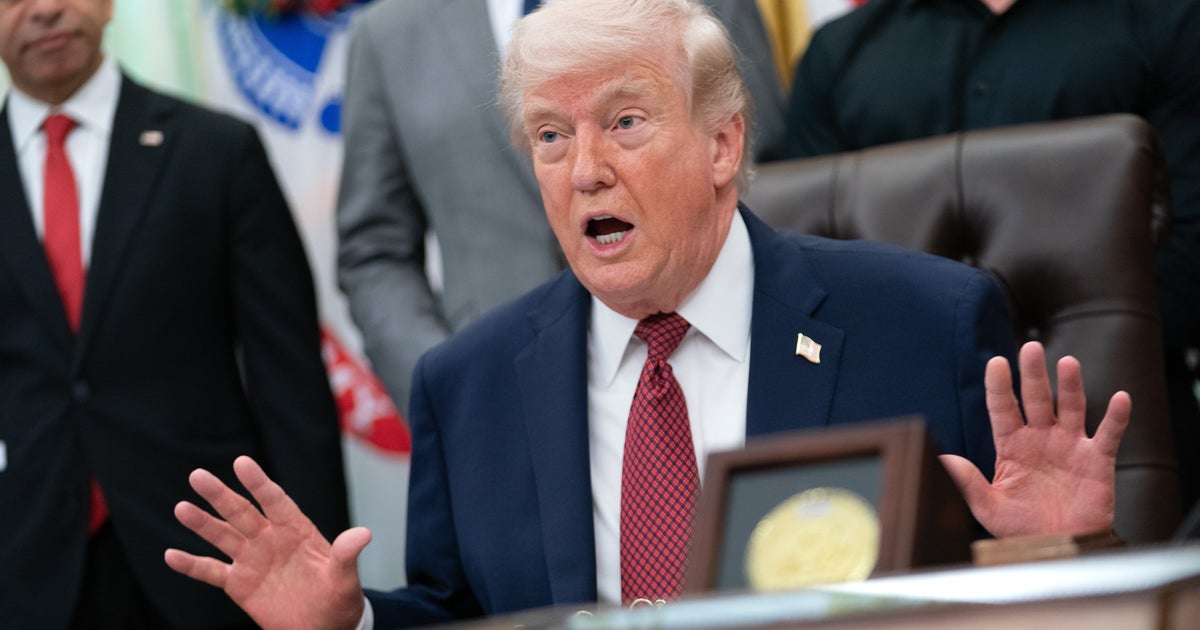
ToplinePresident Donald Trump on Monday rejected reports that Israel influenced him to go to war with Iran, launching his latest attack on the media and polls as his approval rating hit a new low over the weekend. President Donald Trump speaks in the Oval Office after signing an Executive Order April 18, 2026 in Washington, DC. (Photo by Tasos Katopodis/Getty Images)Getty ImagesKey FactsTrump said, “Israel never talked me into the war with Iran, the results of Oct. 7th, added to my lifelong opinion that IRAN CAN NEVER HAVE A NUCLEAR WEAPON, did,” he wrote on Truth Social, alleging of “Pundits and Polls” that “90% of what they say are lies and made up stories.”The U.S. and Israel attacked Iran on Feb. 28, weeks after Netanyahu visited the White House on Feb. 11 and made a “hard sell” for Trump to join the war, according to a New York Times report earlier this month that revealed new details about the pivotal meeting and how it ultimately led Trump to order the strikes. The Israelis reportedly made the argument to Trump—complete with a video presentation—that Iran was well-positioned for regime change and would be so weakened by a joint attack it would be left with no missile program after a weeks-long military assault and no ability to constrict the Strait of Hormuz, the latter of which has proven untrue. Netanyahu also warned waiting longer could give the Iranians more time to build up its missile and drone program to protect its nuclear stockpile, according to The Times.Trump reportedly seemed convinced by Netanyahu’s pitch by the end of the meeting, and was particularly interested in Israel’s proposal to kill Iran’s Supreme Leader, Ayatollah Ali Khamenei. Over the next two weeks, top military and cabinet officials laid out the pros and cons of the operation, with Vice President JD Vance serving as a key skeptic and Defense Secretary Pete Hegseth as a prominent proponent of the strikes, and on Feb. 26, Trump told his team he would soon give official approval of the operation, citing the need to cripple Iran’s missile and nuclear programs, according to The Times.Multiple other reports—and earlier comments from Secretary of State Marco Rubio—have suggested Israel played a prominent role in convincing Trump to attack Iran, with the Wall Street Journal noting Netanyahu’s “persuasive” February meeting with Trump in a report over the weekend about Trump’s thinking on Iran.Big Number37%. That’s Trump’s approval rating in an NBC poll published Sunday, a record low in NBC polling. Crucial Quote“Because Israel was determined to act with or without the U.S., our commander in chief and the administration . . . had a very difficult decision to make,” House Speaker Mike Johnson, R-La., told reporters in March after Rubio and other Pentagon officials briefed Congress on the strikes.Chief CriticFormer Director of the National Counterterrorism Center Joe Kent, who resigned in protest of the Iran war, alleged in his resignation letter, “Iran posed no imminent threat to our nation, and it is clear that we started this war due to pressure from Israel and its powerful American lobby.”Key BackgroundTrump in March also denied entering into the war at Israel’s behest, disputing comments from Rubio who said the U.S. knew Israel was planning to attack Iran and that it would lead to retaliation from Iran against American troops. Trump instead said he thought Iran was “going to attack first and I didn’t want that to happen,” he told reporters during a press conference in March, adding, “if anything, I might have forced Israel’s hand, but Israel was ready and we were ready.” Iran’s nuclear capabilities and Trump’s claims that the U.S. attacked Iran because it believed Iran would attack first have been heavily disputed. Pentagon officials told Congress shortly after the initial wave of attacks that there was no evidence Iran was planning strikes, Reuters reported, citing two unnamed sources familiar with the closed-door briefing. Trump and top U.S. officials have also made conflicting statements on Iran’s nuclear capabilities, as Trump has said it’s a primary reason for the attacks. Director of National Intelligence Tulsi Gabbard wrote in her opening statement before testimony to Congress in March that “Iran’s nuclear enrichment program was obliterated” in the U.S.’s June 2025 strikes against Iran and “there has been no efforts since then to try to rebuild their enrichment capability.” Gabbard left the statement out in her testimony. ContraIran still had a stockpile of enriched uranium that could be used to construct nuclear bombs. Rafael Grossi, director of the International Atomic Energy Agency watchdog, said in March “there has been no evidence of Iran building a nuclear bomb,” but “its large stockpile of near-weapons grade enriched uranium and refusal to grant my inspectors full access are cause for serious concern.” He said that until Iran grants the agency an examination, it “will not be in a position to provide assurance that Iran’s nuclear program is exclusively peaceful.”Further ReadingTrump Approval Rating Hits New Low: Most Adults Disapprove Of Iran War, Poll Finds (Forbes)Iran Signals It Could Be Open To Peace Talks With U.S. (Forbes)Trump Threatens Iran—Again—Amid Claim He Wants Iran To Think He’s ‘Unstable’ (Forbes)
Trump Goes On Damage Control After Claims Israel Manipulated Him Into War
Trump blasted pollsters and the media for negative coverage of the conflict, insisting “the results in Iran will be amazing.”
856 words~4 min read