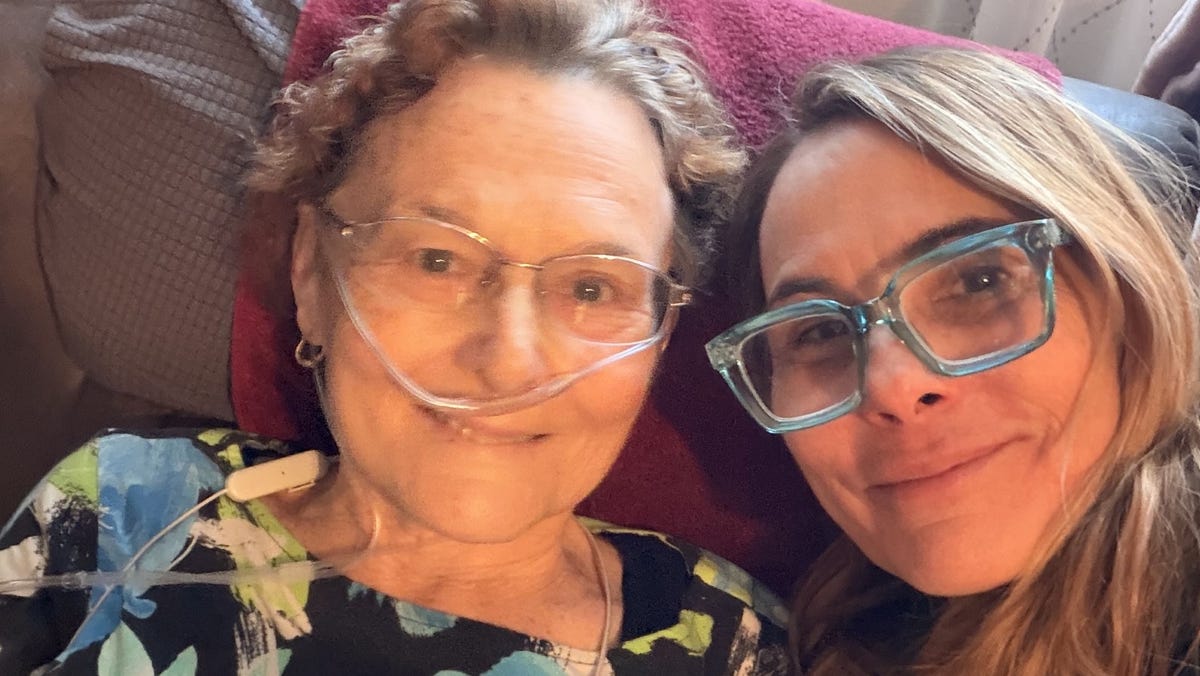
I was shocked and startled to hear the words “Let your mother die” come from the nursing home administrator at the facility where my mother was recuperating from her stroke. There was no medical justification, no clinical evidence and no compassionate reasoning behind his statement. My mother — an active, intelligent and resilient woman — had only recently survived a major stroke. Though she couldn’t speak and struggled to walk, her medical team had been cautiously optimistic. It had only been a couple of months since she was rushed to the hospital, and every sign pointed toward a meaningful recovery.
That’s why I was stunned — truly stunned — when the administrator looked at me and calmly suggested that my mother should die. I sat there unable to process what I was hearing because none of it made sense. My mother was frail, yes, but she was still fighting, still present and still here.
Only later did I learn what inspired his advice: His own mother had recently died in a nursing home, and he was drowning in guilt because he was convinced he had failed her. In his distorted reasoning, allowing my mother to die would somehow spare me the guilt he believed I, too, would one day feel.
When I attempted to talk to him rationally, he shut down, unable — or unwilling — to separate his unresolved grief from the care my mother deserved. His private burden seeped into every decision he made about my mother’s treatment, and it turned his personal anguish into a dangerous lens through which he viewed her life.