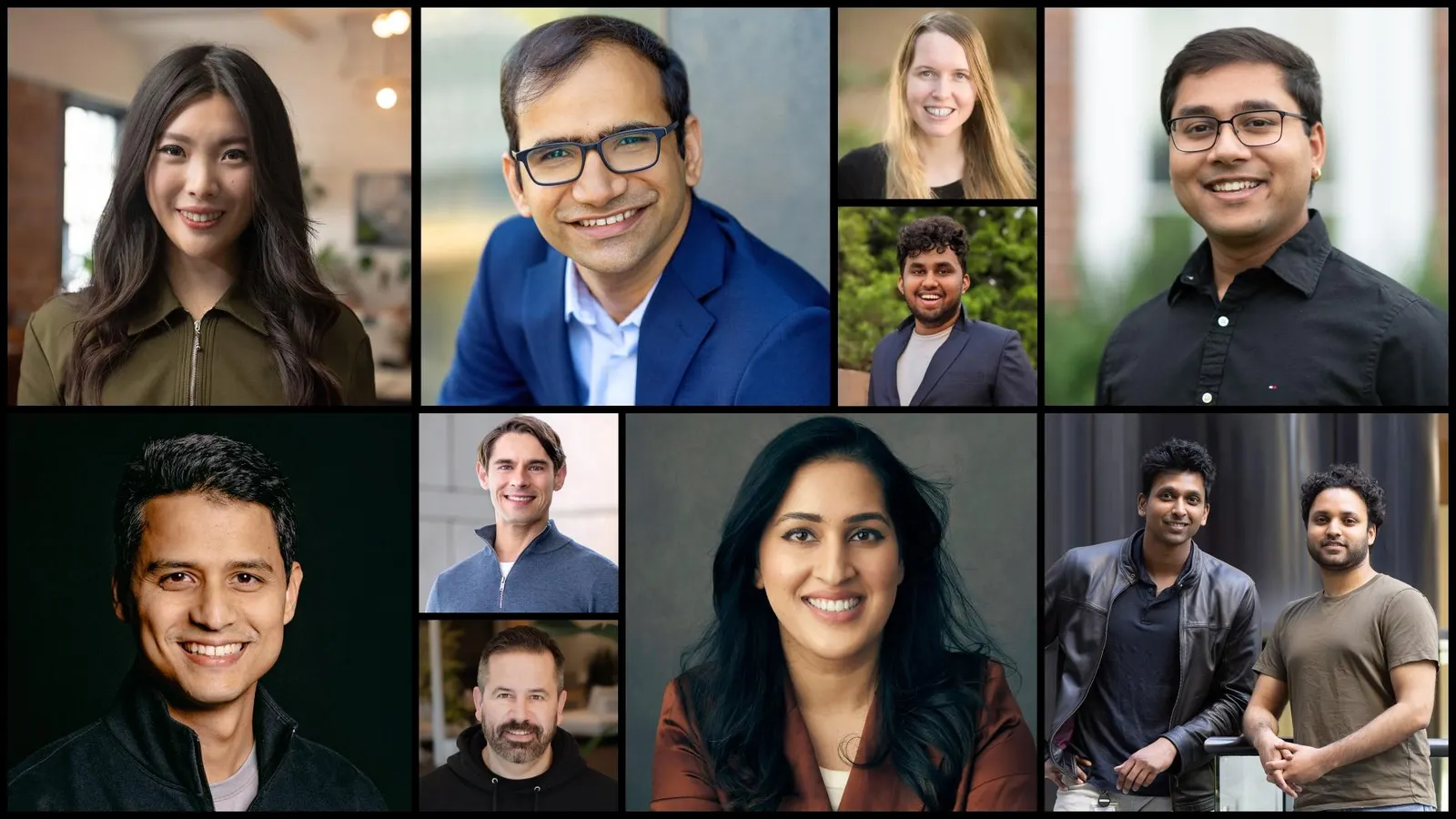
Meet the early-stage startups racing to define the future of artificial intelligence.More than seven years since Forbes launched its first AI 50 list, the artificial intelligence industry has exploded, growing more expansive and increasingly too crowded for a single list to capture. As venture capital firms continue to pour money into AI, a new tier of startups has emerged: younger, earlier-stage companies building fast and raising faster as they try to rival their more established peers.That’s why this year, for the first time, Forbes is introducing the AI 50 Brink List, spotlighting 20 of the most promising Seed and Series A-stage startups building in artificial intelligence. While the AI 50 reflects the industry’s current leaders, the Brink List offers a view into its future pipeline, highlighting up-and-comers that could shape the field’s trajectory.Forbes 2026 AI 50 ListThe Forbes Artificial Intelligence 50 List of 2026 spotlights promising AI-driven businesses. See the leaders driving the future of the industry.VIEW THE FULL LISTAlthough these companies may be young by traditional venture standards (on average, Brink startups are 24 months old), many are competing aggressively for both top AI talent and billion-dollar valuations. Resolve AI, for instance, is developing a system to help engineers identify and fix problems in code that’s already in production and has recruited talent from top labs like Meta and DeepMind. It just raised a Series A extension of $40 million at a $1.5 billion valuation. This dynamic is especially evident in the rise of so-called “neo-labs,” which aim to push AI research forward. Multiple early executives at the big labs have departed to launch their own ventures, like ChatGPT co-creator Liam Fedus. His startup Periodic Labs is training models to accelerate scientific discovery in semiconductors, magnetism and superconductivity. The $4.5 billion-valued lab Humans&’s founding team hails from Meta, OpenAI, Google DeepMind and Anthropic, and is focused on using AI to help coordinate people and workflows. Then there’s Advanced Machine Intelligence, cofounded by Meta’s former chief AI scientist Yann LeCun along with several former senior Meta employees, which has already raised over $1 billion in funding since its launch in 2026. It is building systems that learn from real-world data in addition to text, especially in healthcare applications.Nowhere is this research-first approach more consequential than in healthcare, one of the most tightly regulated domains, where a growing wave of startups is determined to integrate AI into various aspects of medicine. For example, Certuma is building what it hopes will become the first FDA-approved AI system capable of diagnosing conditions and prescribing treatments (See our feature on CEO and cofounder Martín Varsavsky). Latent Health, valued at $600 million, is tackling a different bottleneck: developing AI agents that help doctors convince insurance providers to approve drugs more quickly.It’s that kind of ambition and innovation that’s attracted significant capital from investors. The 20 companies on Forbes’ inaugural AI 50 Brink list have raised over $3.5 billion altogether in Seed and Series A funding alone. Yet even as the AI innovation boom accelerates, a familiar gender imbalance persists. Just three female-led startups appear on this year’s list: Ricursive Intelligence, where CEO Anna Goldie is building self-improving AI chips; Axiom, where CEO Carina Hong is developing an AI mathematician; and Nectar Social, where CEO Misbah Uraizee is building a platform to monitor how social media creators’ posts translate to sales. The Brink list is compiled by Forbes editors and reporters, based on business promise, early traction and the use of AI in solving a new type of problem. Applicants for AI 50 are automatically considered for the Brink list. For more, see our full package of AI 50 coverage, including a detailed explanation of the list methodology, videos and analyses on trends.Here are the 20 early-stage AI companies to watch:
The AI 50 Brink List
Meet the early-stage startups racing to define the future of artificial intelligence.
1,257 words~6 min read