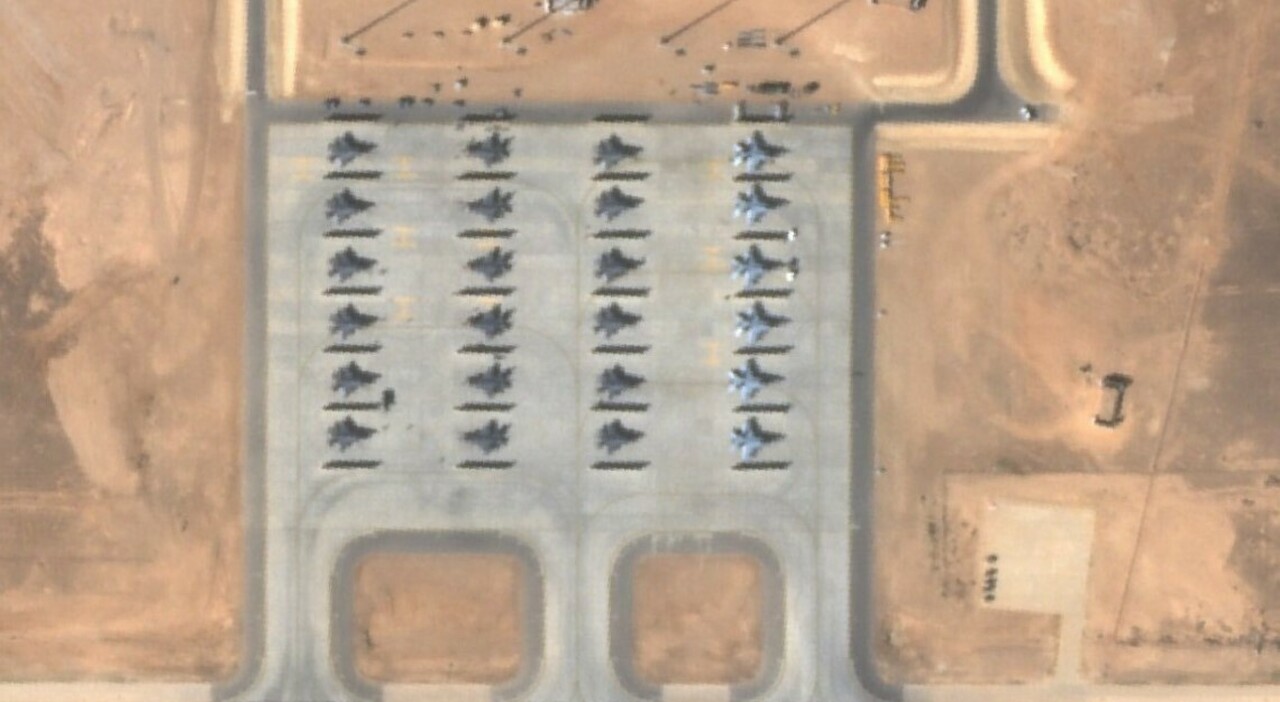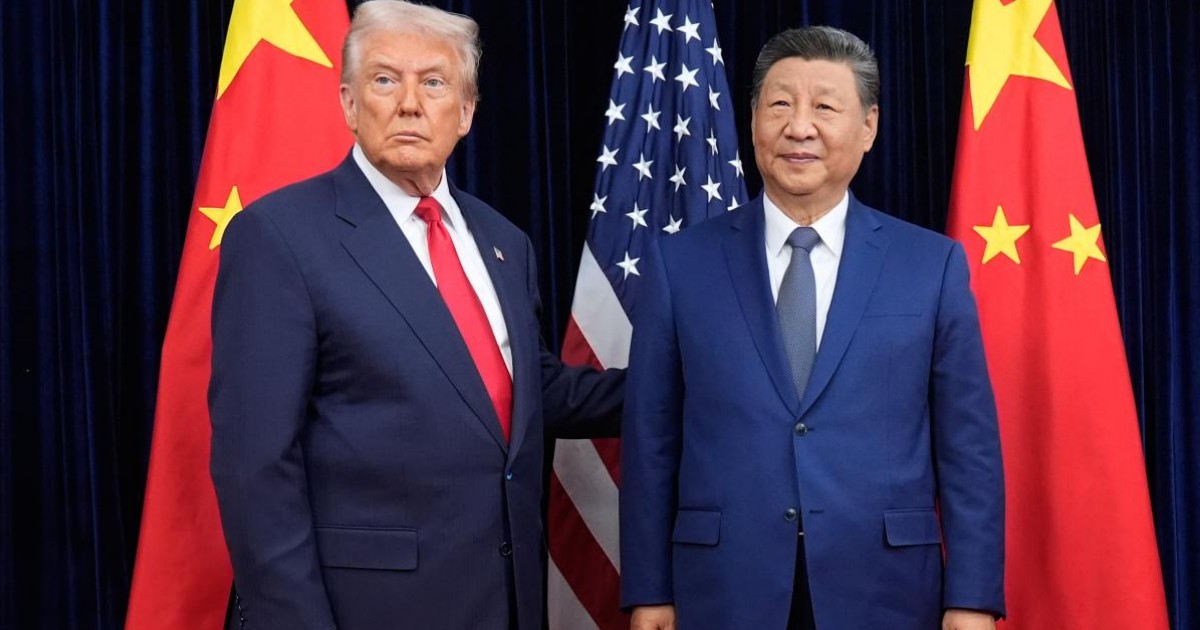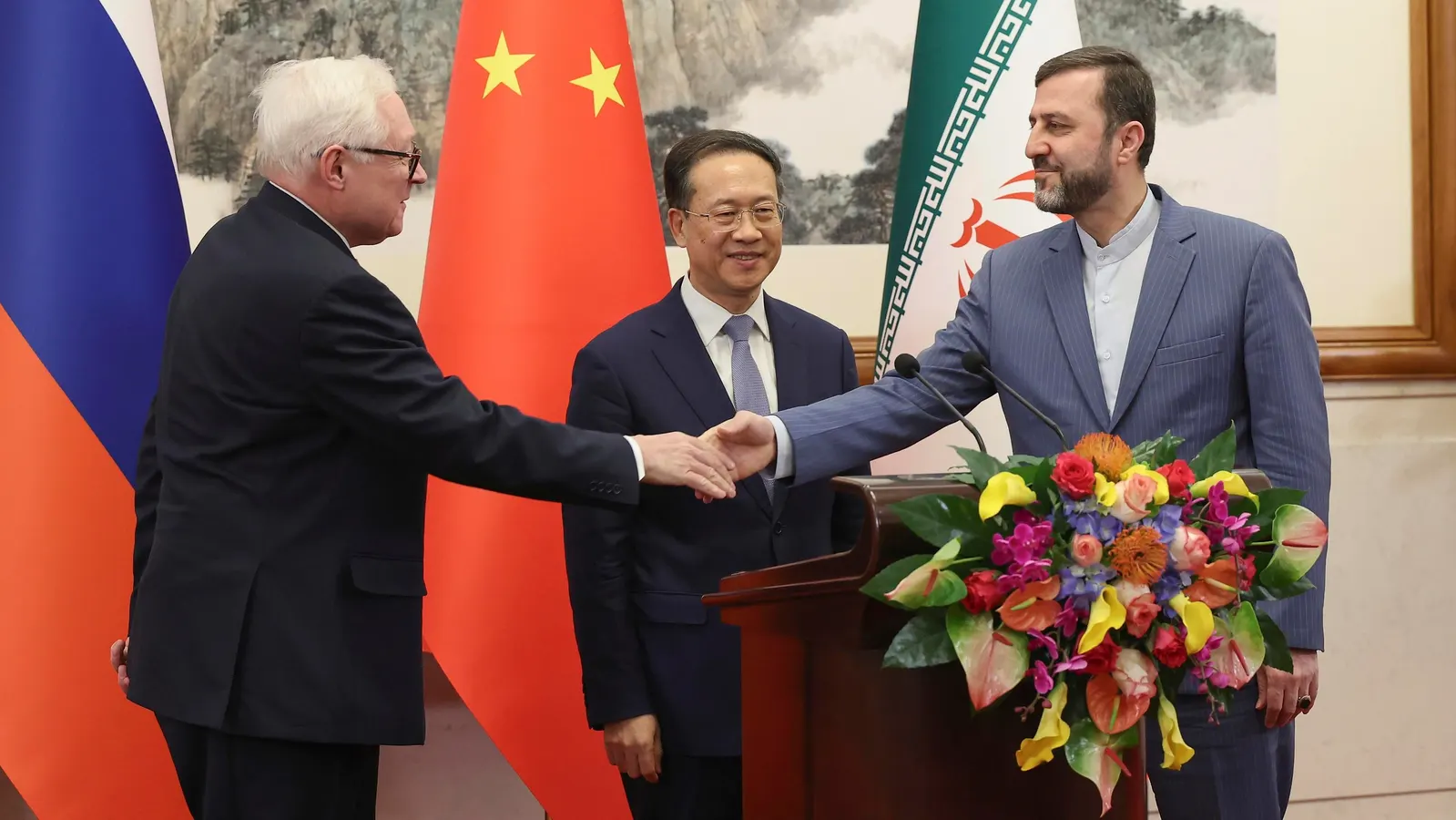
ToplineIran secretly purchased a Chinese satellite that it used to target U.S. bases during the war, according to a Financial Times report that the Chinese government says is “untrue”—adding to a growing number of claims that on Iran uses Chinese and Russian technology or weapons in its war with the U.S.Russian Deputy Foreign Minister Sergei Ryabkov, Chinese Vice Foreign Minister Ma Zhaoxu and Iranian Deputy Foreign Minister Kazem Gharibabadi meet in Beijing in 2025.2025 Getty ImagesKey FactsThe FT report indicated Iran’s Islamic Revolutionary Guard Corps Aerospace Force purchased the satellite, TEE-01B, from Chinese firm Earth Eye Co., in 2024, and the same device was used to take photos of bases in Saudi Arabia, Jordan, Bahrain and Iraq around the time they came under attack.Both the New York Times and CNN reported in the last week that China was preparing to ship new air defense systems to Iran, citing sources familiar with U.S. intelligence assessments.These would include new shoulder-fired antiaircraft missiles, according to both reports, similar to the device President Donald Trump said Iranians used to shoot down an F-15 fighter jet earlier in April.The Chinese government denied to CNN and the Times it intends to send weapons to Iran.Russia, meanwhile, has reportedly supplied Iran with military intelligence, including satellite images of U.S. bases in the Middle East before they were targeted by strikes, according to Ukrainian intelligence assessments reported by Reuters last week.Speaking to a British podcast after the Ukrainian intelligence was made public, President Volodymyr Zelenskyy said he did not receive a reaction from the U.S., adding, “the problem is they trust Putin.”ContraThe Chinese Ministry of Foreign Affairs responded to the FT, saying: “Recently, certain forces have been keen to fabricate rumours and maliciously link them to China. China firmly opposes this kind of ill-intentioned conduct.” On Wednesday, Trump told Fox Business host Maria Bartiromo he asked China not to supply Iran with weapons. "I wrote him a letter asking him not to do that, and he wrote me a letter saying that, essentially, he's not doing that," Trump said. In a later post on Truth Social, Trump insisted Xi would give him a “big, fat, hug” at his next meeting with the Chinese leader for his actions to secure the Strait of Hormuz. When previously asked by reporters about reports of China sending the weapons, the president said Saturday that “if China does that, China will have big problems, OK?”Possible Payments For Moving Through The Strait Of HormuzThere have been unverified reports that Iran has been charging fees to allow ships to pass through the strait since mid-March. Among the slow trickle of foreign ships have been able to travel safely through it: Those owned by China and Russia. China, India, Pakistan and the Philippines, according to the BBC, have gone through the passage, and on Friday a Russian-flagged oil tanker made it through apparently without any difficulty. Iran has signalled it wants to charge ships tolls using cryptocurrency to use the strait in the future, with a spokesperson for the country’s Oil, Gas and Petrochemical Products Exporters’ Union telling the Wall Street Journal last week this could be a tariff of $1 per barrel. On Sunday, Trump threatened to interdict any ships in international waters that paid a toll to Iran, raging in a Truth Social post “no one who pays an illegal toll will have safe passage on the high seas.”What To Watch ForEarlier on Sunday, President Donald Trump announced a blockade of the Strait of Hormuz—the critical waterway that Iran shut down early in the war and throttled the flow of oil and other commodities out of the Persian Gulf. The shutdown has caused global oil prices to soar. The International Energy Association estimated about 25% of all oil shipped by sea in 2025 traveled through the Strait of Hormuz. Asian countries have been hit particularly hard—the IEA estimated that 80% of the oil from the Strait of Hormuz in 2025 was headed toward the continent. Any further disruptions to the Strait of Hormuz could further antagonize China, Iran’s biggest oil customer. China bought an estimated 80% of Iran’s oil in 2025, according to data from shipping analytics firm Kpler reported by Reuters—about 1.38 million barrels of Iranian oil per day.Further ReadingTrump Says China’s Xi Promised No Arms Sales To Iran (Forbes)How China’s Weapons Transfers to Iran Have Evolved Over Decades (New York Times)
Iran Reportedly Used Chinese Satellite To Target U.S. Bases—Here’s How China And Russia Could Help Iran
Neither country has directly intervened in Iran’s war with the U.S. and Israel, but reports suggest they could be helping in other ways.
729 words~3 min read