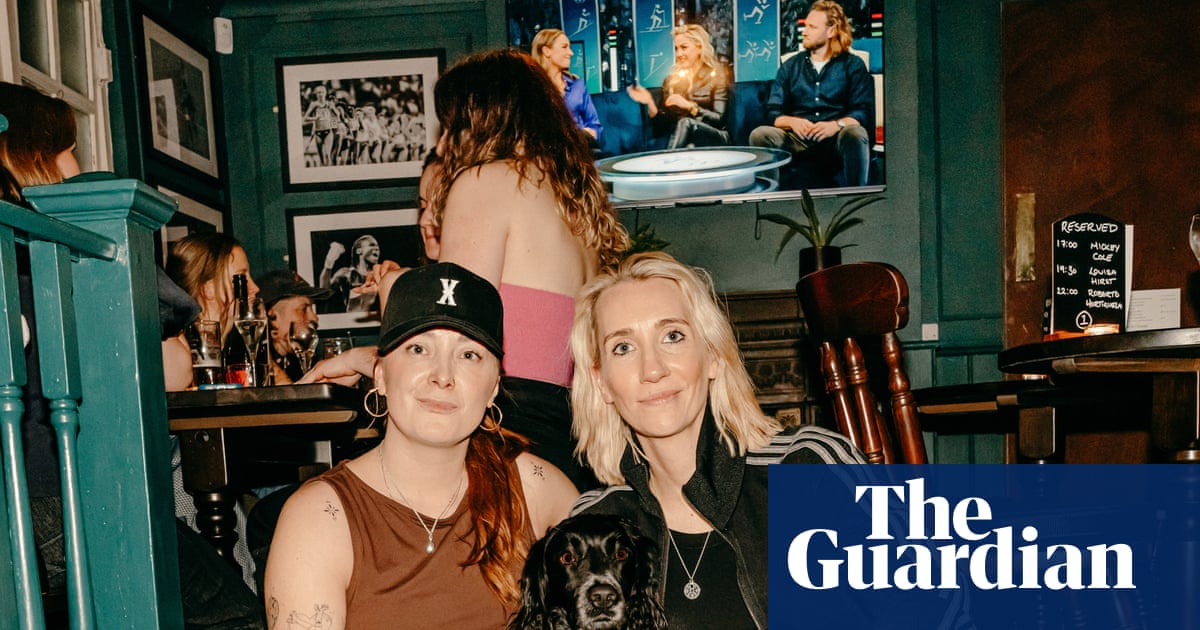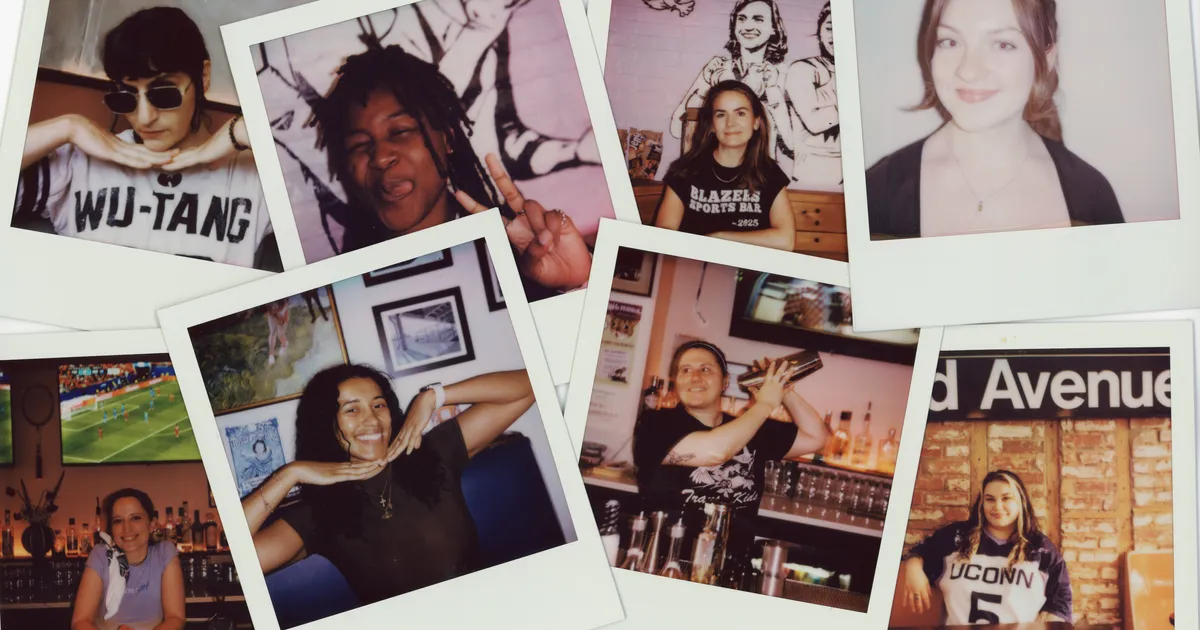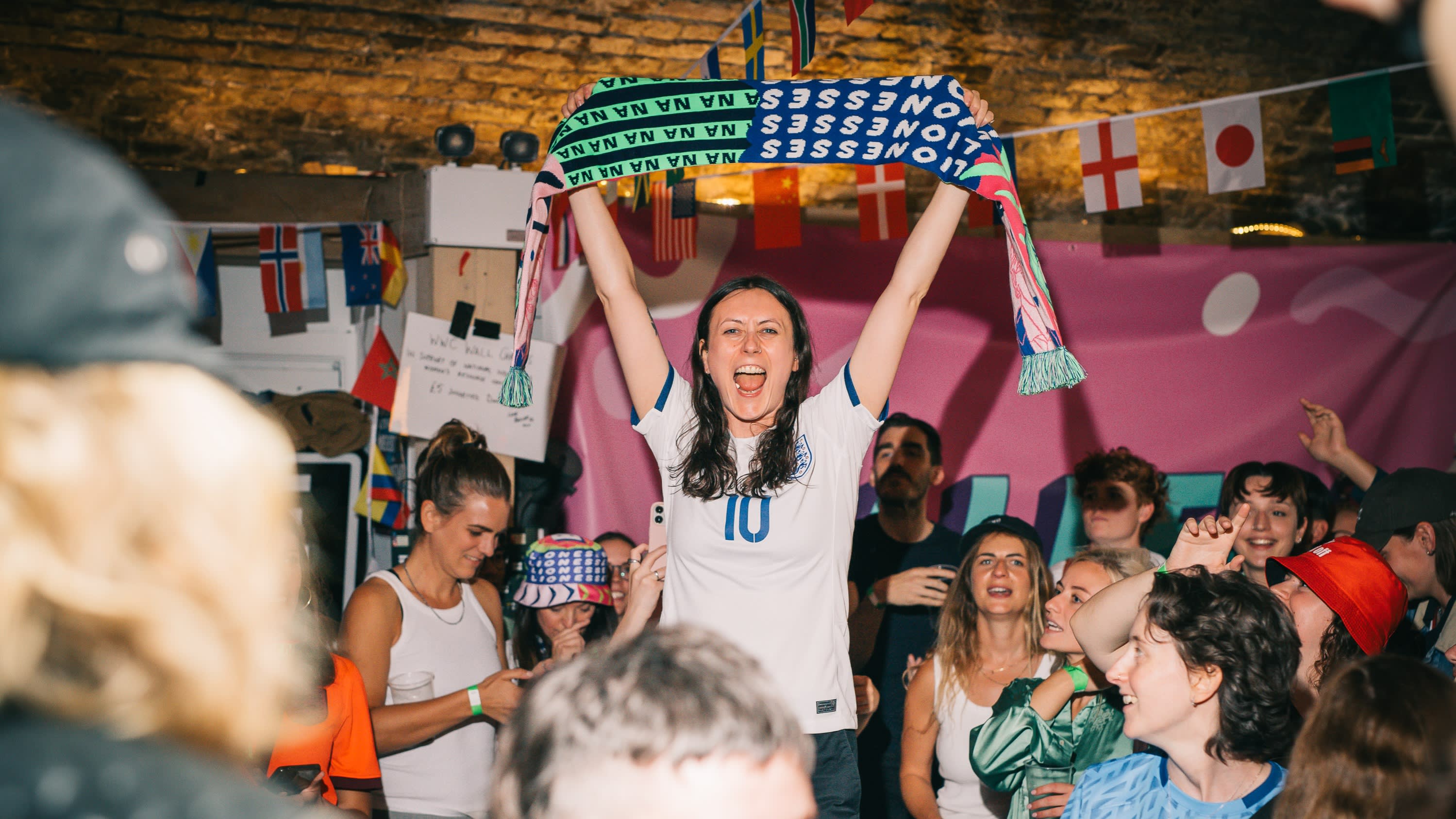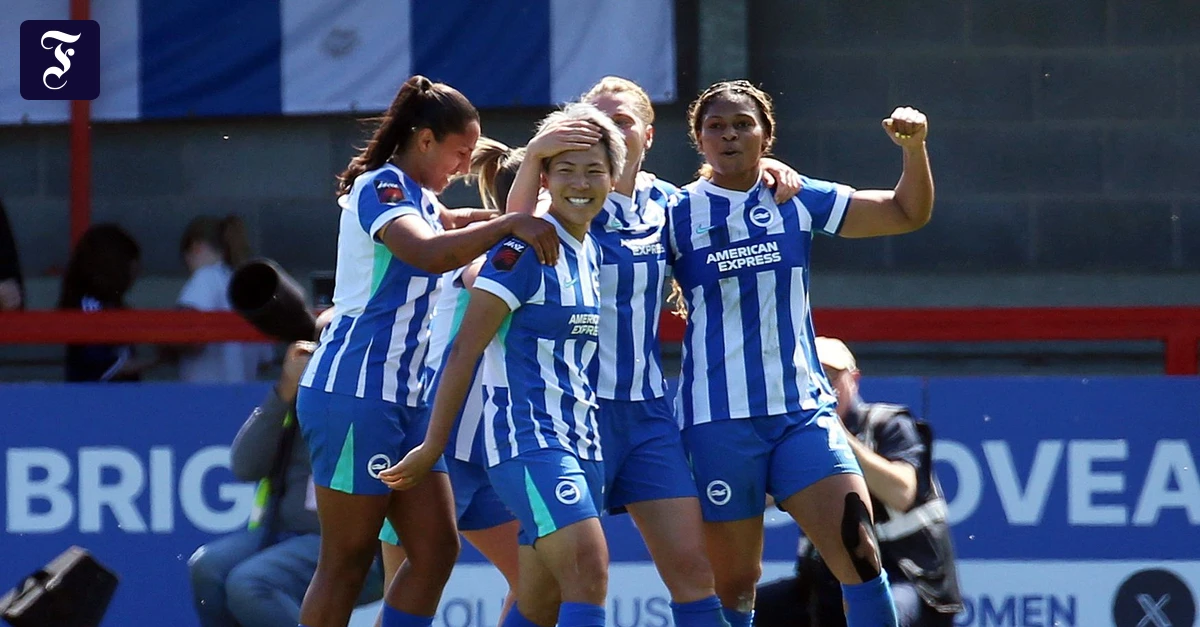
Lucy and Pippa Tallant, owners of Crossbar BrightonSally RawlinsAt a time when women’s sport is drawing record audiences across football, rugby and cricket, the infrastructure around how it’s watched hasn’t exactly kept pace. For all the momentum—the sold-out stadiums, broadcast deals, global leagues gaining unprecedented traction—the experience of watching women’s sport is fragmented across platforms, often hidden behind paywalls, and rarely given a consistent home in public spaces. Put simply, the audience exists, but they have no place to go.Only now there’s Crossbar Brighton, the UK’s first dedicated women’s sports bar, designed to prioritise women’s sport while remaining open to all fans.For founders Lucy and Pippa Tallant, the idea for Crossbar didn’t come in a single moment so much as a long-term desire. “It’s something Lucy spoke about with friends for years,” says Pippa. “Over a glass of wine, the conversation always turned to why there wasn’t a women’s focused space. Traditional sports bars, they’re quick to point out, weren’t the issue. “We’ve had some great nights out in them,” she adds. “But they aren’t designed with women in mind or at the forefront of decisions, so it always felt like there was something missing—this intangible piece that made the vibe what we wanted—and we felt if we were missing that, then surely other women did.”That absence is both cultural and practical. Much of the women’s sport community still lives online—highly engaged, but ultimately limited. Without physical spaces, that engagement struggles to translate into something more durable: ritual, familiarity, connection. Lucy describes the ease of walking into a pub and immediately bonding with another football fan—spotting a Leeds shirt, starting a conversation, sharing the moment. “That’s what can be missing in non-physical spaces,” Pippa explains. “The connection and the memories.”MORE FOR YOUPippa points to the 2022 Euros final as a rare exception—a moment when that connection became visible at scale. “There were pubs up and down the country filled with passionate fans,” she says. “And then the next day, where could they go?” Leah Williamson of England lifts the UEFA Women's EURO trophy on stage during the England Women's team victory parade and celebration on July 29, 2025 in London, England. (Photo by Justin Setterfield/Getty Images)Getty ImagesCrossbar’s answer is what the founders describe as an “elevated sports bar,” but the distinction is clearer in execution than language. The fundamentals remain—multiple screens, booze, pool, darts—but the surrounding experience is deliberately rethought. A considered wine list sits alongside draft beer. Coffee is treated as seriously as matchday drinks. Even the bathrooms—stocked with hand cream, period products and other practically inclusive details—signal a shift in who the space is designed for.Ultimately, they hope it functions as “a safe space for anyone who loves sport, and particularly women’s sport, to find likeminded people.”Lucy and Pippa Tallant, owners of Crossbar BrightonSally RawlinsThe venue opens from morning as a café and workspace, before transitioning into a multi-room sports bar in the evening—a model that reflects how modern hospitality spaces thrive, rather than how sports bars have traditionally operated.That thinking is partly personal, too. “I prefer playing sport to watching it,” Pippa says. “But when Lucy wants to watch a game, I want to join her—and I want to be somewhere I actually enjoy being, with wine I’d choose anyway, and not be forced to settle for the least worst option.”If the concept feels obvious, that’s part of the point and problem. In the US, venues like The Sports Bra have already demonstrated that a women’s-sport-first model can work commercially, making the absence of such a bar in the UK—with its entrenched pub culture and deep-rooted relationship with sport—hard to explain. “It was crazy to us that this was the first of its kind,” Pippa says. “It felt like it was just waiting for someone to take the leap.”And early demand suggests that leap was well-timed. Opening night bookings sold out in four minutes—a response the founders describe as “incredibly reassuring,” even if it exceeded their expectations. What followed has been a steady stream of interest from drinks brands, sports organisations and local teams, many of whom were quick to align, though the business itself is still taking shape. “This is the first of its kind and a first for us too,” Pippa says. England fans celebrate as Chloe Kelly scores the winning penalty as they watch the UEFA Women's EURO 2025 Final between England and Spain at the Vinegar Yard on July 27, 2025 in London, United Kingdom. (Photo by Justin Setterfield/Getty Images)Getty ImagesAlongside day-to-day trade, Crossbar is exploring events, partnerships and community-led programming, including offering space to grassroots teams. The approach is deliberately flexible, and that flexibility may prove necessary given the structural barriers still in place across televised women’s sport. Access remains inconsistent, with many women’s sporting events tied up in fragmented rights deals or unavailable for commercial venues to show. “From the outside it can look like ‘no-one wants to watch this,’” they say, “but in reality we can’t always show it in a public setting.” Visibility, in other words, is still being mediated by distribution, despite demand. So for now, Crossbar is focused on establishing itself as a viable model—both commercially and culturally. Whether that extends beyond Brighton remains an open question. “It started as a passion project,” Pippa says, “but we’ll see where it goes.” Longer term, their definition of success is one of impact: “public access to reliably watch women’s sport across the UK—whether that’s something we provide, or something we help inspire.”
Inside The U.K.’s First Women’s Sports Bar And The Market It’s Betting On
Crossbar Brighton is betting on a fast-growing audience still underserved by traditional pubs and broadcast access.
913 words~4 min read