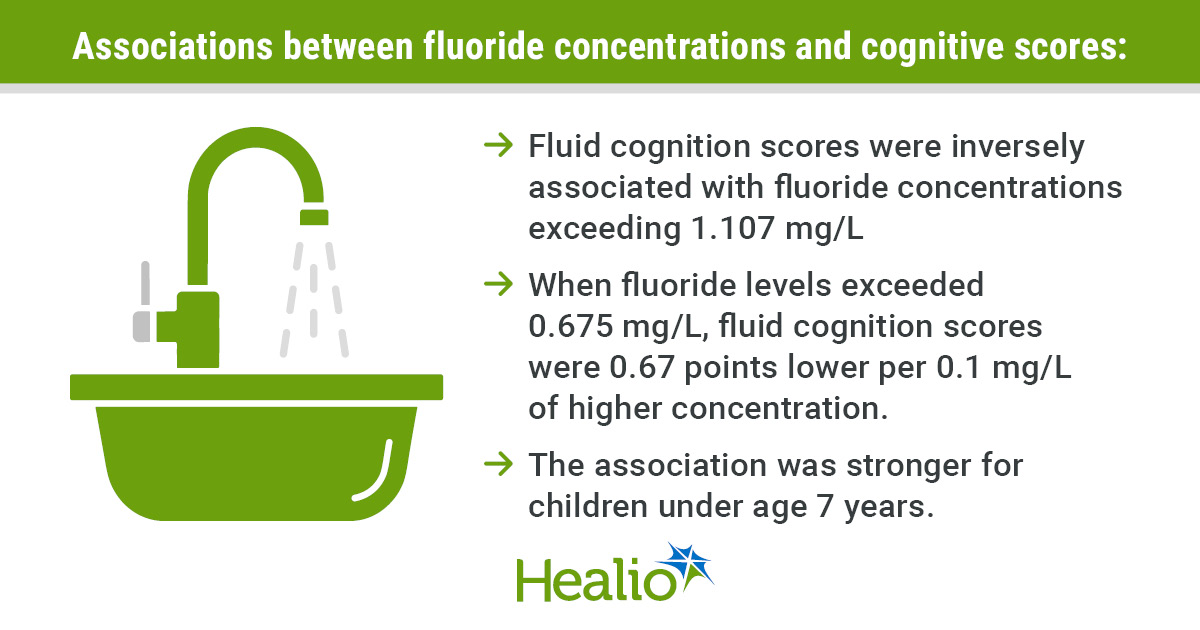
People who drink fluoridated community water long-term are just as smart as those who don't, a first-of-its-kind study found.
Published in the journal Proceedings of the National Academy of Sciences on Monday, April 13, the study is the first to test the impact of fluoridated water on cognition into late adulthood – long beyond childhood and adolescence, the usual targets of fluoride research. It expands upon previous research published in November 2025, also unique for being the first to analyze population-representative data from the United States up to the age of 60.
Community water fluoridation, or the act of adding the mineral to community water supplies to enhance dental health, has historically been considered a revolutionary accomplishment in public health, as noted by the Centers for Disease Control and Prevention. The practice has become a battleground in recent years, however, with Secretary of Health and Human Services Robert F. Kennedy Jr. saying in 2025, without evidence, that fluoride exposure makes children "stupider." Oft-cited studies to this point have been questioned for their validity, especially those using data from outside the United States.
"Like everybody else, I was intrigued by claims that there was a relationship between fluoride and IQ," said study co-author Rob Warren, professor at the University of Minnesota. "And upon looking at the evidence, I was not impressed. The evidence used to support that claim was not great. And so I got to thinking, 'well, what could we do with existing data on the U.S. that is population representative and actually considers fluoride at the levels that we care about?'"