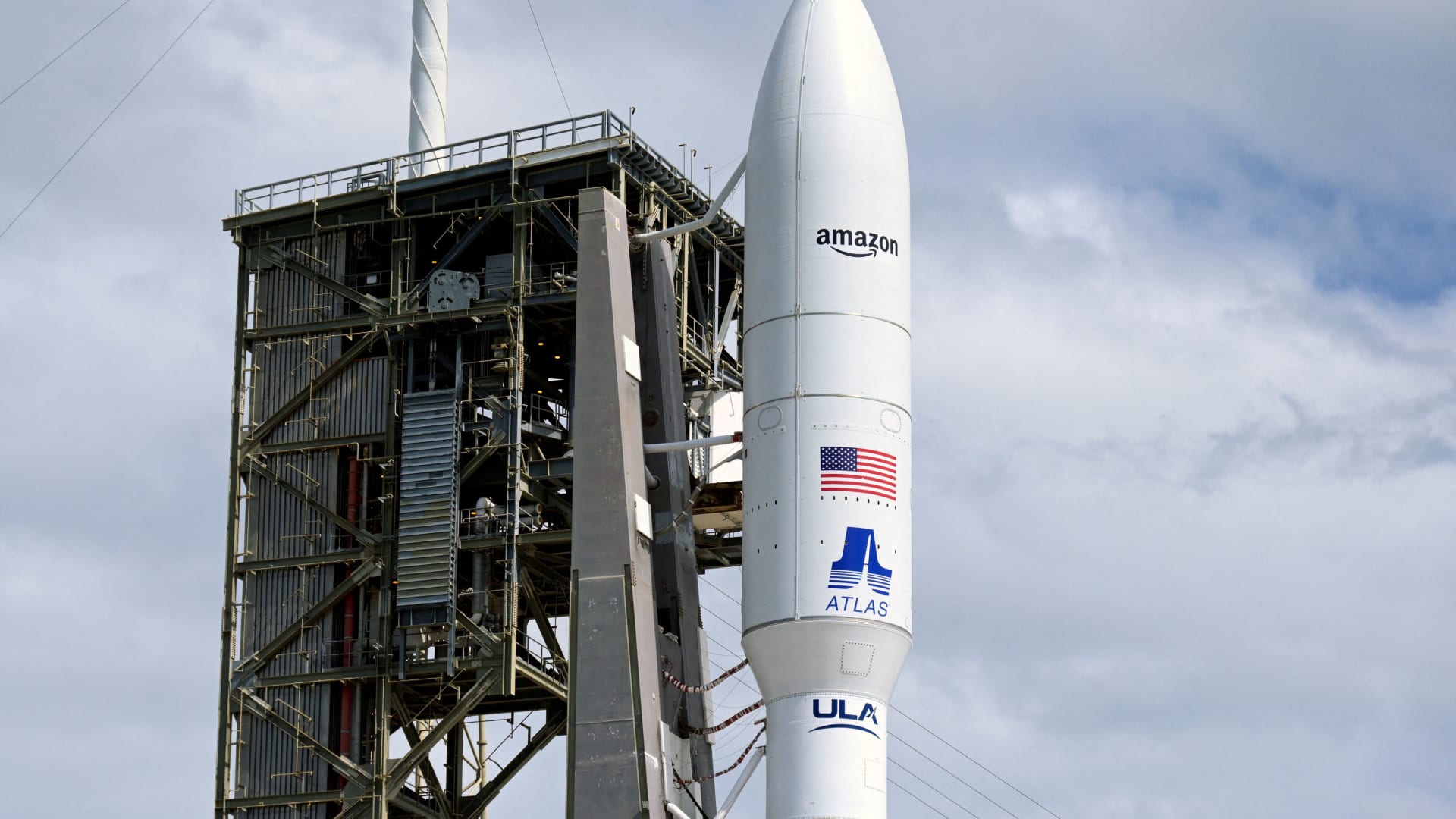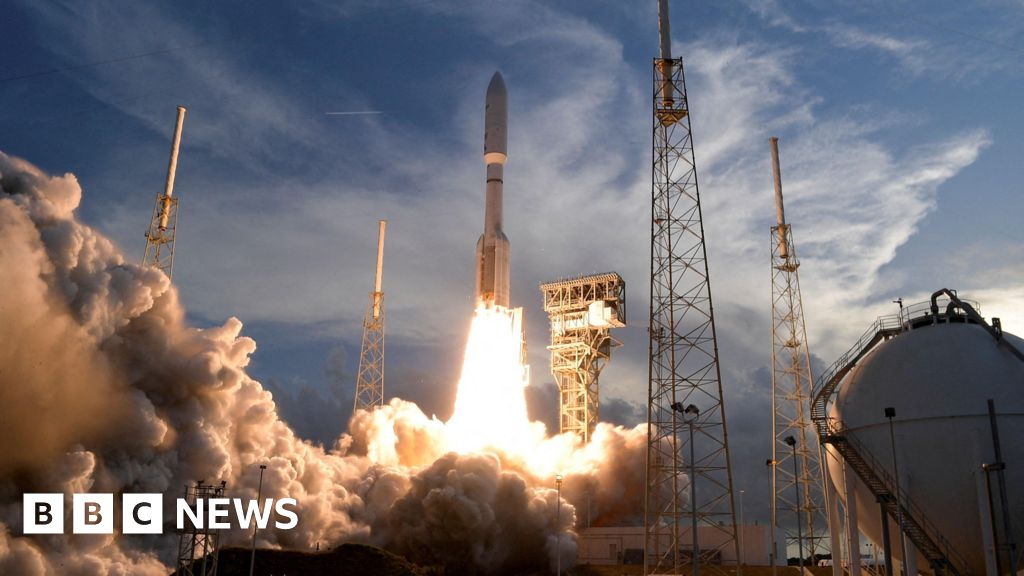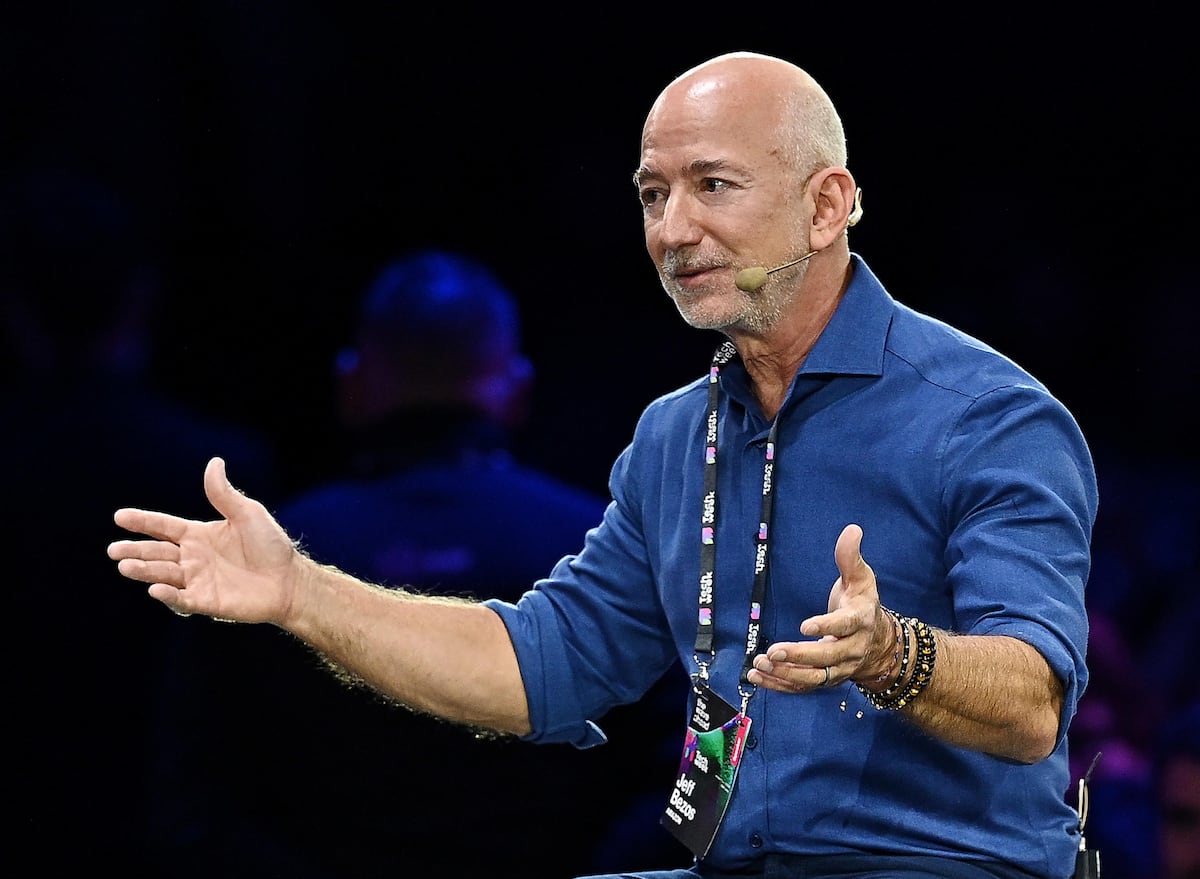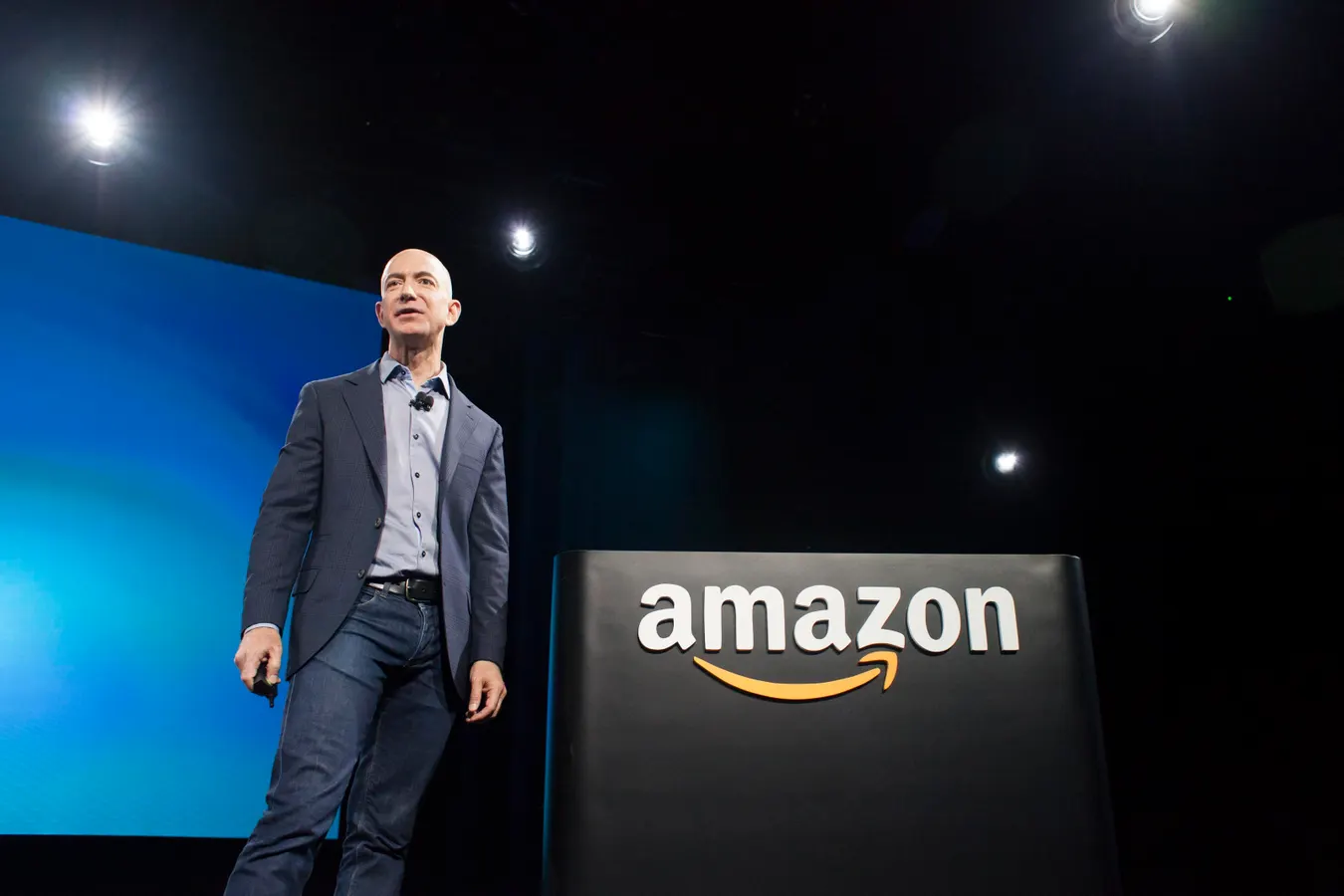
ToplineAmazon announced Tuesday an agreement to acquire satellite company Globalstar for $11.57 billion to expand its satellite business, as it aims to compete with SpaceX’s Starlink business.(Photo by David Ryder/Getty Images)Getty ImagesKey FactsGlobalstar stockholders will receive $90 per share of Amazon common stock in a deal expected to close in 2027 that will enable Amazon Leo—the company’s commercial satellite business—to provide direct-to-device cell service to customers without hardware like cell towers or antennas. In addition to the acquisition, Amazon announced it will partner with Apple to continue to support iPhone and Apple Watch models currently using Globalstar's existing and planned upcoming satellite constellations, collaborating on the phone maker’s satellite features including Emergency SOS, Messages, Find My and Roadside Assistance.Amazon is vying to close the gap with SpaceX's Starlink, which has had a significant head start with more than 10,000 satellites in orbit and over 10 million users since launching to customers in 2021 (Amazon Leo has sent more than 200 satellites and its commercial launch is planned for mid 2026).In 2025, Globalstar revenue was up 9% from the previous year at a record $273 million—driven largely by recurring sales to Apple—and posted a net loss of $8.65 million, up from $63.16 million in 2024. Globalstar’s stock rose 10%, and Amazon stock is up 3% following the announcement. Crucial Quote“What we're seeing is a setup for the battle of the Titans between SpaceX and Amazon,” space analyst Chris Quilty told Forbes. “SpaceX was interested in acquiring the same spectrum and that probably accounts for the premium price that we're seeing being paid.”Key BackgroundGlobalstar currently has a market cap of around $10 billion and reportedly had early talks with SpaceX, which was interested in purchasing the company’s spectrum—the airwaves that provide cell service directly to devices as opposed to through cell towers or antennas. Amazon Leo initially launched in 2019 under the name Project Kuiper, with Bezos recruiting Rajeev Badyal, a former SpaceX executive fired by Elon Musk in 2018, to lead it. Development proceeded slowly for several years due to rocket shortages, manufacturing disruption and launch failures despite Amazon investing billions in satellite manufacturing facilities and launch contracts. The program received its operational license from the Federal Communications Commission in July 2020, and achieved its first orbital milestone in October 2023 with the successful deployment of two prototype satellites. Large-scale deployment began in April 2025, and by November that year Amazon retired the Project Kuiper codename in favor of Amazon Leo, marking the program's formal transition from a research and development initiative to a commercial enterprise. Big Number$10 billion. That’s the amount Amazon committed to building Amazon Leo in 2020. The acquisition of Globalstar marks Amazon’s biggest bet to scale out its satellite business and is the tech giant’s second-largest acquisition to date, falling behind its $13.7 billion acquisition of Whole Foods in 2017. TangentThe deal is the latest chapter in what has become one of the defining business rivalries of the 21st century: the billionaire space race. The race's principal actors have been Elon Musk's SpaceX, which seeks to colonize Mars and provide global satellite internet via Starlink, Jeff Bezos's Blue Origin and Amazon's satellite program, and Richard Branson's Virgin Group through Virgin Galactic and the now-cancelled Virgin Orbit. Other tech billionaires including Robinhood founder Baiju Bhatt, former Google head and current Relativity Space CEO Eric Schmidt and crypto billionaire Jed McCaleb have made bets into the space economy in recent years. For most of the past decade, Musk has lapped the field. SpaceX, which dramatically reduced the cost of rocket launches, has completed more than 600 launches of its spacecraft since its first successful launch in 2008, while Blue Origin only achieved its first successful orbital launch in January 2025. The asymmetry has been even more pronounced in the satellite internet battle: SpaceX’s Starlink already serves more than 10 million customers across more than 100 countries, while Amazon Leo is set to launch mid 2026. The World Economic Forum estimates the space economy will reach a valuation of over $1.8 trillion by 2035 from more than $600 billion last year, with the primary drive being the commercial sector—including satellites, space tourism and data centers—that’s represented around 80% of the industry in recent years.
Amazon Acquires Satellite Firm Globalstar For $11.57 Billion
Amazon is making its most aggressive move yet to close the gap with SpaceX to shortcut its way into becoming a cell service provider.
704 words~3 min read