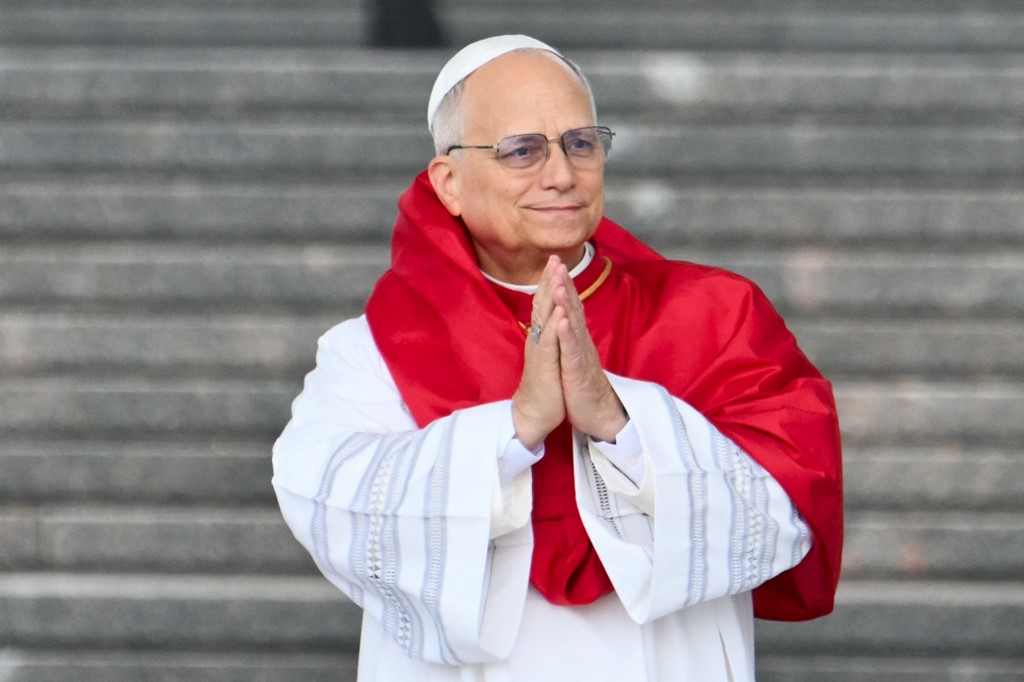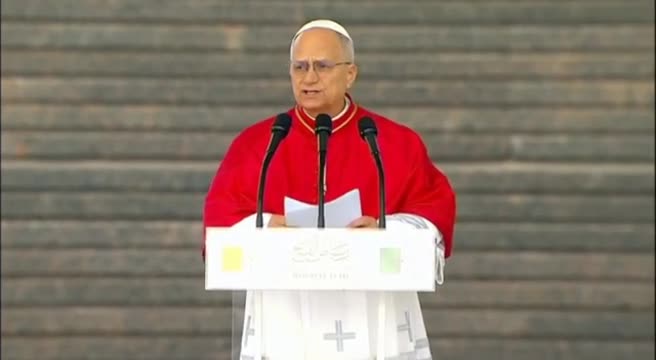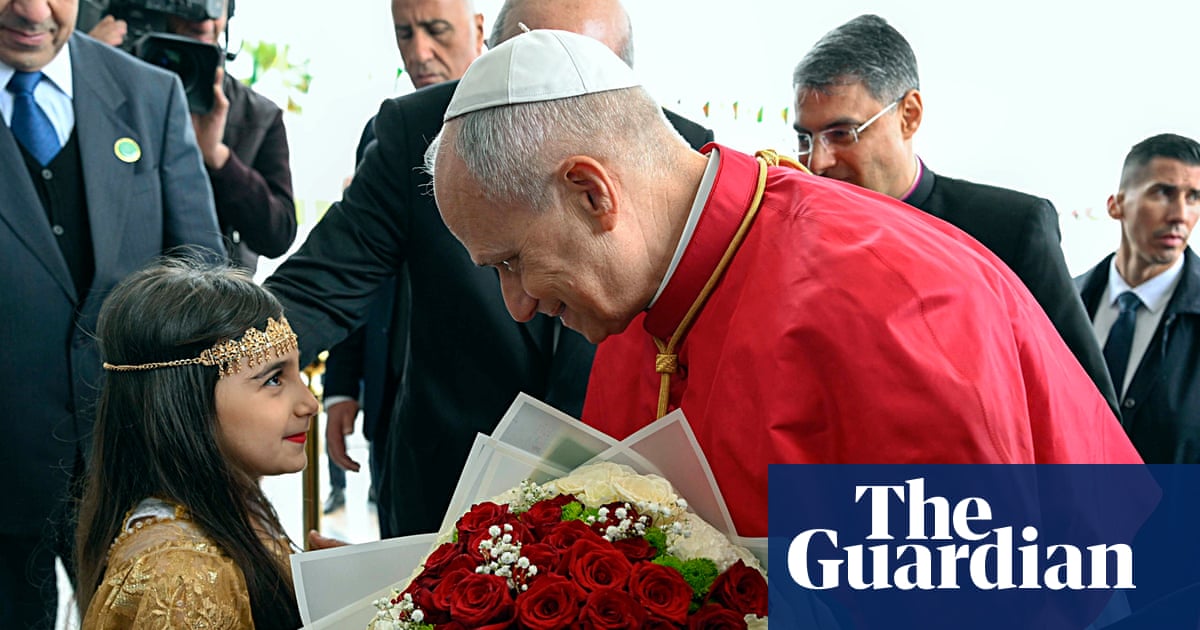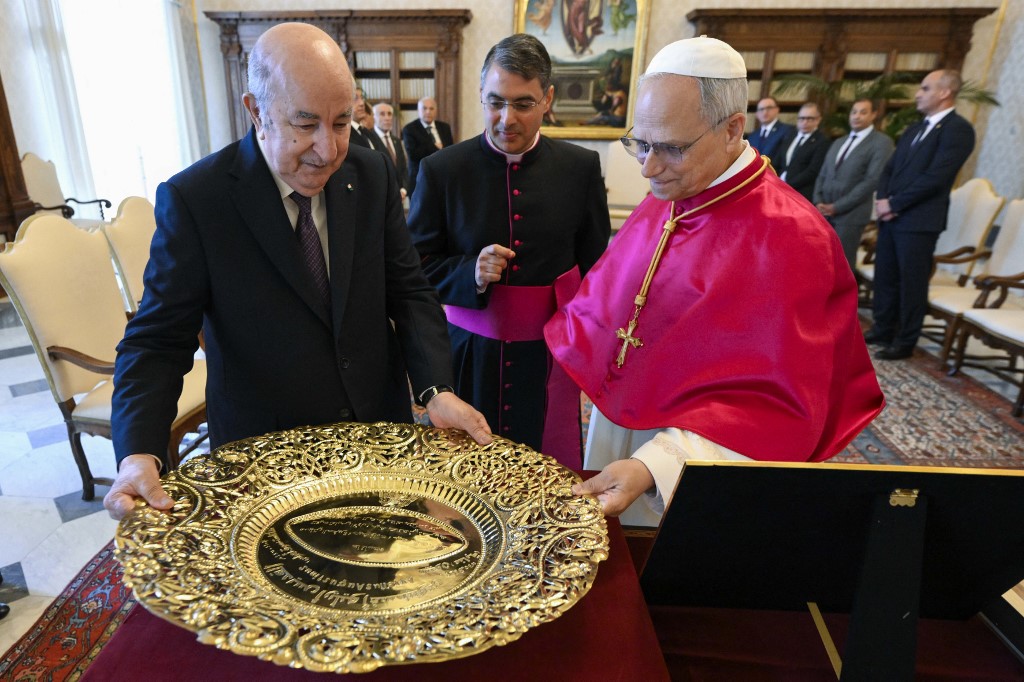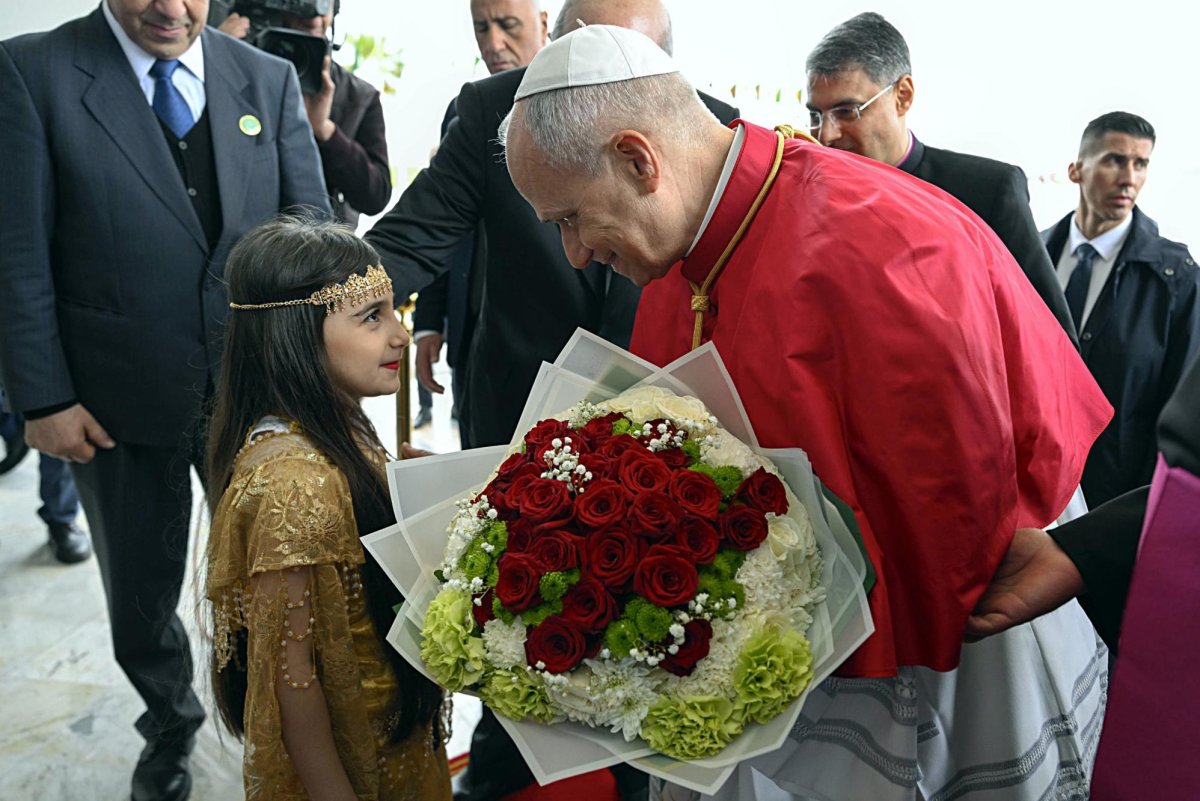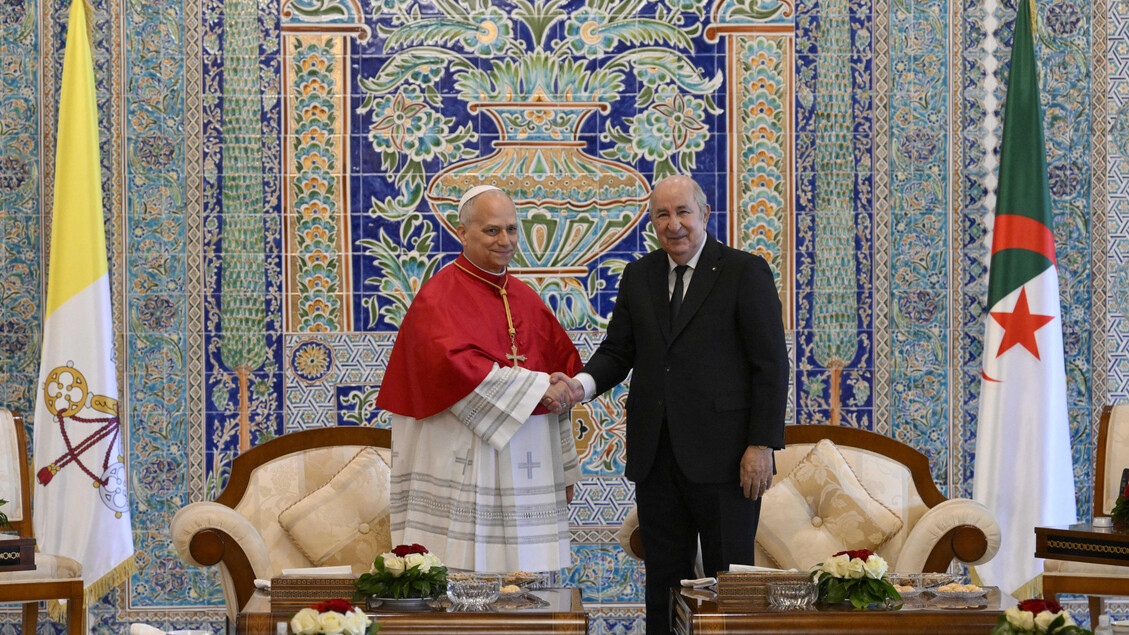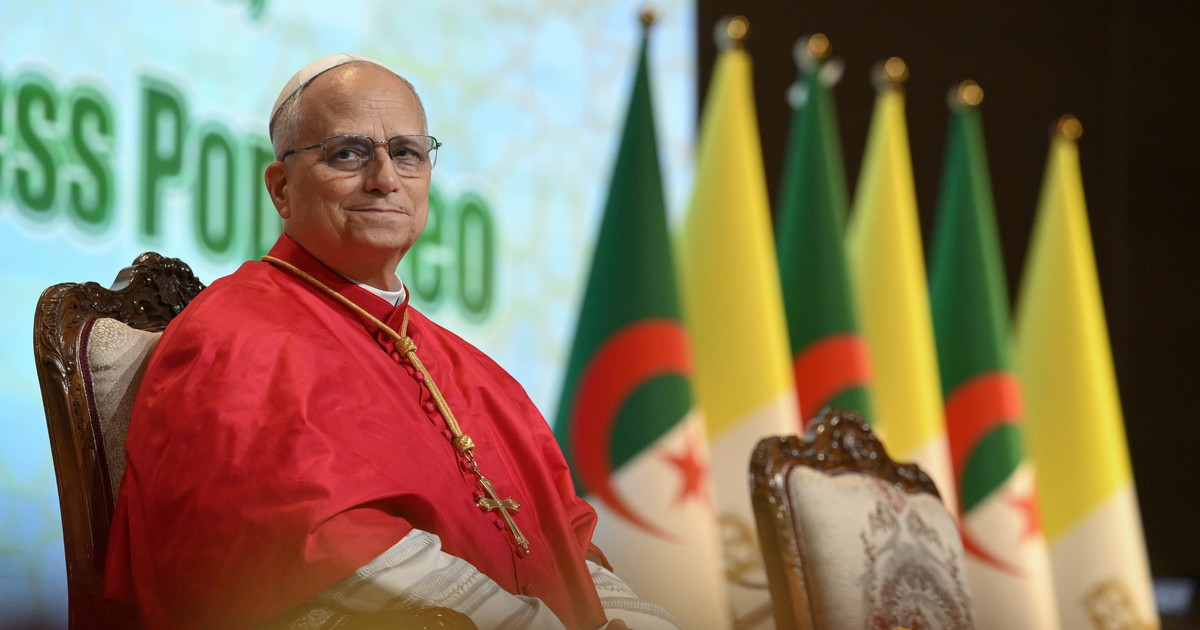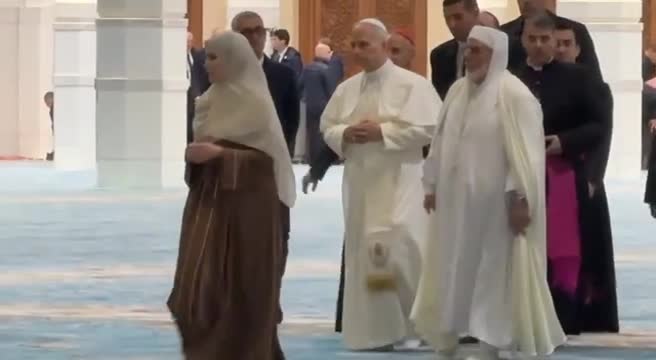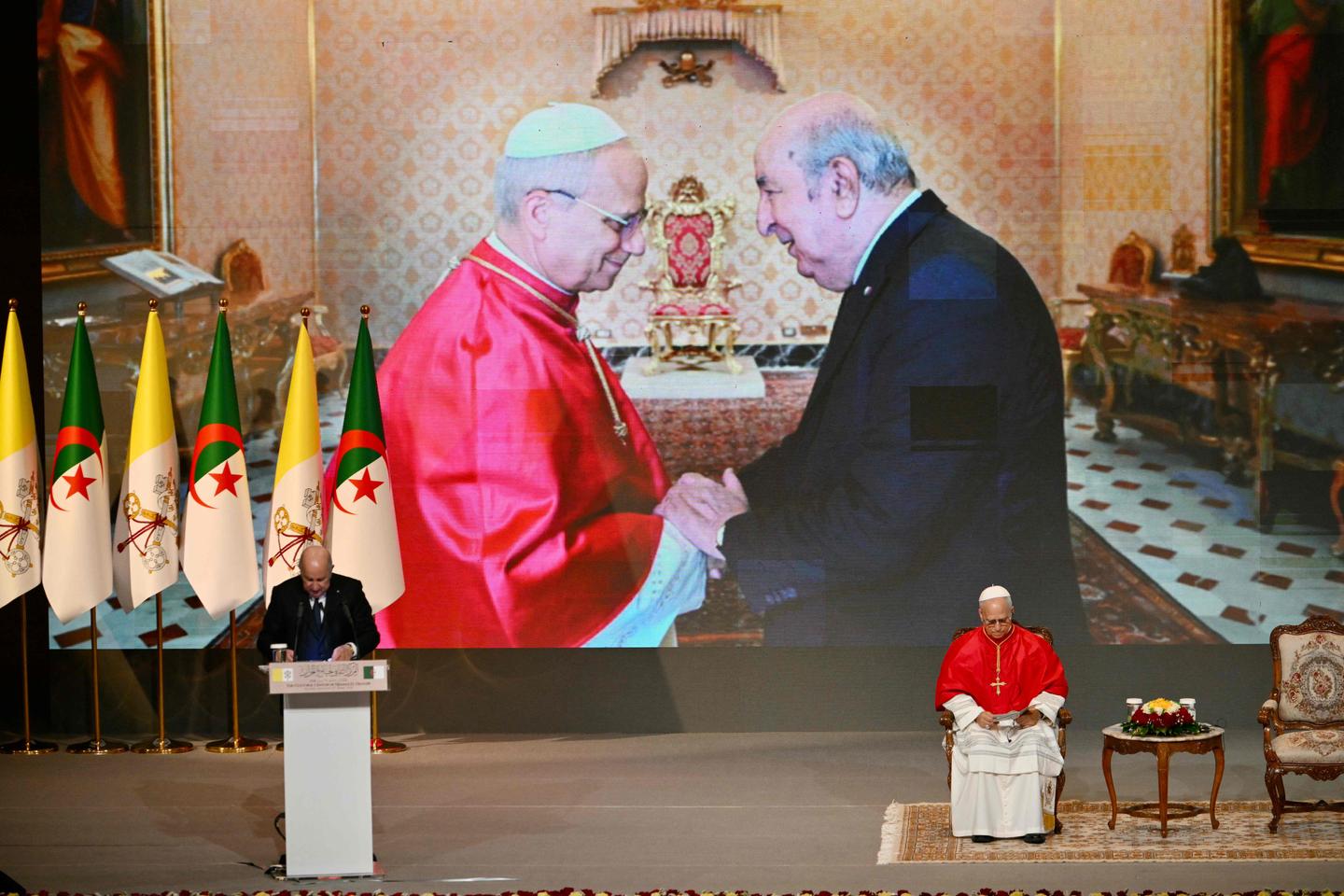
Pope Léon XIV and Algerian President Abdelmadjid Tebboune meet with civil society representatives and the diplomatic corps in Algiers, April 13, 2026. ALBERTO PIZZOLI/AFP
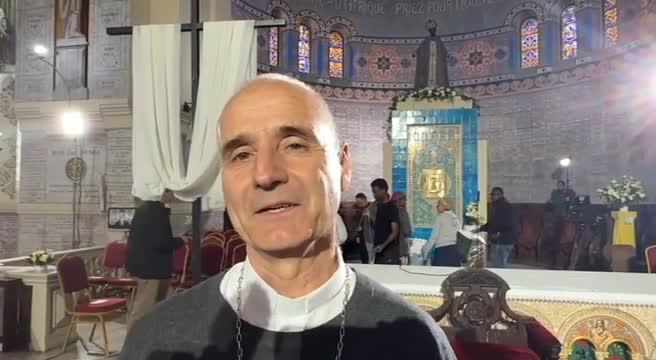
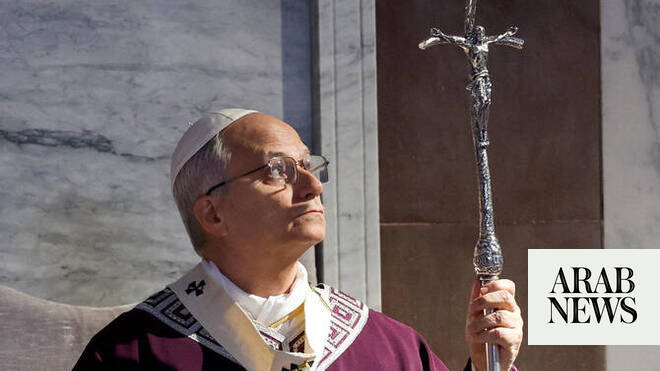
Beneath the vaulted ceiling of the Basilique Notre-Dame d'Afrique, perched above Algiers, a fitting phrase stands out in white letters on the blue mosaics adorning the wall: "Pray for us and for the Muslims." On Monday, April 13, Pope Leo XIV, who concluded the first day of his trip to Algeria here – the first stop on a journey that will also take him to Cameroon, Angola and Equatorial Guinea through April 23 – sat below this inscription to pray before the blue zellige tabernacle.
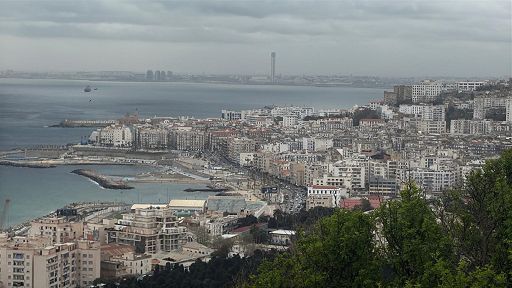
The American pontiff carried out his agenda as if nothing had happened, even though, midway through the day, Algeria was rocked by a failed attack in Blida. Around noon, two men detonated explosives in the city, located about 40 kilometers southwest of Algiers. The suicide bombers died, and several people were injured. The event served as a bloody counterexample to the call for reconciliation and peace that the pope had come to share with the Algerian people.
The attempted attack appeared to target, according to footage posted on social media, a police station in the city. The two suicide bombers activated their explosive belts before they were able to get close enough to their target, apparently rushing their plan after a police officer on duty spotted their approach. In the hours that followed, Algerian authorities imposed a total blackout on information about the incident. Within the delegation accompanying the pope, news of the event took several hours to circulate, and the Vatican press office made no comment.